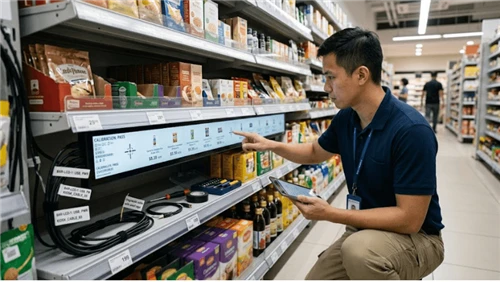
This guide is written from a vendor-neutral position. It won't recommend a specific brand. What it will do is give you a structured framework to evaluate costs, integration requirements, and supplier commitments - so you can make a well-informed decision rather than one driven by a vendor's demo.
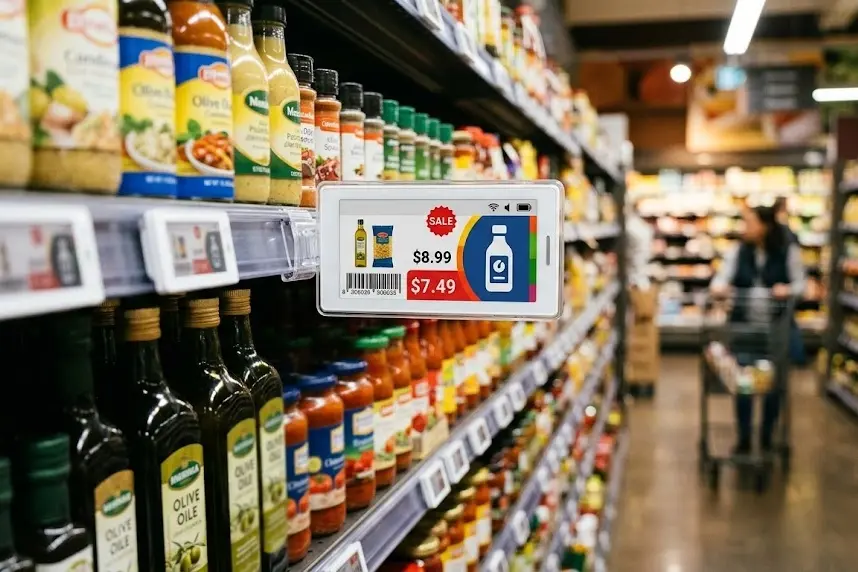
What an Electronic Shelf Label Solution Actually Does
The term covers more than a digital price tag. A fully deployed ESL system is a shelf-edge communication platform that connects every product location in your store to a central management system, updating thousands of labels simultaneously and automatically.
Most systems deliver three layers of functionality: automated price synchronization with your ERP or POS, scheduled promotional pricing with start and end times, and regulatory compliance support for price accuracy rules. More advanced deployments extend into staff-facing workflows - replenishment guidance, click-and-collect pick paths, and planogram compliance monitoring.
Understanding how ESL systems work at the technology level matters because it shapes your total cost of ownership and your integration workload. Every solution operates across three layers:
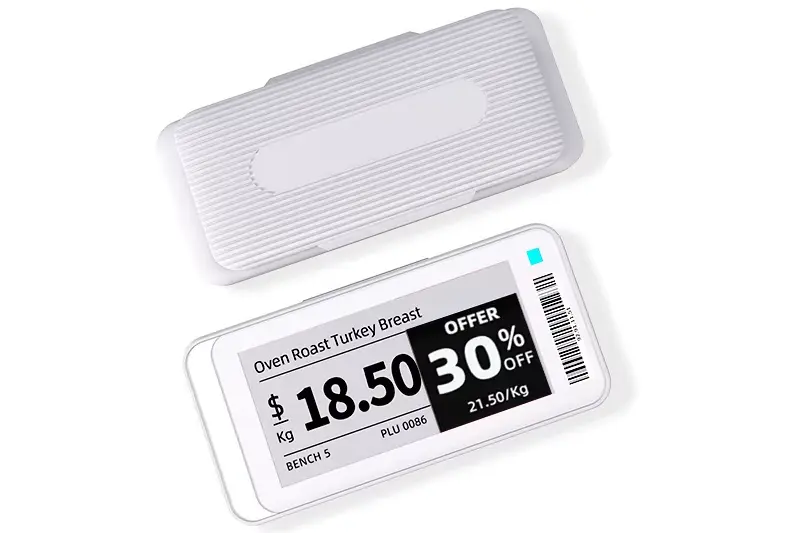
- Display layer - The label hardware. Most modern ESLs use e-paper (electronic ink), which only consumes power when content changes, enabling battery life of seven to ten years. LCD alternatives draw more power and have shorter replacement cycles. The choice between e-paper and LCD affects your long-term maintenance cost significantly.
- Communication layer - How data moves from your server to each label. Main protocols include radio frequency (RF), Bluetooth Low Energy (BLE), NFC, and optical/infrared wireless. Each has real tradeoffs in range, update speed, and interference resistance in dense retail environments.
- Management layer - The software platform connecting your pricing data to the display layer. This is where integration complexity lives, and the part vendors are least transparent about during the sales process.
Is an ESL Solution Right for Your Business Right Now?
Before comparing vendors, answer the more fundamental question: does the investment make sense for your specific operation at this stage?
ESL solutions deliver the clearest return in specific contexts. If your team manually re-labels shelves multiple times per week, the labor savings compound quickly. Large store footprints with high SKU counts carry significant error risk with paper systems - ESLs eliminate both. Retailers in markets with high labor costs see the ROI calculation tip earlier. And for omnichannel operations, ESLs close the lag between online price changes and shelf updates automatically - something manual systems cannot support for dynamic pricing strategies.
On the other hand, some situations warrant waiting. If your store has fewer than 500 SKUs and infrequent price changes, the payback period extends considerably. If your existing POS or ERP is due for replacement within 12 months, connecting an ESL platform to a transitional system adds unnecessary integration cost. And if you haven't identified clear use cases beyond "price changes," a deployment driven by a single low-frequency need often underperforms expectations - particularly when compared against the ongoing cost of well-managed paper labels.
A practical threshold: If your team spends more than four to five hours per week per store on price-label changes, a formal business case is worth building. Below that, the numbers are harder to justify.
Understanding the Real Costs - and How to Estimate ROI
Vendors quote hardware prices. The full financial picture looks different. A complete ESL deployment involves five cost categories that should always be quoted together:
- Label hardware - Per-unit cost multiplied by your total SKU count; varies significantly by display type, size, and color capability
- Communication infrastructure - Gateways and access points (typically one per 30–50 square meters of floor area)
- Software licensing - Management platform; may be a perpetual license or annual SaaS subscription
- Installation - Labor for mounting, binding labels to products, and system configuration
- Integration development - API work to connect the ESL platform with your ERP or POS; frequently underestimated in initial quotes
A hardware-only quote is not a TCO. Always request a line-item breakdown covering all five categories. For a deeper look at what electronic shelf label costs look like in practice, the ranges vary considerably by deployment scale and technology choice.
Ongoing costs vendors rarely lead with: battery replacement (real-world conditions affect rated life), annual label attrition from physical damage, software upgrade fees outside the base contract, and recurring staff training as turnover occurs.
A Simple ROI Estimation Framework
You don't need a detailed financial model to do a directional check. This logic works as a starting point:
- Annual labor saved: (Minutes per label change ÷ 60) × weekly label changes × 52 weeks × hourly labor cost
- Annual system cost: (Total upfront investment ÷ expected system life in years) + annual software and maintenance fees
- ROI check: If annual labor savings exceed annual system cost, you have a positive case. Add pricing accuracy improvements and promotional agility gains for a fuller picture.
To illustrate the logic with illustrative figures only:
| Variable | Assumption |
|---|---|
| Minutes per label change | 3 minutes |
| Weekly label changes per store | 600 |
| Hourly staff cost | $18 |
| Annual labor cost of pricing tasks | ~$28,000 |
| Annual ESL system cost (amortized) | ~$14,000 |
| Net annual saving | ~$14,000 per store |
Run this exercise with your own operational data before requesting vendor quotes. For a more detailed calculation, an ESL ROI calculator can help you model different deployment scenarios.
12 Factors to Evaluate Before Choosing an ESL Solution
Organized by decision priority - foundation requirements first, then performance characteristics, then vendor relationship quality.
Foundation Factors: Non-Negotiables
1. Communication technology and system reliability
The protocol your ESL system uses determines how reliably labels update under real store conditions. Ask vendors for performance data from live deployments in stores of similar size to yours - not from controlled pilots. The differences between RF, BLE, and sub-GHz protocols matter in high-traffic environments where wireless interference is a real variable. Confirm what happens to label display if the network connection drops - whether labels hold their last content or go blank.
2. Integration with your existing systems
This is the factor most vendors minimize in the sales process and the one that causes the most implementation pain. Before evaluating any vendor, document exactly which systems need to push data to the ESL platform, which data fields you need displayed, and your IT team's realistic capacity for integration work. Ask vendors specifically whether they have a pre-built connector for your ERP. Custom integration is common, adds cost, and extends timelines - it should be scoped and priced explicitly before you commit.
3. Data security and regulatory compliance
ESL platforms connect to corporate ERP systems and, in NFC-enabled deployments, may interact with consumer devices. Verify ISO 27001 certification, GDPR compliance for EU-operating retailers, and pricing accuracy compliance for each market you operate in. European retailers should also be aware of the EU Digital Product Passport requirements entering force from 2026, which will require real-time product information accessible at the point of sale. Separately, displaying incorrect prices carries regulatory and reputational risk - your ESL solution needs to be part of your compliance framework, not outside it.
Performance Factors: Long-Term Usability
4. Battery life - under real conditions
E-paper systems are often marketed with seven-to-ten-year battery life. That figure assumes controlled update frequency and temperature. Ask vendors for battery life data from refrigerated environments and high-frequency update scenarios. The difference between a seven-year and four-year actual replacement cycle has significant maintenance cost implications across a large label estate.
5. Display quality, sizes, and content flexibility
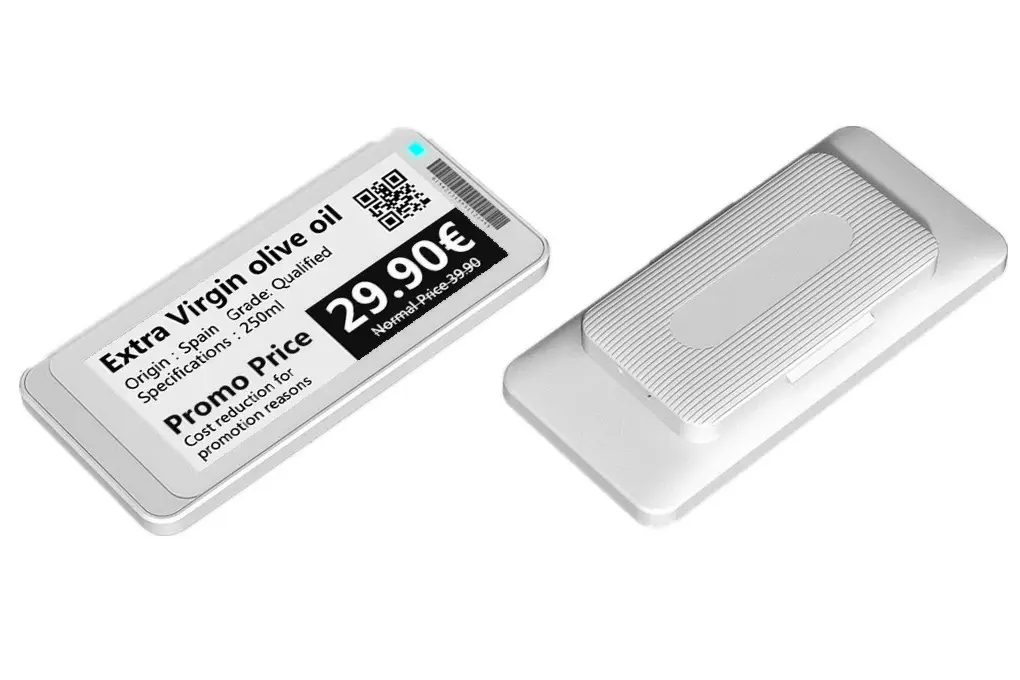
Consider color capability (black and white is functional; three-color adds promotional impact; full-color supports richer merchandising but at higher hardware cost), multi-page content cycling, and whether the size range covers all your shelf formats. If shoppers scanning labels for extended product information matters to your strategy, confirm NFC support at the hardware level - not just on the roadmap.
6. Update speed in practice
For promotional retailers, the difference between a 30-second full-store update and a 10-minute update is operationally meaningful - particularly for flash sales or competitor price-matching responses. Get a documented specification, not a verbal assurance.
7. Scalability from pilot to full rollout
Confirm that the same system architecture that runs your pilot scales to your full estate without a platform migration. Ask vendors to walk you through multi-store, multi-region architecture. Scaling from 500 labels to 50,000 should be a configuration exercise, not a rebuild.
Vendor and Partnership Factors
8. Implementation support and realistic deployment timelines
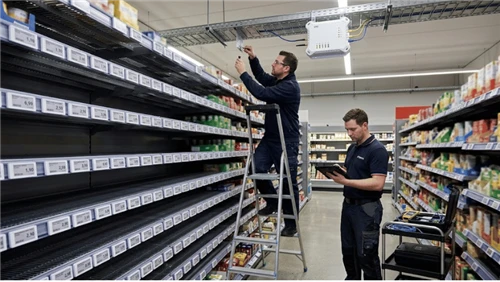
A single-store ESL deployment typically takes one to three days for hardware installation, plus additional time for software setup, label binding, and staff training. A chain-wide rollout requires project management, phased scheduling, and a rollback plan. Ask the vendor who owns project delivery - their team, yours, or a third-party integrator. Review what a typical ESL installation process involves before finalizing your deployment timeline assumptions.
9. After-sales support and SLA commitments
An ESL system is infrastructure. Request the vendor's written SLA by fault severity level. Confirm local service coverage in all your operating markets and whether they offer remote diagnostics. Label update failures are the most common operational issue post-deployment - how quickly and reliably a vendor can diagnose and resolve them matters more than how rarely they say it happens.
10. Vendor financial stability and product roadmap
You are entering a technology relationship that should last eight to ten years. Evaluate whether the vendor has the R&D trajectory and financial standing to still be a credible partner at that horizon. Ask for their roadmap - specifically around full-color display support, AI-driven pricing integration, and cloud platform development. Comparing ESL manufacturers on these dimensions alongside pricing is worth the time before shortlisting.
11. Total cost of ownership transparency
A reputable vendor will provide a complete TCO model - hardware, infrastructure, software, maintenance, battery replacement - over a five-to-seven-year horizon. If a vendor resists providing this, that is a meaningful signal. Review contract terms carefully for minimum purchase volume commitments, proprietary accessory lock-in, and whether software upgrade costs are included or billed separately.
12. Environmental and sustainability credentials
For retailers with active ESG programs, eliminating paper label waste carries a quantifiable environmental impact. Some vendors now offer solar-powered label options. If sustainability reporting matters to your business, ask vendors to support their environmental claims with third-party data rather than marketing copy.
Frequently Asked Questions
How much does an electronic shelf label solution cost?
Costs vary by display type, label count, and integration complexity. Hardware alone ranges from a few dollars to over twenty dollars per label depending on size and color capability. Total system cost - including infrastructure, software, and integration work - should be evaluated through a full TCO request, not a hardware-only quote.
What is a realistic ROI timeline?
For mid-to-large format stores with high price-change frequency, payback timelines of 18 to 24 months are achievable in markets with high labor costs. Smaller stores or those with low pricing activity will see longer periods. Build your own model using actual labor cost and pricing frequency data before relying on vendor-provided benchmarks.
Are ESLs worth it for small retailers?
It depends primarily on pricing change frequency. A small pharmacy or specialty retailer updating prices daily across hundreds of SKUs may have a strong case. A small general store with stable pricing typically does not. Run the ROI framework in this guide with your own numbers first.
How do ESLs integrate with ERP or POS systems?
Integration is handled via API connections between the ESL management platform and your pricing or inventory system. Some vendors offer pre-built connectors for major ERP platforms. Custom integration is common, adds cost, and extends implementation timelines. Your IT team should review vendor API documentation before any commercial commitment is made.
What communication protocol should I choose?
The right choice depends on your store layout, existing wireless infrastructure, and update frequency requirements. RF systems are reliable in large-format stores; BLE offers lower power consumption; NFC enables two-way consumer interaction. There is no universal best option - evaluate against your specific environment.
What regulations apply to electronic shelf labels?
Most markets with consumer pricing laws require that the price displayed on the shelf matches the price charged at the register. ESLs support compliance by enabling accurate, real-time updates - but the compliance obligation remains with the retailer. European retailers should additionally monitor EU Digital Product Passport requirements and GDPR rules around NFC consumer data interactions.
Next Steps
The retailers who see the strongest returns from ESL investments tend to follow a consistent sequence: they define clear operational use cases before evaluating technology, run a meaningful pilot with agreed success metrics rather than relying on vendor demonstrations, and build a full TCO model before comparing quotes across suppliers.
A practical starting sequence:
- Document your current state - how many label changes per week, time per change, and total labor cost of pricing tasks per store
- Define your requirements - prioritize capabilities that address your specific operational challenges, not a feature wish list
- Shortlist at least three vendors - include at least one you have not previously encountered; the market has matured and credible options extend well beyond the largest names
- Run a real pilot - in a representative store, with agreed KPIs, over at least six weeks
- Model full TCO across all shortlisted vendors - using consistent inputs so comparisons are meaningful
If you are evaluating specific hardware options, browse the full ESL product range or contact the team to discuss your deployment requirements directly.