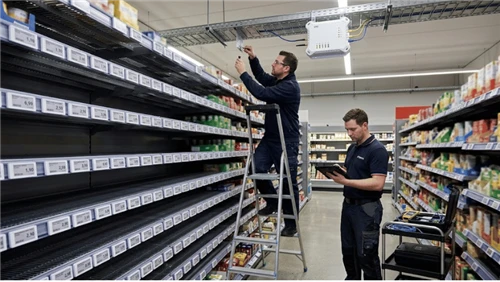
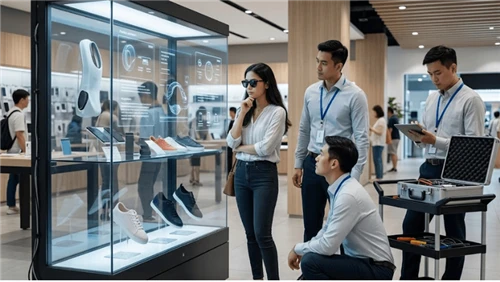
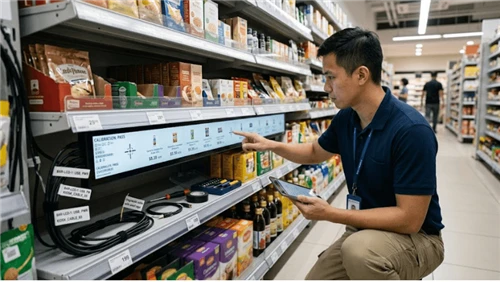
Electronic shelf labels - commonly called digital price tags or ESLs - are built to eliminate that cycle entirely. Prices update from a central system in seconds, with no printing, no physical replacement, and no gap between what the database shows and what the shelf displays.
This guide covers how the technology works, what it realistically costs, what independent research says about its actual impact, and the honest answer to when it does - and doesn't - make financial sense.
What Are Digital Price Tags?
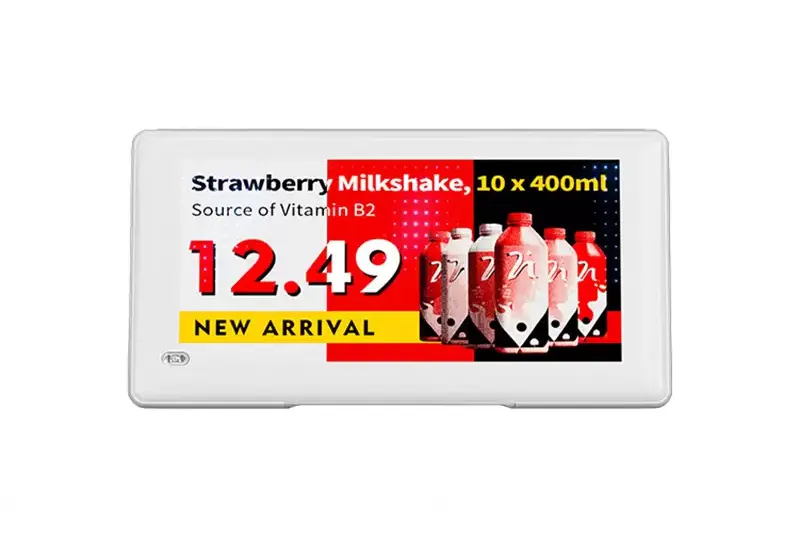
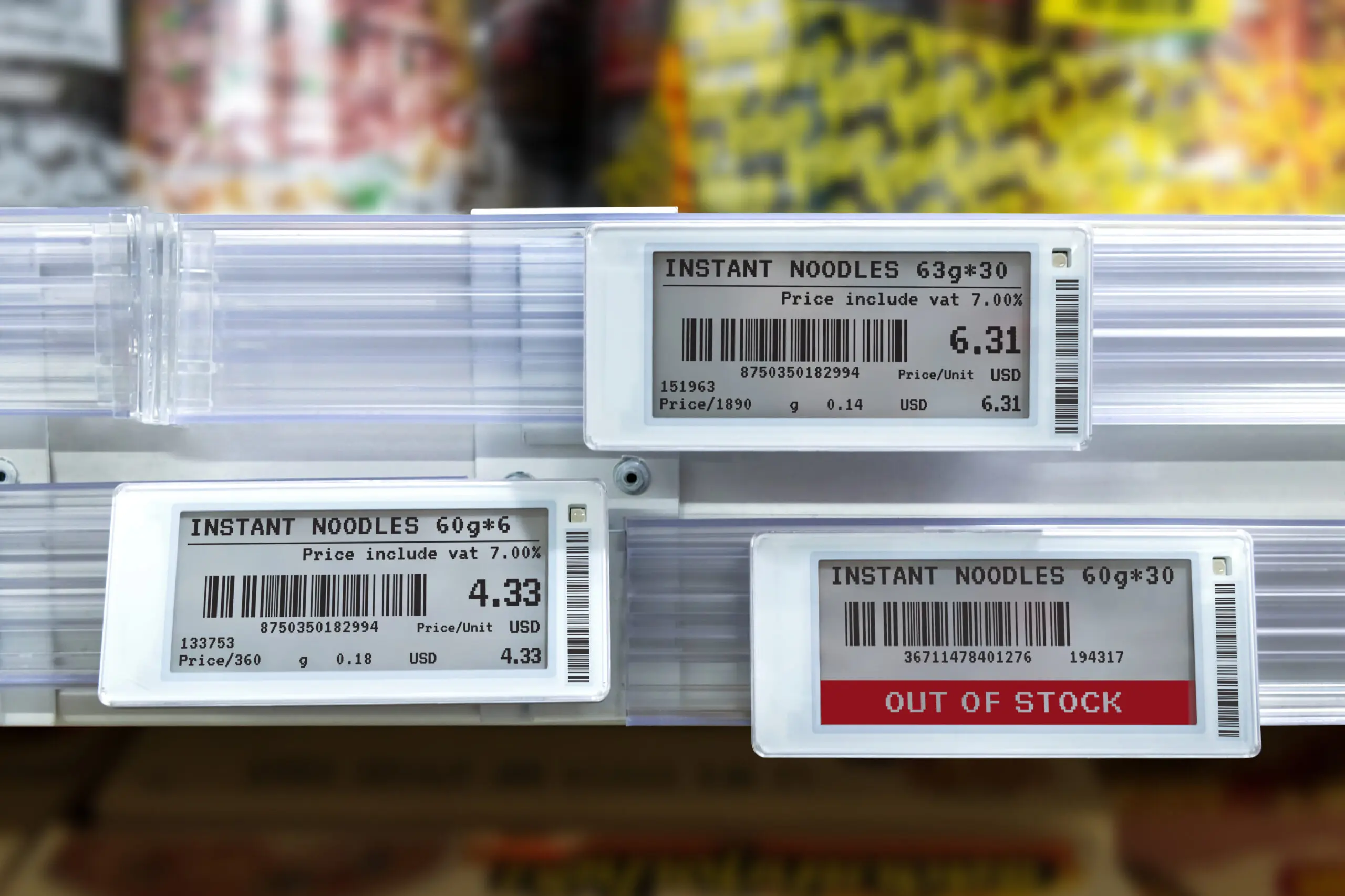
Digital price tags are wireless display devices mounted to the shelf edge. They show pricing, promotions, stock status, and other product information, updating automatically when the store's central pricing system changes - no staff intervention required.
How the Technology Works
Most modern units use e-paper (electronic ink) displays, which only draw power when the image changes. Once a price is set, the screen holds that image without consuming any electricity. This is why most ESL batteries last between five and ten years, even in stores that update prices daily. Some newer models harvest ambient indoor light through small photovoltaic cells, eliminating batteries entirely.
Communication between the store's database and each label happens over a wireless protocol - typically Bluetooth Low Energy (BLE), Sub-GHz RF, or a proprietary system. Each has different trade-offs in range, update speed, and infrastructure cost. For a direct comparison, see this breakdown of Bluetooth vs. Wi-Fi vs. Sub-GHz ESL protocols.
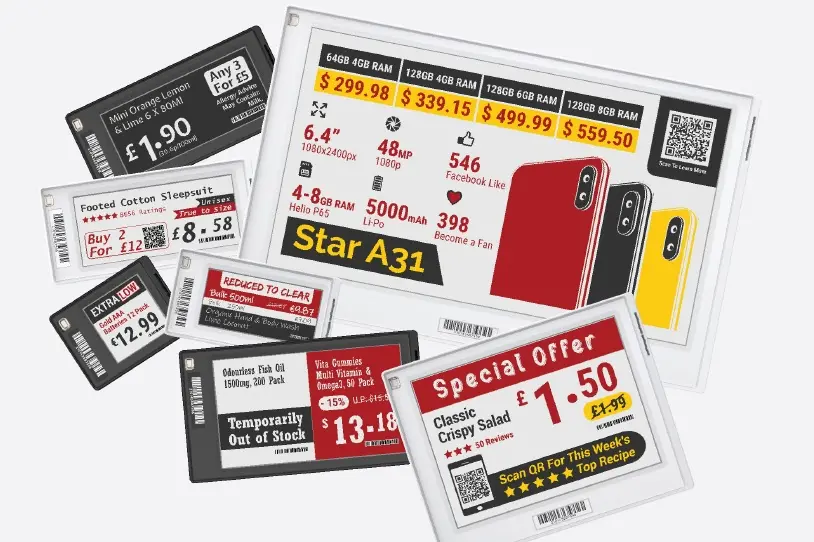
Beyond price, modern ESLs can display promotional countdowns, QR codes, NFC tap-to-learn links, and LED indicators for staff navigation. The hardware has outgrown its original role as a simple price display.
How Digital Price Tags Improve Pricing Accuracy
With paper labels, there is always a gap between when a price changes in the system and when it appears on the shelf. A promotion that goes live in the POS at 8:00 a.m. may not reach the relevant aisle until noon if label crews are running behind. Across hundreds of SKUs and a weekly promotional cycle, price discrepancies between shelf tags and point-of-sale systems accumulate - industry estimates place error rates at 2–5% in traditional paper-label environments.
ESLs close this gap structurally. When a price changes in the central database, the shelf label and the checkout terminal update from the same instruction simultaneously. The shelf-register discrepancy becomes architecturally unlikely rather than something to manage through process discipline.
What the Research Actually Shows
The concern that retailers might use ESLs for demand-based price increases has prompted serious independent scrutiny. A 2025 study by economists from the University of Texas at Austin, UC San Diego, and Northwestern University analyzed pricing data from over 100 U.S. grocery stores before and after ESL adoption and found virtually no surge pricing. The stores actually ran promotional discounts more frequently after deploying ESLs.
The Food Marketing Institute published a fact sheet in April 2026 addressing this directly, noting that ESL hardware does not determine pricing strategy - the business does. The same technology that enables a price increase enables an instant markdown.
The Business Case Beyond Pricing
A Realistic Labor Savings Estimate
The labor math is worth doing specifically for your operation. A reasonable baseline: replacing one paper label takes approximately 60 seconds, including retrieving it, locating the correct shelf position, and confirming placement. A store running 300 price changes per day - common during active promotional periods - spends roughly five staff hours on that task alone. At $17 per hour (a reasonable U.S. retail average), that adds up to approximately $31,000 per year before accounting for label printing and distribution time.
For a more detailed model that accounts for your store's specific update frequency and wage rates, the ESL ROI calculator breaks down each cost variable separately.
Inventory, Sustainability, and Food Waste
ESL systems integrated with inventory sensors can send real-time alerts when specific shelf positions run low, replacing scheduled gap scans with precise, actionable notifications. Retailer case studies cite reductions in daily gap scan time of up to two hours per store.
On sustainability: research from the University of California found that enabling real-time markdowns on perishable items can reduce food waste by up to 21%. When staff can drop the price on near-expiry produce from the back office without walking the floor, fewer items get discarded. For grocery stores with significant perishable turnover, this is often one of the clearest ROI contributors - and one of the most overlooked in initial cost-benefit discussions.
The Concerns Worth Taking Seriously
Surge Pricing: Evidence vs. Fear
The fear is understandable. If a retailer can change prices instantly and algorithmically, what stops them from raising prices during a rush hour, a weather event, or a supply disruption?
Current evidence does not support this happening at scale. The 2025 multi-university study found no meaningful surge pricing pattern in ESL-equipped stores over five years. Walmart's large-scale ESL deployment across more than 2,300 U.S. stores has been accompanied by a public statement that shelf prices do not vary by time of day, demand level, or individual shopper.
The distinction matters: dynamic pricing - adjusting prices based on inventory levels, expiration dates, or competitive conditions - is not the same as surge pricing. The former is how retailers have always managed margins; ESLs just make execution faster and less labor-intensive.
The Stop Price Gouging in Grocery Stores Act
In February 2026, U.S. Senators Ben Ray Luján and Jeff Merkley introduced legislation that would ban ESLs in grocery stores larger than 10,000 square feet, prohibit surveillance pricing based on personal data, and require disclosure of facial recognition technology in stores. A related House bill was introduced in 2025.
As of May 2026, neither bill has passed. ESLs remain legal throughout the United States. Retailers planning large-format grocery deployments should monitor the legislative status, but there is no current legal restriction on the technology.
What Does It Actually Cost?
ESL hardware typically ranges from $5 to $30 per unit depending on display size and features. Total deployment cost - including wireless infrastructure, software licensing, POS and ERP integration, and installation - is the more relevant number for budgeting. For a mid-sized grocery store deploying across 8,000–10,000 label positions, industry-reported project costs typically fall between $80,000 and $200,000, though actual figures vary significantly by vendor and scope. A detailed breakdown of what drives ESL costs can help you build a more accurate estimate before approaching vendors.
A Framework for Calculating Your Return
A straightforward payback estimate uses three inputs:
- Annual labor savings from eliminated manual label changes. Using the estimate above - 300 daily changes at $17/hour - that's roughly $31,000 per year.
- Pricing error reduction. Estimate your current annual cost from checkout discrepancies, customer disputes, and any regulatory exposure from mismatched shelf and register prices.
- Food waste recovery. If perishables are a meaningful category, estimate the value currently lost to disposal that real-time markdowns could recover.
At $100,000 upfront and $40,000 in combined annual savings, payback lands around 2.5 years. Most large-format retailers report actual payback periods of one to three years when all benefit categories are tracked. The most reliable approach is a phased deployment: start with high-frequency departments - produce, electronics, promotional end-caps - measure real results for 90 days, then use those numbers to justify full-store rollout rather than committing the full budget upfront.
Is ESL Right for Your Store?
The ROI case is strongest for stores with more than 1,000–2,000 SKUs, frequent price changes, multi-location operations, or significant perishable categories. For a balanced look at the advantages and disadvantages of electronic shelf labels by store format, that resource covers the trade-offs in practical detail.
For smaller independents with relatively static pricing and limited SKU counts, the payback period extends considerably at current hardware prices. That math will shift as the market scales and unit costs fall - but for now, running the numbers honestly is the right starting point, not vendor presentations.
Deployment Challenges to Anticipate
Most ESL coverage focuses on the benefits. The implementation challenges are equally worth understanding before committing a budget.
Wireless coverage gaps are the most common technical issue, particularly in refrigerated sections and high-shelving zones. Budget for a proper site survey before finalizing gateway placement - this step is frequently skipped and frequently regretted.
POS and ERP integration complexity varies significantly depending on how current your back-office systems are. Legacy setups sometimes require middleware or custom connectors that add both cost and timeline. Ask vendors specifically about integration experience with your system, and request references from customers running the same setup.
Label damage at high-traffic shelf positions - particularly base deck locations where carts and baskets pass frequently - is an ongoing maintenance cost that rarely appears in initial ROI projections. Build in a realistic annual replacement rate when modeling total cost of ownership.
Staff adoption of basic pricing workflows is usually straightforward. More complex features like LED pick-to-light alerts require deliberate training to produce actual returns. For a practical overview of the setup process, see how to install electronic shelf labels. If you encounter update failures after deployment, this troubleshooting guide covers the six most common causes.
Frequently Asked Questions
What is another name for digital price tags?
Electronic shelf labels (ESLs) is the standard industry term. Electronic price tags, digital shelf labels, and smart shelf labels are also used. "E-ink price tags" refers specifically to units using electronic paper displays, which represent the large majority of current deployments.
Do digital price tags allow surge pricing?
The technology enables rapid price changes in both directions. Independent research covering over 100 U.S. stores found no meaningful surge pricing following ESL adoption - stores actually ran promotional discounts more frequently after deploying them. Pricing strategy is a business decision that the hardware itself does not determine.
How much do digital price tags cost?
Individual units range from roughly $5 to $30. Full deployment for a mid-sized grocery store, including infrastructure and software, typically runs $80,000–$200,000. Most large-format retailers recover that investment within one to three years. See this analysis of real ESL costs and who is deploying them for a more granular breakdown.
How long do digital price tag batteries last?
Most e-ink ESL batteries last five to ten years under typical update frequencies. Some newer models use ambient light harvesting and require no replaceable batteries at all.
Are digital price tags legal in the United States?
Yes, as of May 2026. Legislation introduced in early 2026 proposes restrictions for large-format grocery stores, but that bill has not passed. The technology is currently legal nationwide.
What happens when the wireless system goes offline?
E-ink displays retain their last shown image without any power or active connection. Labels continue showing the last price pushed to them - nothing goes blank. Price updates queue and push automatically once connectivity is restored.
The Bottom Line
Digital price tags are no longer experimental. The results from large-scale deployments are documented well enough to evaluate on real numbers. The core value - eliminating the shelf-register gap, cutting manual label labor, enabling instant markdowns on perishables - is consistent across independent sources. The concerns around surge pricing are legitimate to raise, but the evidence, including peer-reviewed research, does not show it happening at scale.
The more useful question isn't whether the technology works. It's whether the math works for your specific operation. Run the ROI framework above with your actual labor costs and daily price change volume. Request detailed quotes from at least two vendors. Ask specifically about integration with your existing POS system and request references from stores that match your format. Then start small, measure honestly, and expand based on what you find - not on what the sales deck promised.