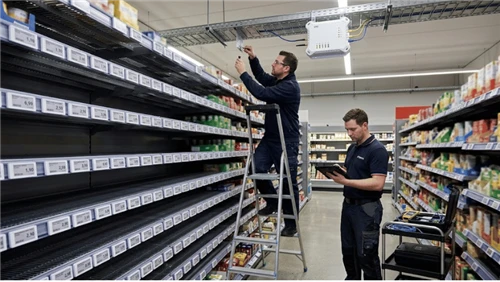
ESL Template Governance for Unit Pricing, Promotions, and Compliance is not a component-selection problem alone. It is a system decision that connects the physical installation, data and software behavior, store or site operations, maintenance access, and acceptance evidence. Projects often appear successful during a short demonstration because the demonstration controls the environment, uses a small device count, and relies on experienced technicians. The operational risk appears later, when the solution is exposed to daily cleaning, product changes, network interruptions, staff turnover, and inconsistent site conditions. Review the relevant Electronic Shelf Label product family before comparing project-specific options.
This guide is written for retail operations, merchandising, legal/compliance, and ESL platform administrators. Its purpose is to turn the broad topic of ESL template management into a reviewable engineering and procurement workflow. The emphasis is a governance-led guide to template ownership, mandatory fields, version control, localization, and approval testing. It does not assume that one product specification, marketing claim, or nominal rating proves suitability. Instead, it shows what to define, what to test, what evidence to retain, and where responsibilities should be assigned before rollout. The wider Electronic Shelf Label System architecture should also be included in the decision.
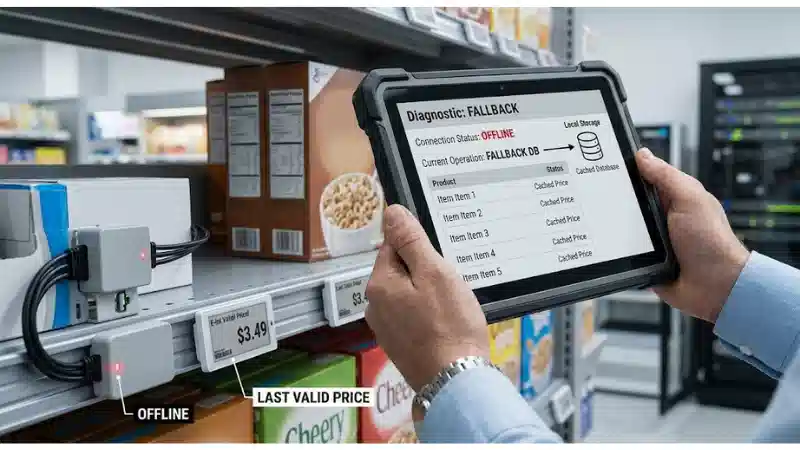
The most useful starting point is to separate three questions. First, can the proposed equipment perform the required function in the actual environment? Second, can the organization operate and maintain it consistently? Third, can the supplier and buyer demonstrate acceptance with objective records? A sound answer to all three is more valuable than a longer feature list.
Executive Decision Framework
A decision on ESL template management should be based on five connected layers: business workflow, physical environment, hardware and interfaces, software and data behavior, and lifecycle support. A weakness in any layer can undermine an otherwise capable product. Use the following table to structure early discussions and to prevent a single attractive feature from dominating the evaluation.
| Decision layer | Questions to resolve | Evidence to request |
|---|---|---|
| Business workflow | What task must be completed, who uses it, and what happens when it is unavailable? | Approved use cases, exception rules, operating owner |
| Site environment | What conditions vary by location, time, cleaning, traffic, temperature, light, or fixture? | Site survey, photographs, measured conditions, difficult-site sample |
| Hardware and interfaces | What physical, electrical, signal, mounting, and peripheral boundaries exist? | Drawings, interface control document, cable and mounting schedule |
| Software and data | Where does information originate, how is it validated, and how does the system recover? | Data flow, version matrix, update and rollback procedure |
| Lifecycle support | How will the fleet be monitored, serviced, stocked, changed, and retired? | SLA, spares plan, service instructions, change-control records |
Key Engineering and Procurement Factors
1. Mandatory Price And Unit-Price Fields
Mandatory price and unit-price fields should be converted into a site-specific requirement rather than left as a general statement. The project team should identify the operating range, normal variation, abnormal events, user behavior, and maintenance actions that affect this factor. For example, a device may meet a nominal specification while still failing at the interface between the device and the fixture, network, content workflow, or service procedure. A requirement is stronger when it names the condition, the expected behavior, the permitted exception, and the method used to verify the result. Compare this requirement with the related Esl Price Tag information on the project website.
A common failure in this area is promotional price shown without qualifying text. That outcome is rarely caused by one isolated component. It can result from an assumption that was not documented, a site condition that was not sampled, a software rule that was not tested, or a service step that was not assigned. During design review, ask the supplier to explain the complete path from normal operation to fault detection, user impact, technician action, and recovery. The answer should identify dependencies and should not rely on phrases such as "standard practice" without project-specific evidence.
Use template defect rate as one practical control measure. Record the baseline during the pilot, define who reviews it, and set an escalation rule before production rollout. The objective is not to collect every possible metric. It is to retain the small set of measures that reveals deterioration early and supports a decision. Where a metric is indirect, document its limitation. Where the measurement depends on a tool or platform, confirm that the buyer can export or retain the evidence after handover.
2. Promotion Hierarchy And Date Logic
Promotion hierarchy and date logic should be converted into a site-specific requirement rather than left as a general statement. The project team should identify the operating range, normal variation, abnormal events, user behavior, and maintenance actions that affect this factor. For example, a device may meet a nominal specification while still failing at the interface between the device and the fixture, network, content workflow, or service procedure. A requirement is stronger when it names the condition, the expected behavior, the permitted exception, and the method used to verify the result. Compare this requirement with the related Digital Price Tag information on the project website.
A common failure in this area is unit price calculated from stale pack size. That outcome is rarely caused by one isolated component. It can result from an assumption that was not documented, a site condition that was not sampled, a software rule that was not tested, or a service step that was not assigned. During design review, ask the supplier to explain the complete path from normal operation to fault detection, user impact, technician action, and recovery. The answer should identify dependencies and should not rely on phrases such as "standard practice" without project-specific evidence.
Use approval lead time as one practical control measure. Record the baseline during the pilot, define who reviews it, and set an escalation rule before production rollout. The objective is not to collect every possible metric. It is to retain the small set of measures that reveals deterioration early and supports a decision. Where a metric is indirect, document its limitation. Where the measurement depends on a tool or platform, confirm that the buyer can export or retain the evidence after handover.
3. Font Size, Contrast, And Information Priority
Font size, contrast, and information priority should be converted into a site-specific requirement rather than left as a general statement. The project team should identify the operating range, normal variation, abnormal events, user behavior, and maintenance actions that affect this factor. For example, a device may meet a nominal specification while still failing at the interface between the device and the fixture, network, content workflow, or service procedure. A requirement is stronger when it names the condition, the expected behavior, the permitted exception, and the method used to verify the result. Compare this requirement with the related Electronic Shelf Label Solutions information on the project website.
A common failure in this area is small labels overloaded with secondary content. That outcome is rarely caused by one isolated component. It can result from an assumption that was not documented, a site condition that was not sampled, a software rule that was not tested, or a service step that was not assigned. During design review, ask the supplier to explain the complete path from normal operation to fault detection, user impact, technician action, and recovery. The answer should identify dependencies and should not rely on phrases such as "standard practice" without project-specific evidence.
Use percentage of labels on approved versions as one practical control measure. Record the baseline during the pilot, define who reviews it, and set an escalation rule before production rollout. The objective is not to collect every possible metric. It is to retain the small set of measures that reveals deterioration early and supports a decision. Where a metric is indirect, document its limitation. Where the measurement depends on a tool or platform, confirm that the buyer can export or retain the evidence after handover.
4. Template Versions By Label Size And Department
Template versions by label size and department should be converted into a site-specific requirement rather than left as a general statement. The project team should identify the operating range, normal variation, abnormal events, user behavior, and maintenance actions that affect this factor. For example, a device may meet a nominal specification while still failing at the interface between the device and the fixture, network, content workflow, or service procedure. A requirement is stronger when it names the condition, the expected behavior, the permitted exception, and the method used to verify the result. Compare this requirement with the related Electronic Shelf Labels For Supermarket information on the project website.
A common failure in this area is uncontrolled local template edits. That outcome is rarely caused by one isolated component. It can result from an assumption that was not documented, a site condition that was not sampled, a software rule that was not tested, or a service step that was not assigned. During design review, ask the supplier to explain the complete path from normal operation to fault detection, user impact, technician action, and recovery. The answer should identify dependencies and should not rely on phrases such as "standard practice" without project-specific evidence.
Use field truncation incidents as one practical control measure. Record the baseline during the pilot, define who reviews it, and set an escalation rule before production rollout. The objective is not to collect every possible metric. It is to retain the small set of measures that reveals deterioration early and supports a decision. Where a metric is indirect, document its limitation. Where the measurement depends on a tool or platform, confirm that the buyer can export or retain the evidence after handover.
5. Local Language And Market-Specific Requirements
Local language and market-specific requirements should be converted into a site-specific requirement rather than left as a general statement. The project team should identify the operating range, normal variation, abnormal events, user behavior, and maintenance actions that affect this factor. For example, a device may meet a nominal specification while still failing at the interface between the device and the fixture, network, content workflow, or service procedure. A requirement is stronger when it names the condition, the expected behavior, the permitted exception, and the method used to verify the result. Compare this requirement with the related Electronic Shelf Labels For Grocery Stores information on the project website.
A common failure in this area is rollback impossible after a faulty release. That outcome is rarely caused by one isolated component. It can result from an assumption that was not documented, a site condition that was not sampled, a software rule that was not tested, or a service step that was not assigned. During design review, ask the supplier to explain the complete path from normal operation to fault detection, user impact, technician action, and recovery. The answer should identify dependencies and should not rely on phrases such as "standard practice" without project-specific evidence.
Use promotion end-date exceptions as one practical control measure. Record the baseline during the pilot, define who reviews it, and set an escalation rule before production rollout. The objective is not to collect every possible metric. It is to retain the small set of measures that reveals deterioration early and supports a decision. Where a metric is indirect, document its limitation. Where the measurement depends on a tool or platform, confirm that the buyer can export or retain the evidence after handover.
6. Approval, Rollback, And Audit Ownership
Approval, rollback, and audit ownership should be converted into a site-specific requirement rather than left as a general statement. The project team should identify the operating range, normal variation, abnormal events, user behavior, and maintenance actions that affect this factor. For example, a device may meet a nominal specification while still failing at the interface between the device and the fixture, network, content workflow, or service procedure. A requirement is stronger when it names the condition, the expected behavior, the permitted exception, and the method used to verify the result. Compare this requirement with the related Electronic Shelf Labels For Pharmacies information on the project website.
A common failure in this area is promotional price shown without qualifying text. That outcome is rarely caused by one isolated component. It can result from an assumption that was not documented, a site condition that was not sampled, a software rule that was not tested, or a service step that was not assigned. During design review, ask the supplier to explain the complete path from normal operation to fault detection, user impact, technician action, and recovery. The answer should identify dependencies and should not rely on phrases such as "standard practice" without project-specific evidence.
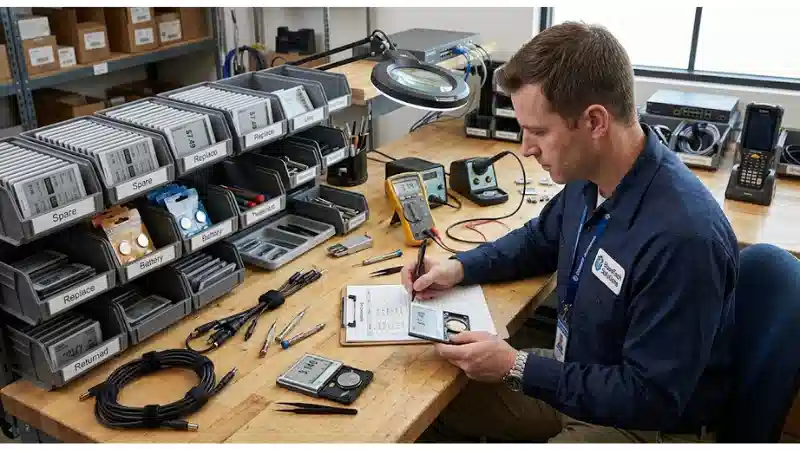
Use template defect rate as one practical control measure. Record the baseline during the pilot, define who reviews it, and set an escalation rule before production rollout. The objective is not to collect every possible metric. It is to retain the small set of measures that reveals deterioration early and supports a decision. Where a metric is indirect, document its limitation. Where the measurement depends on a tool or platform, confirm that the buyer can export or retain the evidence after handover.
Seven-Step Deployment and Acceptance Workflow
The following workflow can be adapted to a pilot, a single-site project, or a multi-location rollout. It is intentionally evidence-led. The sequence reduces the chance that procurement approval occurs before important interfaces and acceptance methods are understood.
Step 1: Define the operational scenario
Document the transaction or display purpose, site types, user groups, hours of operation, environmental variation, and business consequence of failure. For ESL template management, separate mandatory behavior from desirable features. Include exceptional periods such as promotions, seasonal changes, maintenance windows, power recovery, and network outages.
Use the Electronic Shelf Labels For Warehouses page as a related internal reference when preparing this step.
Step 2: Build a site and interface inventory
List fixture types, dimensions, power sources, network paths, software systems, peripherals, and service clearances. Capture photographs and measured dimensions rather than relying on store-format names. Record every interface owner because unresolved boundaries are a frequent source of delays.
Use the Electronic Shelf Labels For Consumer Electronics Stores page as a related internal reference when preparing this step.
Step 3: Create measurable requirements
Rewrite broad requests as conditions and acceptance methods. A requirement should state what is being tested, the operating condition, the expected result, the sample size, and the evidence format. Avoid inserting unverified numerical limits merely to make the specification look precise; obtain limits from the real product documentation and project risk assessment.
Use the Electronic Shelf Label System Components Explained page as a related internal reference when preparing this step.
Step 4: Run a representative pilot
Choose a pilot that includes the difficult sites, not only the easiest flagship location. Test the most demanding content, environment, transaction, mounting, and service cases. Include ordinary staff and field technicians so that the evaluation reflects real operation rather than an engineer-led demonstration.
Use the Electronic Shelf Label Deployment Roadmap From Pilot Store To Chain Wide Rollout page as a related internal reference when preparing this step.
Step 5: Review exceptions and redesign
Classify every issue as a product limitation, integration defect, site condition, process gap, training problem, or requirement ambiguity. Do not hide exceptions inside an average pass rate. Decide whether the solution needs a technical change, a site rule, a spare part, a monitoring alert, or an explicit exclusion.
Step 6: Approve rollout controls
Freeze approved configurations, templates, firmware, software, mounting parts, documentation, and test scripts. Define change control for substitutions and updates. Establish who can approve deviations and how affected sites will be identified.
Step 7: Complete handover and lifecycle planning
Deliver as-built records, configuration exports, serial or asset lists, training materials, troubleshooting trees, spare strategy, escalation contacts, and acceptance evidence. Schedule a post-rollout review using operating data rather than waiting for recurring failures.
Acceptance Test Matrix
Testing should reflect the real risk profile of ESL template management. The table below is a starting structure, not a substitute for model-specific limits. Numerical thresholds should come from approved project requirements, verified manufacturer documentation, applicable standards, and pilot evidence.
| Test area | Method | Evidence | Pass decision |
|---|---|---|---|
| Functional operation | Run normal and exception workflows using production-like data and representative users. | Timestamped results, screenshots or photographs, event logs | All mandatory paths complete; exceptions follow the approved rule |
| Environmental/site condition | Operate at difficult sampled locations and during realistic condition changes. | Site readings, observations, alarms, repeat-test record | No critical failure; limitations are documented and accepted |
| Interface recovery | Interrupt power, signal, network, or dependent service in a controlled test. | Before/after state, recovery time, queued-event result | Returns to a known state without duplication or hidden mismatch |
| Service task | Perform the expected replacement, cleaning, refill, adjustment, or diagnostic procedure. | Task time, tools used, access photographs, technician feedback | Safe, repeatable, and achievable by the defined service role |
| Configuration control | Confirm approved versions, templates, settings, and asset identity. | Configuration export, version list, serial/asset record | Installed state matches the approved baseline |
| Documentation and handover | Use supplied instructions to complete a task without informal expert assistance. | Observed task, document revision, open issue list | Documents are accurate and unresolved issues have owners |
Common Failure Modes and Controls
Failure-mode review is most useful when it is linked to an observable symptom, a likely boundary, a safe immediate action, and a permanent corrective action. The following examples should be expanded with model-specific troubleshooting information during the project.
- Promotional price shown without qualifying text: inspect the requirement for mandatory price and unit-price fields, preserve logs and physical evidence, and review template defect rate. Avoid replacing components until the project team has ruled out configuration, site, and process causes.
- Unit price calculated from stale pack size: inspect the requirement for promotion hierarchy and date logic, preserve logs and physical evidence, and review approval lead time. Avoid replacing components until the project team has ruled out configuration, site, and process causes.
- Small labels overloaded with secondary content: inspect the requirement for font size, contrast, and information priority, preserve logs and physical evidence, and review percentage of labels on approved versions. Avoid replacing components until the project team has ruled out configuration, site, and process causes.
- Uncontrolled local template edits: inspect the requirement for template versions by label size and department, preserve logs and physical evidence, and review field truncation incidents. Avoid replacing components until the project team has ruled out configuration, site, and process causes.
- Rollback impossible after a faulty release: inspect the requirement for local language and market-specific requirements, preserve logs and physical evidence, and review promotion end-date exceptions. Avoid replacing components until the project team has ruled out configuration, site, and process causes.
Supplier and RFQ Questions
- Which exact models and configurations are proposed for ESL template management, and which options are excluded?
- Which performance statements are supported by model-specific documentation or test evidence?
- Which site conditions, interfaces, consumables, and third-party systems are buyer responsibilities?
- How are firmware, software, templates, and hardware revisions controlled after approval?
- What diagnostic data can the buyer access and export without a supplier-only account?
- What happens after power loss, network loss, application failure, or interrupted update?
- Which service tasks can be completed on site, and which require factory return?
- What spare parts are recommended by fleet size, site criticality, and lead time?
- How are substitutions, end-of-life notices, and compatibility changes communicated?
- What is included in FAT, SAT, pilot support, training, warranty, and post-warranty service?
- What evidence will be included in final handover, and in what file formats?
- Which claims, certifications, or standards apply to the complete delivered system versus an individual component?
Documentation Package for Handover
A complete handover package should include approved requirements and deviation log, site survey and installation drawings, interface and cable schedule, asset, serial, and configuration list, software, firmware, template, and settings baseline, FAT, pilot, SAT, and corrective-action records, operating, cleaning, maintenance, and troubleshooting instructions, training attendance and competency records, spare-parts list and escalation contacts, and change-control and end-of-life procedure. The package should be stored where operations and service teams can access it, not only in the project manager's email archive. Assign an owner for updates because outdated documents can create the same operational risk as missing documents.
FAQ
Q: What should be specified first for ESL template management?
A: Start with the operating scenario and failure consequence. Define the sites, users, environment, interfaces, required behavior, and acceptance evidence before choosing a model. A product comparison is meaningful only after the project team agrees on those conditions.
Q: How large should the pilot be?
A: There is no universal device count. The pilot should cover the important variations and failure modes: difficult site geometry, demanding environmental conditions, representative software interfaces, normal staff workflows, and service tasks. A small but representative pilot is more informative than a larger easy-site demonstration.
Q: Should procurement rely on a datasheet?
A: No. A datasheet is necessary, but it does not prove integration, installation quality, maintainability, or site performance. Use it as one input together with interface documents, sample testing, supplier evidence, and project acceptance criteria.
Q: How can buyers avoid unverified claims?
A: Ask for the source of every important claim and distinguish a component certificate from a complete-system result. Use the exact model and configuration in the evidence. Where a value cannot be confirmed, mark it as a supplier response item instead of presenting it as fact.
Q: What records should be retained after acceptance?
A: Keep approved requirements, test scripts, results, photographs, configuration versions, asset lists, exceptions, corrective actions, training records, and final sign-off. These records support troubleshooting and prevent later changes from being mistaken for original defects.
Q: When should a project stop before rollout?
A: Pause when a critical requirement has no test method, an interface owner is missing, repeated pilot failures have no root cause, or the recovery process depends on undocumented expert knowledge. Scaling uncertainty usually multiplies cost rather than resolving it.
Final Recommendation
For ESL template management, select the solution that produces the strongest verified fit across the actual site, interfaces, operating workflow, recovery behavior, and lifecycle support. Do not treat a pilot as a showroom demonstration. Use it to expose difficult conditions, test exception handling, and generate evidence that can be repeated during rollout.
The procurement package should make uncertainty visible. Where a parameter, compatibility statement, certification, or operating limit has not been verified, record it as an open supplier response or test item. This approach protects technical credibility and creates a clearer basis for quotation comparison, acceptance, and long-term service.