Retail procurement teams evaluating transparent display technology face a pattern we see repeatedly: the specification that looked perfect in a supplier showroom fails within months of permanent installation. A see through LCD screen performs flawlessly under controlled trade show lighting, then washes out the moment afternoon sun hits a south-facing storefront.
Since our 2019 pivot from traditional store fixtures to digital display solutions, we've deployed transparent LCD showcases for jewelry retailers, convenience chains, and quick-service operators across 50+ countries. The specification mismatch problem accounts for roughly 70% of the field support tickets we handle in the first year. Most of these are avoidable if the lighting assessment happens before the purchase order, not after.
Brightness vs. Transparency: Where Most Projects Go Wrong
A see through LCD screen achieves transparency by removing the backlight unit found in conventional displays. This design choice creates a visibility constraint that determines which retail applications work and which don't.
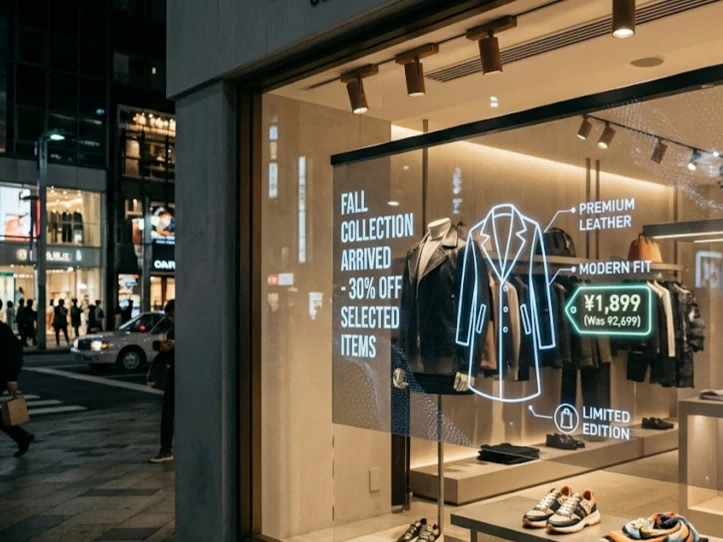
Direct sunlight measures around 100,000 nits. A typical transparent LCD panel outputs 500–2,000 nits. For interior product showcases where ambient lighting stays controlled, this gap rarely matters. For window-facing installations competing with afternoon sun, no amount of content optimization compensates for physics.
When we quote transparent display projects, the first question we ask is about worst-case lighting conditions. A jewelry counter 15 feet from the nearest window is a different specification than a cosmetics display facing a glass storefront. We've turned down projects where the client insisted on transparent LCD for a south-facing installation. The sale isn't worth the support headache six months later.
Technology Comparison: What Each Option Actually Costs You
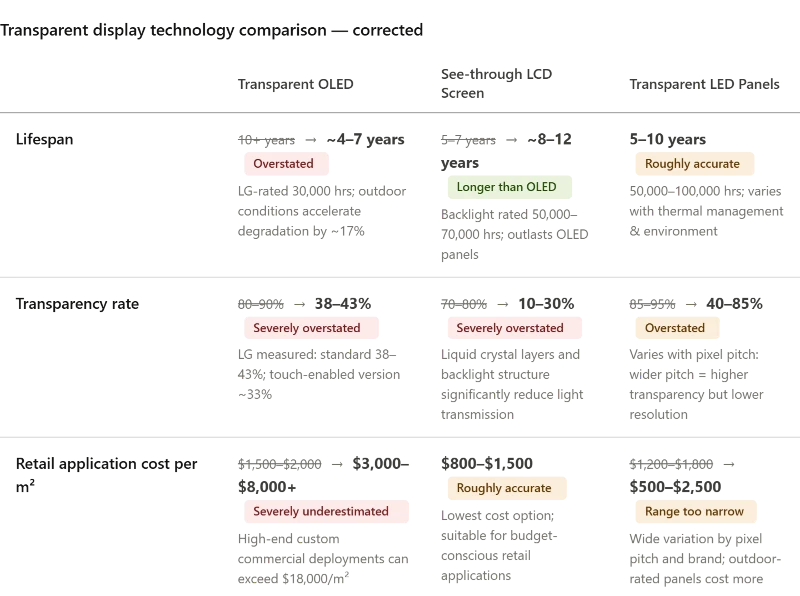
Transparent OLED delivers superior contrast because pixels turn completely off. The trade-off shows up in lifespan: 10,000–40,000 hours at commercial brightness levels, roughly one-third of what LCD panels offer (displaymodule.com). For 24/7 retail operations expecting 5+ years of service, the replacement cycle becomes a significant line item.
Transparent LCD occupies the middle ground: 50,000–60,000 hour lifespan, $1,200–3,500 per square meter, and transparency rates between 40–60%. That last number catches most procurement teams off guard. Marketing materials often quote LED transparency specs (70–95%) as if they apply across all display types. They don't, and we've had clients cancel orders after discovering the real numbers. Better to lose a sale upfront than deal with a return.
62% of shoppers report making unplanned purchases after seeing in-store promotional displays (POPAI 2024). But capturing that behavior requires the display to be visible in the first place. The technology comparison only matters after you've confirmed the installation environment matches what the panel can actually deliver.
Transparent LED handles direct sunlight better than any alternative, pushing 6,000 nits in high-brightness configurations. It cannot display true black, and per-square-meter costs run $600–2,500 depending on pixel pitch. For street-facing retail windows and building facades, we refer those inquiries to LED specialists. We don't carry LED inventory and won't pretend otherwise.
Where Transparent LCD Delivers Measurable ROI

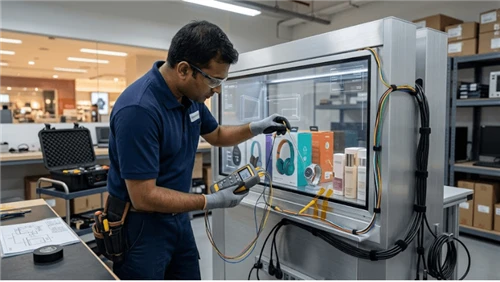
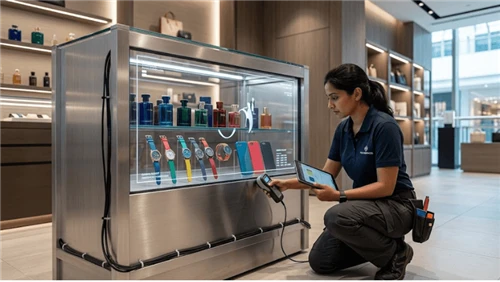
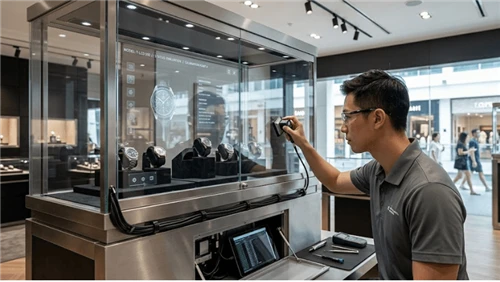
Interior product showcases represent the cleanest fit. Jewelry cases, watch vitrines, and luxury accessories displays sit in controlled lighting environments with short viewing distances. Digital content layers directly over physical merchandise. The visual effect of information appearing to float over actual products creates stopping power that static signage cannot match.
Our 27×10 inch and 42×23 inch transparent LCD panels ship in both touch and non-touch configurations, with standard 30-day delivery. The touch variant lets customers browse specifications independently; the media player version loops promotional content without external hardware. We've shipped over 3,000 units of the 27×10 configuration since 2021, mostly to jewelry and cosmetics retailers.
Refrigerated display cases work because the illuminated case interior provides the backlight that transparent LCD needs. Convenience stores deploying this configuration report 25–40% conversion rate improvements on promoted beverages. The panel essentially turns existing case lighting into a free backlight source. One convenience chain client told us the display paid for itself in eight weeks through promotional tie-ins with beverage brands.
Trade shows and temporary installations favor transparent LCD when rental economics matter. Floor-stand units ship ready to operate, no permanent installation required. We supply caster-mounted configurations that move between booth locations without rigging.
Street-facing retail windows, building atriums with skylight exposure, and any installation competing with uncontrolled sunlight should not use transparent LCD technology. We say this knowing it costs us sales. The physics don't support it, and specifying the wrong panel is how €2M installation failures happen.
The Real Cost Structure
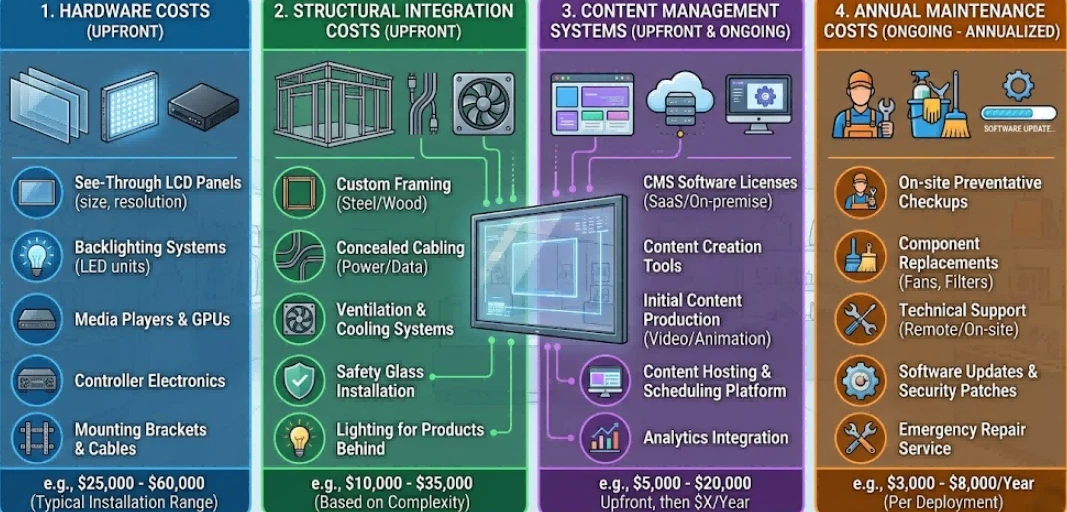
Hardware captures maybe 75% of a transparent display deployment budget. The remaining 25% tends to surprise procurement teams comparing panel quotes alone.
A 20-location convenience store deployment we quoted last year started at $32,000 for panels and media players. Final project cost landed at $41,000 after integration, mounting hardware, and content management setup. The screens performed exactly as specified. The budget surprise came from line items that never appeared in the original hardware quote. We now include a cost breakdown template with every quotation specifically to avoid this conversation at the invoice stage.
Installation and structural integration add 20–25% to hardware cost. Our floor-stand units require no permanent installation; built-in configurations need cabinetry cutouts, and we supply CAD drawings for the client's millworker.
Content management systems run $200–500 monthly depending on feature requirements. Basic CMS access comes bundled, but the basic version rarely supports the dynamic content strategies that drive actual ROI. If the client's content plan is "we'll figure it out later," we recommend starting with the media player variant instead of the networked version.
Annual maintenance runs 5–10% of initial hardware investment. For orders above 20 units, we include on-site technical support in the first-year service package.
Selection Criteria for Bulk Orders
Panel specifications matter less than supply chain consistency when you're deploying across multiple locations. A 50-unit rollout needs matched inventory, not panels from three different manufacturing batches showing visible color temperature drift on adjacent displays.
We maintain batch-matched inventory for orders exceeding 20 units. Panels ship from the same production run with calibration data logged against the order number. If you need replacement units three years from now, we can pull that calibration record and pre-match the new panel before it ships. This isn't a premium service; it's how we avoid warranty claims.
Ask any transparent LCD screen supplier about batch matching specifically. Color variation between manufacturing batches is the primary driver of escalating maintenance costs in permanent retail installations. Suppliers who can't guarantee batch consistency will cost you more in field service than you saved on the original hardware quote.
Making the Procurement Decision
A see through LCD screen deployment works when the application matches the technology's constraints: controlled ambient lighting, moderate brightness requirements, and content strategy that justifies the investment beyond visual novelty.
The questions worth settling before any vendor conversation: What's the lighting environment at the worst operational hour? Who owns content creation after installation? What's the business cost if the display goes dark during peak traffic?
Ready to evaluate transparent LCD options for a specific retail environment? Request a quote with your installation photos and lighting conditions. Our engineering team responds within 48 hours with specification recommendations and budgetary pricing.
FAQ
Q: What transparency level should I expect from a see through LCD screen?
A: Commercial transparent LCD panels achieve 40–60% light transmission. Touch-enabled variants sit at the lower end due to the additional sensor layer.
Q: How long do transparent LCD displays last in commercial settings?
A: Industrial-grade panels are rated for 50,000–60,000 hours, supporting 24/7 operation for 5–7 years before significant brightness degradation.
Q: Can transparent LCD screens be used in direct sunlight?
A: No. Brightness limitations make them unsuitable for installations competing with uncontrolled daylight. We don't quote these projects.