This topic initially appeared to be mostly a Walmart story. Walmart is a good starting point, as it is likely the most well-known case.
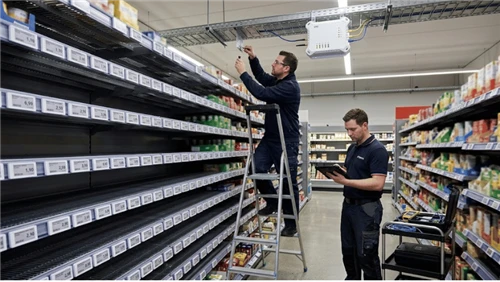
Walmart announced in 2024 that they're rolling out electronic shelf labels to a couple thousand stores by 2026. After a pilot in Texas, they decided to go big. What does Walmart use this system for? Two things: First, employees change prices through a mobile app-a task that used to take two days now takes just minutes. Second, the labels flash lights to help employees quickly locate items that need restocking or picking. For a supermarket managing tens of thousands of SKUs, this represents real money in efficiency gains.
However, Europe has been doing this for decades. Metro in Germany got into this game back in the mid-90s-possibly 1995, though this is not fully confirmed-when some Swedish company won the contract for their Cash & Carry stores. Nearly 30 years earlier than what many people think of as "new technology."
So when American politicians started freaking out about "surge pricing" last summer, Europeans have had these things forever and nobody's rioting in the streets over bread prices.
More on that controversy later. First, more on who's actually using these things.
United States Retailers
Kroger started testing sometime around 2018, maybe a bit earlier, and has expanded to a few hundred stores now. Their system has some fancy name-EDGE something, which stands for Enhanced Display for Grocery Environment-and besides displaying prices, can show nutritional information, personalized ads, and coupons. Their CEO at the time said something grand about building a seamless ecosystem powered by data. Notable about Kroger was their response to "surge pricing" concerns-"To be clear, Kroger has never used surge pricing." That's a strong statement, and why this controversy is essentially a non-issue will be expanded on later.
Amazon Fresh and Whole Foods have them too, of course. Amazon wants to try every in-store technology-electronic shelf labels create synergy with their Just Walk Out checkout-free system. Kohl's was even earlier, using them since around 2015 or so, making them one of the earlier adopters in the U.S. Target has also started deploying, though their usage is a bit different-they mainly use electronic shelf label software to pre-input store layouts and shelf sequences, more like a shelf management tool.
Europe
The European market contains cases that make the American deployments look almost modest.
Germany
Germany is probably the most aggressive. The Aldi brothers are doing something very German right now-running a formal bake-off with multiple suppliers simultaneously. At least three or four vendors are competing, including that Korean company and the French one. Classic move: why pick one vendor when you can make them compete? Aldi Süd has equipped maybe a hundred-something stores so far, but they're clearly in no rush to commit. Meanwhile there's another German chain-Kaufland-rolling out to produce sections first, and Lidl went all-in with one of the big European suppliers.
But the most honest take comes from dm, the drugstore chain. Their IT guy just said it straight-something about how recouping the substantial investment remains difficult, which is why they continue to test. Makes sense when you think about it-dm uses fixed pricing, so what exactly are they speeding up? Not every retailer needs this.
France
France has a bit of a home advantage here-one of the world's largest electronic shelf label suppliers is headquartered there. There's a Carrefour case worth noting: some concept store in Paris installed thousands of labels in one go, combining urban design, organic food, and local services all together. Europeans really are more sophisticated than Americans when it comes to retail concepts.
Netherlands
Speaking of sophisticated-Albert Heijn in the Netherlands has come up with something genuinely new. Starting in 2023, they tested AI-driven "dynamic discounts": products automatically reduce in price based on expiration date-the closer to expiration, the steeper the discount. The algorithm considers location, promotions, weather, historical sales, and inventory. Someone from their sustainability team said something like, supermarkets throw away massive amounts of products every day, and they think that's too much. If this actually puts a dent in food waste, that alone justifies the technology.
United Kingdom
Good data on the UK is difficult to obtain. Scattered deployments, nothing systematic.
Norway
Norway deserves a separate mention though. One of the big grocery co-ops there has actual data showing customer satisfaction increased after installing electronic shelf labels, because shoppers liked the clearer product information and allergen details. Unexpected-these labels were assumed to be purely an operations play, but apparently customers actually notice and care. Norwegian shoppers are already used to grocery prices changing frequently.
But in August 2024, big news came out of Norway: their competition authority slapped a massive fine on several major grocery chains for illegally sharing pricing information. Although it involved human "price hunters" rather than electronic shelf labels themselves, this case sounded an alarm for the entire industry-if pricing transparency technology is misused, there are antitrust risks.
Asia
What's happening in Asia is a completely different story.
Japan
Japan is probably the most interesting case. The government actually set a hard deadline: convenience stores must achieve full RFID or electronic shelf label coverage by 2025. So the big chains-7-Eleven, FamilyMart-aren't really choosing to adopt, they're being pushed. Whether they'll hit that target is another question, but the mandate exists.
China and Korea
The research into China and Korea was not as deep as it probably should have been. What is known is that they're not just adopting-they're manufacturing. There's at least one major Chinese supplier and one Korean one that have become serious global players. Their names pop up in random partnerships constantly. The Korean angle is interesting because their consumers are already so comfortable with mobile payments that NFC-enabled labels feel natural there. But there's likely a lot more happening in these markets that is not captured here.
Other Markets
Canada
A few of the big chains started major rollouts recently, and Sobeys was one of them. Not much else to say about Canada. It's happening, it's big, but nothing particularly creative.
Australia
Adoption is climbing fast in Australia. But no particularly creative implementations have emerged there yet.
Small Retailers
There's also a small case worth noting: some grocery store in Brooklyn, New York. The owner said something like, the first Friday morning after installing the electronic shelf labels, he walked into the store and the promotional prices were already all in effect when they opened-that's when he knew it was the right decision. Sometimes the perspective of a small store is more real than big company press releases.
Sweden
Sweden is one of the birthplaces of the technology-there's a company there that started in the 1990s and claims to be one of the first to introduce electronic shelf labels to stores.
The "Surge Pricing" Controversy
In August 2024, U.S. Senators Elizabeth Warren and Bob Casey wrote a letter warning Kroger that electronic shelf labels could allow grocery stores to implement "dynamic pricing," with prices surging based on time and weather to "extract maximum profit." Some New York politician followed up with criticism, comparing it to Uber's surge pricing mechanism.
Is this concern valid?
Researchers from a couple of business schools-one was UC San Diego-analyzed data from a large retailer's stores across several states. The conclusion: price change patterns before and after using electronic shelf labels were almost completely identical. "If digital labels caused surge pricing, you'd expect to see a clear spike in price changes... but we didn't see any meaningful difference before and after installation."
Why won't grocery stores price like Uber? The researchers' explanation is straightforward: "Unlike Uber or hotels, grocery stores don't make money on individual items-they make money on your entire basket and long-term loyalty. Grocery stores have thin margins on individual items, and unexpectedly raising prices, even on just one item, risks alienating shoppers and sending them to competitors."
Another researcher put it more bluntly: "The idea that stores would optimize prices on individual products just to squeeze an extra 50 cents out of customers-that's simply unbelievable."
So what are electronic shelf labels actually doing? Discounting near-expiration products (estimates suggest dynamic pricing on perishables can reduce food waste by something like 20%, though the solidity of that number is uncertain), improving label-changing efficiency, reducing pricing errors (minimizing discrepancies between shelf prices and scanner prices), and better inventory management. Not so evil after all.
Why Haven't Many Stores Adopted Yet?
The obvious answer is cost, but it's actually messier than that.
The labels themselves run maybe $15-25 each-different numbers from different sources-which sounds fine until the math is done on a store with ten thousand SKUs. But that's not even the real issue. It's all the stuff around it. Someone who worked on a pilot program said the POS integration alone took months longer than anyone expected. Legacy systems, data formatting issues, the usual nightmare. And then there's still the need for gateways, staff training, and half the time the vendor's support is in a different time zone.
But here's the key question: does any given store actually need this? As mentioned earlier with dm-German drugstore, fixed prices-why would they rush to install technology that speeds up price changes they don't make? Similar logic has come from a regional grocery chain in the Midwest that decided to hold off. Their pricing guy basically said they change prices once a week, maybe twice during holidays, they're not Walmart. The ROI calculation only works if frequent updates are happening.
There's also a labor angle that people don't talk about much, and it's not fully understood. In some markets-parts of Southeast Asia, maybe India, parts of Africa-labor is just cheap enough that the automation argument falls apart. Why spend six figures on technology when people can be paid to swap paper tags? Good data on where exactly that tipping point is doesn't exist. Probably varies a lot by country, by city even.
And then there's this technical fragmentation issue that came up in reading about different suppliers. The protocols aren't standardized. Some use RF, some use NFC, there's still infrared floating around somewhere. So if a retailer is operating in multiple regions-hypermarkets in one country, convenience stores in another-they might end up with completely different systems that don't talk to each other. That's likely a factor for some of the bigger global players, though no one would confirm it on the record.