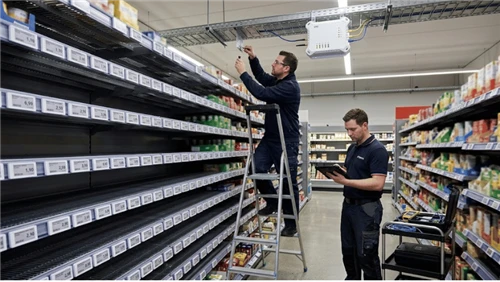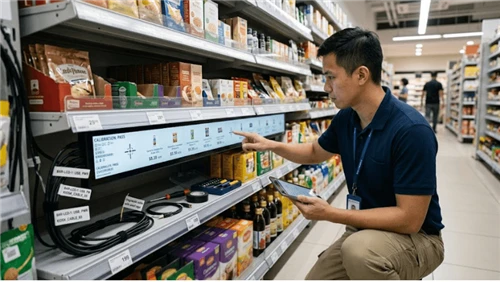
Multilingual Electronic Shelf Labels: Template Design for Bilingual and Multi-Currency Stores is not a question that can be answered by one brochure value. For international retailers, localization teams, merchandising leaders, ESL administrators, and system integrators, the real decision is how to localize shelf content without shrinking critical information, breaking product mapping, or creating ungoverned store-specific templates. A reliable project therefore starts with the operating task, records the installed conditions, and converts every important claim into evidence that can be reviewed before rollout.
This guide uses a data-and-template governance method covering language priority, scripts, currencies, dates, units, fallback behavior, and local approval. It does not assume that a particular product, architecture, certification, return, or performance level applies to every project. Published specifications should be tied to the exact model and configuration, while legal, safety, accessibility, payment, and cybersecurity obligations should be reviewed by qualified parties for the relevant market.

The recommended output is a decision package: scope, requirements, drawings or data maps, test method, expected result, captured evidence, defect ownership, recovery procedure, and the conditions that require retesting. That package gives procurement, engineering, content, operations, and suppliers a common basis for approval instead of relying on subjective impressions.
Define the design job
For multilingual electronic shelf labels, this stage should produce a reviewable output rather than an informal agreement. The team should connect the requirement to the intended user, operating condition, owner, and acceptance evidence.
Define the language use case
This requirement should be decided before hardware is ordered. Define the language use case. This matters because a shelf can show stale, unreadable, or incorrectly mapped information even when the device itself appears online. The project should separate permanent bilingual display, user-selected language, staff-only language, and rotating content, and retain the most relevant parts of update logs, endpoint acknowledgments, binding records, shelf audits, exception queues, and signed test results as evidence. For a project team, this changes the decision: test the requirement under store format, shopper profile, and label capability, name the owner who accepts or escalates exceptions, and state whether the conclusion applies only to the tested configuration. Supplier documentation can define a starting boundary, but local validation is still required.
Teams that need the broader product context can review the electronic shelf label solutions before locking this requirement.
Prioritize required information by language
This is a system question rather than a single-component feature. Prioritize required information by language. This matters because a shelf can show stale, unreadable, or incorrectly mapped information even when the device itself appears online. The project should decide which fields must appear in every language and which can move to a secondary screen or QR destination, and retain the most relevant parts of update logs, endpoint acknowledgments, binding records, shelf audits, exception queues, and signed test results as evidence. In a pilot, the difference becomes obvious: test the requirement under small label formats and long translations, name the owner who accepts or escalates exceptions, and state whether the conclusion applies only to the tested configuration. Supplier documentation can define a starting boundary, but local validation is still required.
Keep product identity unambiguous
The specification only becomes useful when it is tied to a real operating condition. Keep product identity unambiguous. This matters because a shelf can show stale, unreadable, or incorrectly mapped information even when the device itself appears online. The project should preserve SKU, barcode, brand, variant, size, and unit information across localized names, and retain the most relevant parts of update logs, endpoint acknowledgments, binding records, shelf audits, exception queues, and signed test results as evidence. Operations should translate the requirement into a repeatable check: test the requirement under similar products and multilingual catalogs, name the owner who accepts or escalates exceptions, and state whether the conclusion applies only to the tested configuration. Supplier documentation can define a starting boundary, but local validation is still required.
This checkpoint should be read alongside the site's guidance on electronic shelf label product range, because adjacent decisions can change the result.
Translate the job into measurable requirements
For multilingual electronic shelf labels, this stage should produce a reviewable output rather than an informal agreement. The team should connect the requirement to the intended user, operating condition, owner, and acceptance evidence.
Verify character and font support
A strong design separates the intended outcome from the method used to achieve it. Verify character and font support. This matters because a shelf can show stale, unreadable, or incorrectly mapped information even when the device itself appears online. The project should test every required script, punctuation mark, currency symbol, accented character, and fallback glyph, and retain the most relevant parts of update logs, endpoint acknowledgments, binding records, shelf audits, exception queues, and signed test results as evidence. For a project team, this changes the decision: test the requirement under actual device firmware and rendering engine, name the owner who accepts or escalates exceptions, and state whether the conclusion applies only to the tested configuration. Supplier documentation can define a starting boundary, but local validation is still required.
For related implementation context, use the retail electronic shelf labels resource as a starting point and verify the local configuration.
Control line breaking and text expansion
The most common mistake is to approve the visible result without testing the process behind it. Control line breaking and text expansion. This matters because a shelf can show stale, unreadable, or incorrectly mapped information even when the device itself appears online. The project should design for translated strings that are longer or use different word boundaries, and retain the most relevant parts of update logs, endpoint acknowledgments, binding records, shelf audits, exception queues, and signed test results as evidence. In a pilot, the difference becomes obvious: test the requirement under German, French, Arabic, CJK, and mixed-script records, name the owner who accepts or escalates exceptions, and state whether the conclusion applies only to the tested configuration. Supplier documentation can define a starting boundary, but local validation is still required.
Handle bidirectional text deliberately
The buyer should define both the supported condition and the condition that triggers redesign. Handle bidirectional text deliberately. This matters because a shelf can show stale, unreadable, or incorrectly mapped information even when the device itself appears online. The project should test field order, numbers, punctuation, icons, and mixed Latin/right-to-left content, and retain the most relevant parts of update logs, endpoint acknowledgments, binding records, shelf audits, exception queues, and signed test results as evidence. Operations should translate the requirement into a repeatable check: test the requirement under Arabic or Hebrew alongside SKU and price fields, name the owner who accepts or escalates exceptions, and state whether the conclusion applies only to the tested configuration. Supplier documentation can define a starting boundary, but local validation is still required.
The next linked decision is covered in electronic shelf label technology; keep the boundaries separate so one article does not substitute for a project test.
Multilingual Electronic Shelf Labels Decision Table
The table below turns the topic into a compact review structure. Add project-specific limits, test tools, owners, and approval signatures before using it as an acceptance record.
| Localization element | Decision | Test |
|---|---|---|
| Language priority | Which fields appear in each language | Readability review on smallest label |
| Character support | Required scripts and symbols | Device render test |
| Numbers and currency | Locale-specific formatting rule | Shelf/POS comparison |
| Fallback | Behavior for missing translation | Forced missing-field scenario |
| Approval | Central and local responsibility | Version and sign-off audit |
Build the content or physical design
For multilingual electronic shelf labels, this stage should produce a reviewable output rather than an informal agreement. The team should connect the requirement to the intended user, operating condition, owner, and acceptance evidence.
Localize numbers, dates, units, and currency
This requirement should be decided before hardware is ordered. Localize numbers, dates, units, and currency. This matters because a shelf can show stale, unreadable, or incorrectly mapped information even when the device itself appears online. The project should define decimal separators, grouping, symbol position, tax presentation, unit price, and effective dates, and retain the most relevant parts of update logs, endpoint acknowledgments, binding records, shelf audits, exception queues, and signed test results as evidence. For a project team, this changes the decision: test the requirement under each market and store configuration, name the owner who accepts or escalates exceptions, and state whether the conclusion applies only to the tested configuration. Supplier documentation can define a starting boundary, but local validation is still required.
Teams that need the broader product context can review the electronic shelf edge labels before locking this requirement.
Separate translation from price authority
This is a system question rather than a single-component feature. Separate translation from price authority. This matters because a shelf can show stale, unreadable, or incorrectly mapped information even when the device itself appears online. The project should prevent localization edits from changing numeric price values, product identifiers, or promotion logic, and retain the most relevant parts of update logs, endpoint acknowledgments, binding records, shelf audits, exception queues, and signed test results as evidence. In a pilot, the difference becomes obvious: test the requirement under central translation workflows and local review, name the owner who accepts or escalates exceptions, and state whether the conclusion applies only to the tested configuration. Supplier documentation can define a starting boundary, but local validation is still required.
Create missing-translation fallback rules
The specification only becomes useful when it is tied to a real operating condition. Create missing-translation fallback rules. This matters because a shelf can show stale, unreadable, or incorrectly mapped information even when the device itself appears online. The project should decide whether to use a default language, approved abbreviation, secondary screen, or exception queue, and retain the most relevant parts of update logs, endpoint acknowledgments, binding records, shelf audits, exception queues, and signed test results as evidence. Operations should translate the requirement into a repeatable check: test the requirement under incomplete catalogs and urgent promotions, name the owner who accepts or escalates exceptions, and state whether the conclusion applies only to the tested configuration. Supplier documentation can define a starting boundary, but local validation is still required.
This checkpoint should be read alongside the site's guidance on electronic shelf labels in grocery stores, because adjacent decisions can change the result.
Prototype under realistic conditions
For multilingual electronic shelf labels, this stage should produce a reviewable output rather than an informal agreement. The team should connect the requirement to the intended user, operating condition, owner, and acceptance evidence.
Build a limited template family
A strong design separates the intended outcome from the method used to achieve it. Build a limited template family. This matters because a shelf can show stale, unreadable, or incorrectly mapped information even when the device itself appears online. The project should standardize layouts by label size, script direction, department, and promotion type, and retain the most relevant parts of update logs, endpoint acknowledgments, binding records, shelf audits, exception queues, and signed test results as evidence. For a project team, this changes the decision: test the requirement under multi-country deployment without uncontrolled variants, name the owner who accepts or escalates exceptions, and state whether the conclusion applies only to the tested configuration. Supplier documentation can define a starting boundary, but local validation is still required.
For related implementation context, use the how electronic shelf labels work resource as a starting point and verify the local configuration.
Use preview data that exposes edge cases
The most common mistake is to approve the visible result without testing the process behind it. Use preview data that exposes edge cases. This matters because a shelf can show stale, unreadable, or incorrectly mapped information even when the device itself appears online. The project should test longest names, multiple currencies, loyalty conditions, unit prices, and scripts together, and retain the most relevant parts of update logs, endpoint acknowledgments, binding records, shelf audits, exception queues, and signed test results as evidence. In a pilot, the difference becomes obvious: test the requirement under worst-case records rather than ideal examples, name the owner who accepts or escalates exceptions, and state whether the conclusion applies only to the tested configuration. Supplier documentation can define a starting boundary, but local validation is still required.
Version localized content assets
The buyer should define both the supported condition and the condition that triggers redesign. Version localized content assets. This matters because a shelf can show stale, unreadable, or incorrectly mapped information even when the device itself appears online. The project should record source text, translation status, approver, template version, and deployment scope, and retain the most relevant parts of update logs, endpoint acknowledgments, binding records, shelf audits, exception queues, and signed test results as evidence. Operations should translate the requirement into a repeatable check: test the requirement under campaigns and frequent price events, name the owner who accepts or escalates exceptions, and state whether the conclusion applies only to the tested configuration. Supplier documentation can define a starting boundary, but local validation is still required.
The next linked decision is covered in ESL refresh rates and display performance; keep the boundaries separate so one article does not substitute for a project test.
Validate readability and usability
For multilingual electronic shelf labels, this stage should produce a reviewable output rather than an informal agreement. The team should connect the requirement to the intended user, operating condition, owner, and acceptance evidence.

Test with native readers and store staff
This requirement should be decided before hardware is ordered. Test with native readers and store staff. This matters because a shelf can show stale, unreadable, or incorrectly mapped information even when the device itself appears online. The project should confirm wording, order, readability, and operational meaning rather than relying only on machine checks, and retain the most relevant parts of update logs, endpoint acknowledgments, binding records, shelf audits, exception queues, and signed test results as evidence. For a project team, this changes the decision: test the requirement under pilot stores and local market teams, name the owner who accepts or escalates exceptions, and state whether the conclusion applies only to the tested configuration. Supplier documentation can define a starting boundary, but local validation is still required.
Teams that need the broader product context can review the ESL gateway placement before locking this requirement.
Audit field consistency across channels
This is a system question rather than a single-component feature. Audit field consistency across channels. This matters because a shelf can show stale, unreadable, or incorrectly mapped information even when the device itself appears online. The project should compare shelf, POS, receipt, app, and e-commerce representations for critical price conditions, and retain the most relevant parts of update logs, endpoint acknowledgments, binding records, shelf audits, exception queues, and signed test results as evidence. In a pilot, the difference becomes obvious: test the requirement under omnichannel promotions and cross-border assortments, name the owner who accepts or escalates exceptions, and state whether the conclusion applies only to the tested configuration. Supplier documentation can define a starting boundary, but local validation is still required.
Measure localization exceptions
The specification only becomes useful when it is tied to a real operating condition. Measure localization exceptions. This matters because a shelf can show stale, unreadable, or incorrectly mapped information even when the device itself appears online. The project should track missing glyphs, overflow, truncation, untranslated fields, wrong currency, and incorrect direction, and retain the most relevant parts of update logs, endpoint acknowledgments, binding records, shelf audits, exception queues, and signed test results as evidence. Operations should translate the requirement into a repeatable check: test the requirement under every content release, name the owner who accepts or escalates exceptions, and state whether the conclusion applies only to the tested configuration. Supplier documentation can define a starting boundary, but local validation is still required.
This checkpoint should be read alongside the site's guidance on ESL data readiness, because adjacent decisions can change the result.
Control lifecycle changes
For multilingual electronic shelf labels, this stage should produce a reviewable output rather than an informal agreement. The team should connect the requirement to the intended user, operating condition, owner, and acceptance evidence.
Ask suppliers about rendering boundaries
A strong design separates the intended outcome from the method used to achieve it. Ask suppliers about rendering boundaries. This matters because a shelf can show stale, unreadable, or incorrectly mapped information even when the device itself appears online. The project should request supported scripts, fonts, Unicode behavior, bidirectional support, template tools, and preview options, and retain the most relevant parts of update logs, endpoint acknowledgments, binding records, shelf audits, exception queues, and signed test results as evidence. For a project team, this changes the decision: test the requirement under each device family and software release, name the owner who accepts or escalates exceptions, and state whether the conclusion applies only to the tested configuration. Supplier documentation can define a starting boundary, but local validation is still required.
For related implementation context, use the POS and ERP integration resource as a starting point and verify the local configuration.
Define localization ownership in the operating model
The most common mistake is to approve the visible result without testing the process behind it. Define localization ownership in the operating model. This matters because a shelf can show stale, unreadable, or incorrectly mapped information even when the device itself appears online. The project should assign central and local roles for translation, legal review, template approval, and emergency changes, and retain the most relevant parts of update logs, endpoint acknowledgments, binding records, shelf audits, exception queues, and signed test results as evidence. In a pilot, the difference becomes obvious: test the requirement under countries with different compliance needs, name the owner who accepts or escalates exceptions, and state whether the conclusion applies only to the tested configuration. Supplier documentation can define a starting boundary, but local validation is still required.
Include migration and rollback
The buyer should define both the supported condition and the condition that triggers redesign. Include migration and rollback. This matters because a shelf can show stale, unreadable, or incorrectly mapped information even when the device itself appears online. The project should plan how templates and translations move between versions without losing approved prior content, and retain the most relevant parts of update logs, endpoint acknowledgments, binding records, shelf audits, exception queues, and signed test results as evidence. Operations should translate the requirement into a repeatable check: test the requirement under software upgrades and new label models, name the owner who accepts or escalates exceptions, and state whether the conclusion applies only to the tested configuration. Supplier documentation can define a starting boundary, but local validation is still required.
The next linked decision is covered in ESL pilot checklist; keep the boundaries separate so one article does not substitute for a project test.
Implementation Checklist
Use this checklist as a planning aid, then adapt it to the exact product, site, jurisdiction, and service model.
- List every required language and script
- Define field priority for each label size
- Test glyphs and bidirectional text on devices
- Localize currency, dates, decimals, and units
- Create missing-translation fallbacks
- Limit the number of template variants
- Use native-language reviewers
- Track localization defects after release
Common Project Mistakes
- Selecting a solution from a headline specification before defining how to localize shelf content without shrinking critical information, breaking product mapping, or creating ungoverned store-specific templates.
- Testing an open bench sample while ignoring the final fixture, enclosure, content, network, and service environment.
- Accepting a supplier statement without recording the exact model, configuration, assumption, method, and evidence boundary.
- Treating a successful normal-flow demonstration as proof of failure detection, fallback, recovery, and reconciliation.
- Leaving ownership ambiguous across buyer, integrator, software team, store operations, facilities, and service provider.
- Approving rollout without version control, defect closure, training, spares, monitoring, and a retest trigger for future changes.
Questions to Ask Suppliers and Integrators
- Which exact label, gateway, mounting, firmware, and software configuration is being offered?
- Which operating limits and assumptions are documented for the proposed configuration?
- What evidence can be supplied from representative installed conditions rather than a demonstration?
- How are exceptions, failed updates, binding errors, and device replacement identified and closed?
- Which APIs, data fields, security roles, support responsibilities, and change-notification rules apply?
- What is the acceptance test, defect process, warranty boundary, spare strategy, and end-of-support policy?
FAQ
Q: Can ESLs display any language?
A: Only if the complete device and software path supports the required characters, fonts, direction, and rendering behavior. Test the actual label model and firmware with production strings.
Q: Should both languages always appear at once?
A: Not necessarily. Simultaneous display may be appropriate for critical fields, while secondary screens or rotating content may be better for detail. The choice depends on label size, readability, and store requirements.
Q: How should multiple currencies be shown?
A: Define the authoritative price, exchange or dual-price policy, currency symbol, decimal format, tax treatment, and effective time. Do not let template localization create an independent price calculation.
Q: What happens when a translation is missing?
A: Use an approved fallback and create an exception. Silent blank fields or uncontrolled machine translation can create confusion and compliance risk.
Q: Who approves multilingual templates?
A: Use a joint process involving central merchandising or content ownership, local market reviewers, operations, and compliance. The approval record should identify language, template version, and deployment scope.
Conclusion
A defensible multilingual electronic shelf labels decision connects the intended result to the complete installed system, a named operating owner, and evidence from realistic conditions. Start by defining how to localize shelf content without shrinking critical information, breaking product mapping, or creating ungoverned store-specific templates; then document the configuration, run normal and failure tests, close defects, and retain the evidence used for approval. The strongest procurement outcome is not the longest specification. It is a controlled requirement set that suppliers can answer, project teams can test, and operations can sustain after handover.