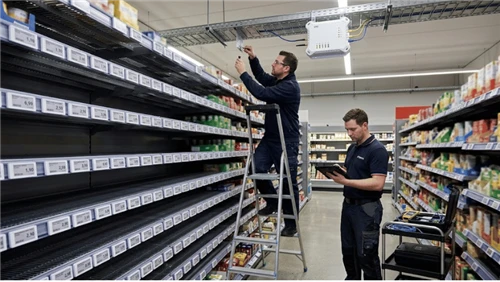
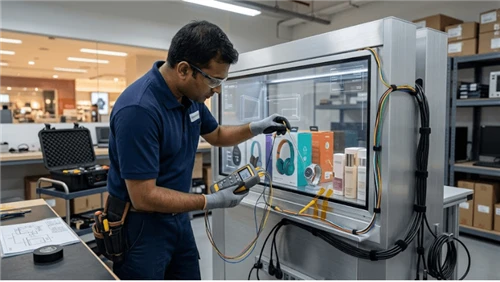
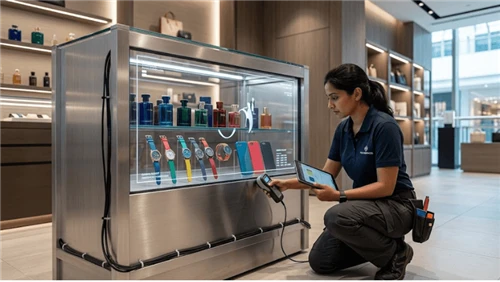
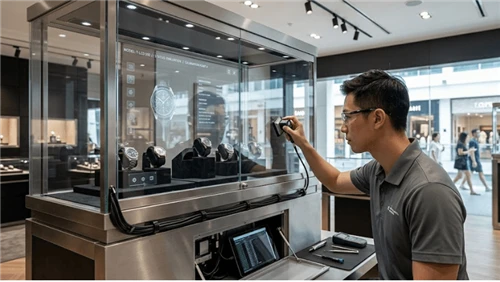
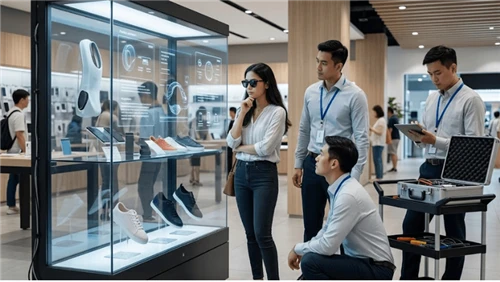
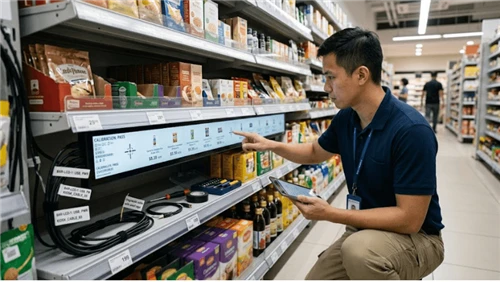
Walmart went with VusionGroup's (formerly SES-imagotag) VUSION series. The system uses E Ink e-paper displays, Bluetooth Low Energy communication, and runs on their proprietary VUSION OS. VusionGroup has been in this space for decades and already works with retailers like Carrefour and Walmart's European competitors, so the partnership wasn't exactly a surprise when it was announced.
So how does it actually work?
Price Updates
Price updates are the most obvious pain point. A single Walmart store has over 100,000 items. Swapping out traditional paper labels used to take forever-employees would print out new tags, grab a cart, and walk the entire store replacing them one by one. During a major sale event or a company-wide price adjustment, this could eat up dozens of labor hours per store. Now the entire process can be completed in minutes, with tens of thousands of labels updating wirelessly at the same time. The store manager pushes a button, and by the time they finish their coffee, every shelf in the building shows the new prices.

Technical Infrastructure

The technical side is what would be expected for Bluetooth implementations. They've got these base stations scattered around the store that talk to all the labels at once. BLE made sense here-doesn't kill the battery, doesn't need much data since you're just sending price changes. The VUSION OS handles all the coordination behind the scenes. There's probably some retry thing happening for labels that don't get the signal the first time. With 100,000 labels some of them are going to be stuck behind a pallet or something.
Display Technology
The screens are basically Kindle screens. E-reader batteries last forever because they only use power when the display actually changes. Works fine under those awful fluorescent lights and you can read them from whatever angle.
LED Locator Feature
There's also a feature where the labels blink. They've got little LEDs on them, and when someone's restocking or picking online orders they can scan a product and the right label starts flashing so they can find it. The LEDs are different colors. Red and green for sure, maybe one more. It apparently helps people find stuff faster instead of wandering around confused, which happens a lot when seasonal items get shuffled around to random endcaps. It improved picking times by like 30% but that was probably from VusionGroup's own marketing so who knows.

Pricing Accuracy

Pricing accuracy matters because a lot of money gets wasted on this. With paper labels, mismatches happen constantly. A product goes on sale but the old tag stays up. A price change gets entered in the system but nobody walks the floor to swap out the label. The customer sees one price on the shelf, gets to checkout, and the register says something different. Now you've got a frustrated customer, an employee doing a price override, maybe a manager getting called over-all for a two dollar discrepancy. Multiply that by thousands of stores and millions of transactions, and the cost of pricing errors becomes substantial. With ESL, the shelf price and the system price are always synced, so that entire category of problems just goes away. At a conference last year, a Walmart VP said ESL "simplified daily activities for store teams." Other executives mentioned operational consistency across stores and reduced pricing errors-which apparently cost retailers more than you'd think.
NFC and QR Code Integration
There's NFC and QR code stuff too. Bring your phone close and it redirects you to product information-nutrition details, ingredient lists, whatever. Whether Walmart actually does personalized coupons through these hasn't been confirmed, but the hardware supports it.
Rollout Plans
Walmart started the rollout in 2024 and announced plans to deploy ESL across approximately 2,300 stores. VusionGroup won this contract over competitors like Pricer and Displaydata. The VUSION platform has been deployed at scale in European retail for years, so Walmart could look at real-world performance data rather than relying on pilot projections.