If you have ever walked into a store and immediately felt comfortable - or immediately wanted to leave - you have experienced the retail environment at work. Most shoppers cannot articulate why one store feels right and another feels off. But the difference is never accidental.
What Is a Retail Environment, Exactly?
A retail environment is the total combination of physical, sensory, and psychological conditions that surround a customer during a shopping experience. It includes the tangible - store layout, lighting, signage, product displays, temperature - and the intangible - background music, scent, staff behavior, and the overall "feeling" of a space.
Think of it this way: the retail environment is not the store itself. It is how the store makes people feel and act. Two identical 2,000-square-foot spaces selling the same products at the same prices can produce wildly different sales numbers depending on how their environments are designed.
This concept is sometimes confused with "store layout" or "visual merchandising," but those are just components. The retail environment is the whole picture - every element working together (or against each other) to shape customer behavior from the moment someone sees the storefront to the moment they walk out.
Types of Retail Environments

Not all retail environments serve the same purpose, and the design approach changes significantly depending on the format.
Department stores operate large, multi-level spaces divided into distinct zones - cosmetics, apparel, electronics, home goods - each with its own micro-environment. The challenge here is coherence: every department needs its own atmosphere without making the store feel fragmented. Increasingly, department stores use digital signage at the shelf edge to visually differentiate zones while keeping pricing and promotions centrally managed.
Specialty and boutique stores focus on a narrow product category. Their environments tend to be more curated and emotionally driven. A well-run boutique makes you feel like you have discovered something - the layout is exploratory, the lighting is warm, and the staff knows your name after two visits.
Grocery and convenience stores prioritize efficiency. Wide aisles, clear category signage, logical product grouping. Nobody wants to wander aimlessly looking for eggs. The environment here is built around reducing friction, not creating ambiance.
Pop-up shops are temporary retail spaces designed to generate buzz and test markets. Their environments are intentionally unusual - a shipping container, a gallery space, a festival tent - because the novelty itself is part of the value proposition.
Online retail environments are worth mentioning because they increasingly influence physical store expectations. Customers who are used to personalized recommendations, one-click purchasing, and instant product information now expect some version of that experience in person. This is pushing physical retailers toward digital integration faster than many anticipated.
Why the Retail Environment Matters More Than Most Retailers Think
Here is a number that should get your attention: PwC's "Future of Customer Experience" survey of 15,000 respondents found that 86% of buyers are willing to pay more for a great customer experience - and will pay up to a 16% price premium to get it. Not a better product. A better experience.
And yet, walk into most mid-market retail stores in 2026, and what do you find? Fluorescent lighting from 2009. A playlist that nobody chose on purpose. Paper price tags with yesterday's prices. Staff standing behind a counter waiting for someone to approach them.
The gap between what customers expect and what most stores deliver is enormous. That gap is also an opportunity. Stores that invest in their environments - thoughtfully, not expensively - consistently outperform competitors in foot traffic, dwell time, and conversion rate.
A quick example: one European grocery chain reported that after redesigning its produce section - better lighting (shifting from cool fluorescent to warm 3000K LEDs), wooden display fixtures instead of metal shelving, and a subtle fresh-citrus ambient scent - produce sales in the remodeled stores increased by 17% over a six-month period. The products did not change. The prices did not change. The environment changed.
The Core Elements That Shape Any Retail Environment
Store Layout and Customer Flow
Layout is the skeleton. Everything else hangs on it. Three models dominate retail design, and each serves a different purpose.
The grid layout - parallel aisles, predictable paths - is the workhorse of grocery stores and pharmacies. It maximizes shelf space and makes navigation simple, though it sacrifices the feeling of discovery.
The free-flow layout removes rigid aisle structures and lets customers wander. Boutiques and lifestyle stores use this because browsing, not efficiency, drives their sales. The risk? Customers can feel disoriented if the space is not carefully curated.
The racetrack layout creates a loop that guides shoppers through the entire store before reaching checkout. Furniture stores and large-format retailers love this model because it maximizes product exposure - but it can frustrate customers who just want one item.
One detail that many retailers overlook: the first 5 to 15 feet inside the entrance is called the decompression zone. Customers entering a store need a moment to adjust - their eyes adapt to new lighting, they register the temperature change, they mentally shift from "walking" to "shopping." Placing promotions or high-value items in this zone is a common and costly mistake. Keep it open. Let people arrive.
Lighting
Lighting is probably the single most underestimated element in retail design. It does three things simultaneously: it creates mood, directs attention, and shapes how products look.
The technical basics matter. For most retail spaces, brightness in the 400 to 700 lux range provides a comfortable balance. Color temperature is where things get interesting - warm light (2700K–3000K) creates intimacy and works beautifully in fashion, bakeries, and home décor. Cool light (4000K–5000K) feels clean and modern, which is why electronics and tech stores lean toward it. Accent lighting - spotlights, track lights, backlit shelves - guides the eye to featured products. Some retailers are now combining illumination with information by using shelf-edge LCD strips that backlight products while simultaneously displaying pricing or promotions.
What most guides will not tell you: bad lighting does not just look bad. It actively drives people away. Research published by the Lighting Research Center at Rensselaer Polytechnic Institute found that color temperature directly influences shopper arousal and dwell time - cooler temperatures increase alertness while warmer tones promote relaxation and longer browsing. A separate Philips Lighting study reported that retailers using dynamic lighting saw a 14% increase in sales compared to those with static lighting. Getting this wrong is not a missed opportunity - it is active damage.
Sound and Scent
These two elements work below conscious awareness, which is exactly what makes them powerful.
According to the Scent Marketing Institute's 2021 report, a scented retail environment can increase perceived product quality by 42% and extend customer dwell time by up to 20%. A 2022 study published in the Journal of Marketing Research went further, finding that retail spaces with a consistent scent signature saw average sales increase by 11%. The keyword in all of this research is "relevant." A bakery that smells like fresh bread is inviting. A shoe store that smells like fresh bread is confusing. The scent needs to make sense within the context of the brand and product.
Music follows similar logic. Slow-tempo tracks encourage lingering. Upbeat music energizes the space during peak hours. Volume between 60 and 70 decibels allows conversation without shouting. Genre should match the brand - classical for luxury, indie acoustic for lifestyle brands, current hits for younger demographics. The most common mistake? Not choosing at all and leaving a random Spotify algorithm in charge.
Touch and Interaction
Physical retail's single greatest advantage over e-commerce is tactile experience. Letting customers handle, try, sample, and test products converts browsers into buyers at rates that no product photo can match. Stores that build try-before-you-buy zones, sampling stations, and hands-on displays consistently report higher conversion and larger basket sizes.
Common Mistakes That Undermine Retail Environments
After working with retailers across different categories, certain patterns come up again and again:
Ignoring the basics while chasing trends. A store with terrible lighting and confusing signage does not need an AR mirror - it needs working fundamentals. Technology should solve problems, not mask them.
Treating the environment as a one-time project. A retail environment is not a renovation you do once. It requires ongoing attention - seasonal updates, playlist changes, lighting adjustments, display refreshes. The stores that feel "alive" are the ones where someone is actively managing the environment week to week.
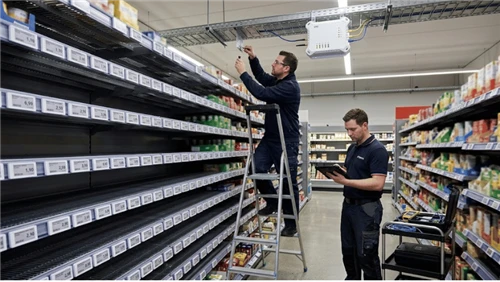
Pricing inconsistencies. This is a surprisingly common and damaging issue. When the price on the shelf does not match the price at the register, trust evaporates instantly. A mid-sized grocery store may need to change hundreds of prices daily. During promotional events, that number multiplies. Manual updates with paper tags are slow, error-prone, and consume employee hours that could be spent on customer service. This is one area where technology makes an immediate, measurable difference - electronic shelf labels allow retailers to update thousands of prices across locations in minutes, eliminating discrepancies and freeing staff for higher-value work.
Underestimating staff impact. No environment design can compensate for disengaged employees. Staff are the living expression of your brand. The best retail environments automate low-value tasks - like manual price changes - so people can focus on what humans do best: connect with customers.
How Technology Is Changing Retail Environments (Without Replacing What Works)
This is where many articles go wrong. They present technology as a silver bullet. It is not. Technology works when it solves a specific operational problem or genuinely improves the customer experience. Used poorly, it just adds expense and complexity.
That said, several technologies are producing real, measurable results in retail environments right now.
Electronic shelf labels (ESLs) have crossed from innovation to industry standard. Walmart's recent large-scale ESL deployment across U.S. stores signals that even the biggest players see this as essential infrastructure, not a luxury. The operational case is straightforward: instant price accuracy, centralized control across locations, support for dynamic pricing strategies, and significant labor savings. For retailers still relying on paper tags, the ROI calculation is not complicated.
Digital shelf-edge displays take things further by turning the shelf edge into active selling space. Instead of a static paper tag, a screen at the shelf edge can rotate promotions, show product videos, or display time-sensitive offers. According to a 2019 Nielsen study on in-store media, digital displays generate significantly higher recall and purchase intent than static signage - and industry reports suggest they can increase purchase amounts at the display location by over 29%.
Self-service kiosks address a different problem: information access and checkout friction. Shoppers who can check inventory, browse extended catalogs, or complete purchases without waiting in line report higher satisfaction. For retailers with large product ranges, interactive kiosk displays extend the selling floor beyond physical shelf limitations.
The throughline across all of these is the same: technology that removes friction and gives customers more control over their experience tends to work. Technology deployed for its own sake - because it looks impressive in a trade show booth - usually does not.

A Practical Example: Before and After
Consider a 300-square-meter electronics retail store that was struggling with declining foot traffic and flat conversion rates despite competitive pricing.
Before: Uniform fluorescent lighting throughout. Paper price tags updated manually by two staff members spending roughly 4 hours daily on pricing alone. No ambient sound design. Products arranged by brand rather than use case. Checkout bottleneck during peak hours.
After redesign: Zone-based lighting - warmer tones in the lifestyle peripherals section, cooler and brighter in the core computing area. Electronic shelf labels replaced paper tags, reclaiming approximately 20 labor hours per week. A curated ambient soundtrack at moderate volume. Products reorganized by use case (home office, gaming, creative work) with cross-merchandised accessories. A self-service kiosk near the entrance for inventory lookup and quick purchases.
Results over six months: Average dwell time increased by roughly 22%. Pricing errors dropped to near zero. Staff, freed from manual pricing tasks, reported more customer interactions per shift. The store did not become a different store - it became a better version of itself.
What Comes Next for Retail Environments
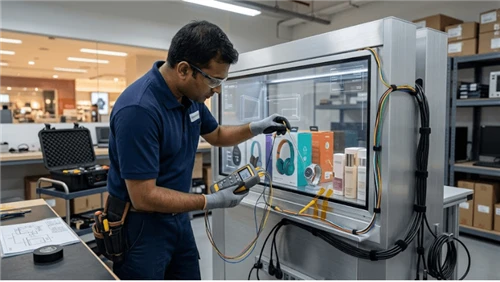
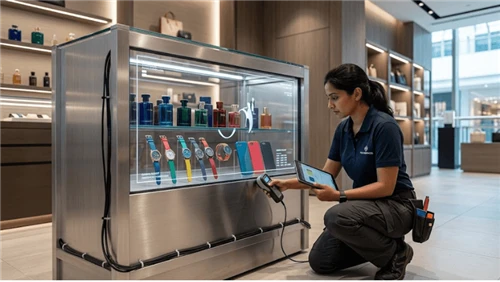
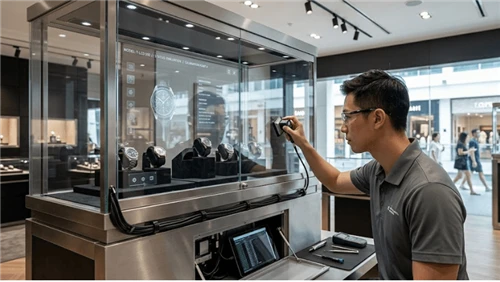
The trajectory is clear: physical retail environments are becoming digitally augmented spaces where real-time data, automated operations, and sensory design work together. Transparent display technology is beginning to overlay digital content onto physical product showcases without requiring customers to use a phone or headset. AI-driven dynamic pricing is enabling price adjustments based on demand patterns, inventory levels, and competitive positioning. Personalization - already standard online - is making its way to the shelf edge.
But the fundamentals will not change. Good layout, good lighting, clean and welcoming spaces, knowledgeable staff, and honest pricing will always be the foundation. Technology amplifies what is already working. It does not fix what is broken.
If you are evaluating how digital display technology fits into your retail environment - whether that means electronic shelf labels, shelf-edge screens, or interactive kiosks - the right starting point is understanding your specific operational pain points and customer experience gaps. From there, the technology choices become much clearer. Reach out to our team if you would like to talk through what that looks like for your store.