Bar LCD Thermal Management: Ventilation, Heat Paths, and Enclosure Design is not a question that can be answered by one brochure value. For fixture engineers, display integrators, retail operations teams, OEM buyers, and maintenance planners, the real decision is how to prevent heat-related instability when a bar LCD is installed inside a shelf, cabinet, fascia, or custom enclosure. A reliable project therefore starts with the operating task, records the installed conditions, and converts every important claim into evidence that can be reviewed before rollout.
This guide uses a heat-path and installed-condition method that connects panel power, player load, enclosure volume, ambient temperature, airflow, dust, service access, and acceptance testing. It does not assume that a particular product, architecture, certification, return, or performance level applies to every project. Published specifications should be tied to the exact model and configuration, while legal, safety, accessibility, payment, and cybersecurity obligations should be reviewed by qualified parties for the relevant market.

The recommended output is a decision package: scope, requirements, drawings or data maps, test method, expected result, captured evidence, defect ownership, recovery procedure, and the conditions that require retesting. That package gives procurement, engineering, content, operations, and suppliers a common basis for approval instead of relying on subjective impressions.
Define the design job
For bar LCD thermal management, this stage should produce a reviewable output rather than an informal agreement. The team should connect the requirement to the intended user, operating condition, owner, and acceptance evidence.
Define the complete heat-source inventory
This requirement should be decided before hardware is ordered. Define the complete heat-source inventory. This matters because a screen can remain powered while content is unreadable, cropped, stale, overheated, or disconnected from the intended workflow. The project should record the panel, backlight, media player, power conversion, interface boards, lighting, and nearby equipment rather than treating the LCD as the only source, and retain the most relevant parts of brightness measurements, thermal logs, content playback records, uptime logs, photographs, and acceptance test results as evidence. For a project team, this changes the decision: test the requirement under maximum brightness, peak processing load, and worst-case ambient temperature, name the owner who accepts or escalates exceptions, and state whether the conclusion applies only to the tested configuration. Supplier documentation can define a starting boundary, but local validation is still required.
Teams that need the broader product context can review the bar-shaped LCD screen solution before locking this requirement.
Set measurable acceptance criteria for the complete heat-source inventory
This is a system question rather than a single-component feature. Set measurable acceptance criteria for the complete heat-source inventory. This matters because a screen can remain powered while content is unreadable, cropped, stale, overheated, or disconnected from the intended workflow. The project should capture component power data, measured input power, and thermal images and compare it with an approved baseline, and retain the most relevant parts of brightness measurements, thermal logs, content playback records, uptime logs, photographs, and acceptance test results as evidence. In a pilot, the difference becomes obvious: test the requirement under a representative pilot, worst-case content, and normal operating hours, name the owner who accepts or escalates exceptions, and state whether the conclusion applies only to the tested configuration. Supplier documentation can define a starting boundary, but local validation is still required.
Assign ownership and an exception path for the complete heat-source inventory
The specification only becomes useful when it is tied to a real operating condition. Assign ownership and an exception path for the complete heat-source inventory. This matters because a screen can remain powered while content is unreadable, cropped, stale, overheated, or disconnected from the intended workflow. The project should record who reviews failures, who authorizes changes, and how the result is retested, and retain the most relevant parts of brightness measurements, thermal logs, content playback records, uptime logs, photographs, and acceptance test results as evidence. Operations should translate the requirement into a repeatable check: test the requirement under handover, store changes, software releases, and supplier substitutions, name the owner who accepts or escalates exceptions, and state whether the conclusion applies only to the tested configuration. Supplier documentation can define a starting boundary, but local validation is still required.
This checkpoint should be read alongside the site's guidance on LCD display screen product range, because adjacent decisions can change the result.
Translate the job into measurable requirements
For bar LCD thermal management, this stage should produce a reviewable output rather than an informal agreement. The team should connect the requirement to the intended user, operating condition, owner, and acceptance evidence.
Define the passive heat path
A strong design separates the intended outcome from the method used to achieve it. Define the passive heat path. This matters because a screen can remain powered while content is unreadable, cropped, stale, overheated, or disconnected from the intended workflow. The project should provide conductive and convective routes from heat sources to a safe exhaust or enclosure surface, and retain the most relevant parts of brightness measurements, thermal logs, content playback records, uptime logs, photographs, and acceptance test results as evidence. For a project team, this changes the decision: test the requirement under horizontal and vertical mounting, sealed cavities, shelf recesses, and wall contact, name the owner who accepts or escalates exceptions, and state whether the conclusion applies only to the tested configuration. Supplier documentation can define a starting boundary, but local validation is still required.
For related implementation context, use the 28-inch bar display resource as a starting point and verify the local configuration.
Set measurable acceptance criteria for the passive heat path
The most common mistake is to approve the visible result without testing the process behind it. Set measurable acceptance criteria for the passive heat path. This matters because a screen can remain powered while content is unreadable, cropped, stale, overheated, or disconnected from the intended workflow. The project should capture mechanical drawings, surface-temperature readings, and airflow visualization and compare it with an approved baseline, and retain the most relevant parts of brightness measurements, thermal logs, content playback records, uptime logs, photographs, and acceptance test results as evidence. In a pilot, the difference becomes obvious: test the requirement under a representative pilot, worst-case content, and normal operating hours, name the owner who accepts or escalates exceptions, and state whether the conclusion applies only to the tested configuration. Supplier documentation can define a starting boundary, but local validation is still required.
Assign ownership and an exception path for the passive heat path
The buyer should define both the supported condition and the condition that triggers redesign. Assign ownership and an exception path for the passive heat path. This matters because a screen can remain powered while content is unreadable, cropped, stale, overheated, or disconnected from the intended workflow. The project should record who reviews failures, who authorizes changes, and how the result is retested, and retain the most relevant parts of brightness measurements, thermal logs, content playback records, uptime logs, photographs, and acceptance test results as evidence. Operations should translate the requirement into a repeatable check: test the requirement under handover, store changes, software releases, and supplier substitutions, name the owner who accepts or escalates exceptions, and state whether the conclusion applies only to the tested configuration. Supplier documentation can define a starting boundary, but local validation is still required.
The next linked decision is covered in 35.5-inch bar display; keep the boundaries separate so one article does not substitute for a project test.
Bar Lcd Thermal Management Decision Table
The table below turns the topic into a compact review structure. Add project-specific limits, test tools, owners, and approval signatures before using it as an acceptance record.
| Thermal control | What to measure | Pass condition |
|---|---|---|
| Heat sources | Power and local temperature rise | All sources included in the model |
| Air path | Intake, exhaust, recirculation | Unobstructed flow in installed state |
| Component temperature | Panel, player, PSU, interface board | Within documented limits |
| Protection | Warning and shutdown response | Alert and safe recovery demonstrated |
| Maintenance | Dust and filter condition | Repeatable service procedure |
Build the content or physical design
For bar LCD thermal management, this stage should produce a reviewable output rather than an informal agreement. The team should connect the requirement to the intended user, operating condition, owner, and acceptance evidence.
Define vent and fan strategy
This requirement should be decided before hardware is ordered. Define vent and fan strategy. This matters because a screen can remain powered while content is unreadable, cropped, stale, overheated, or disconnected from the intended workflow. The project should size openings or active airflow without creating recirculation, blocked intakes, excessive noise, or unsafe access, and retain the most relevant parts of brightness measurements, thermal logs, content playback records, uptime logs, photographs, and acceptance test results as evidence. For a project team, this changes the decision: test the requirement under dusty stores, fabric filters, customer-facing apertures, and restricted cabinet volume, name the owner who accepts or escalates exceptions, and state whether the conclusion applies only to the tested configuration. Supplier documentation can define a starting boundary, but local validation is still required.
Teams that need the broader product context can review the 36.8-inch digital signage display before locking this requirement.
Set measurable acceptance criteria for vent and fan strategy
This is a system question rather than a single-component feature. Set measurable acceptance criteria for vent and fan strategy. This matters because a screen can remain powered while content is unreadable, cropped, stale, overheated, or disconnected from the intended workflow. The project should capture airflow measurements, filter pressure checks, acoustic notes, and maintenance intervals and compare it with an approved baseline, and retain the most relevant parts of brightness measurements, thermal logs, content playback records, uptime logs, photographs, and acceptance test results as evidence. In a pilot, the difference becomes obvious: test the requirement under a representative pilot, worst-case content, and normal operating hours, name the owner who accepts or escalates exceptions, and state whether the conclusion applies only to the tested configuration. Supplier documentation can define a starting boundary, but local validation is still required.
Assign ownership and an exception path for vent and fan strategy
The specification only becomes useful when it is tied to a real operating condition. Assign ownership and an exception path for vent and fan strategy. This matters because a screen can remain powered while content is unreadable, cropped, stale, overheated, or disconnected from the intended workflow. The project should record who reviews failures, who authorizes changes, and how the result is retested, and retain the most relevant parts of brightness measurements, thermal logs, content playback records, uptime logs, photographs, and acceptance test results as evidence. Operations should translate the requirement into a repeatable check: test the requirement under handover, store changes, software releases, and supplier substitutions, name the owner who accepts or escalates exceptions, and state whether the conclusion applies only to the tested configuration. Supplier documentation can define a starting boundary, but local validation is still required.
This checkpoint should be read alongside the site's guidance on 43.9-inch bar display, because adjacent decisions can change the result.
Prototype under realistic conditions
For bar LCD thermal management, this stage should produce a reviewable output rather than an informal agreement. The team should connect the requirement to the intended user, operating condition, owner, and acceptance evidence.
Define temperature sensing and protection
A strong design separates the intended outcome from the method used to achieve it. Define temperature sensing and protection. This matters because a screen can remain powered while content is unreadable, cropped, stale, overheated, or disconnected from the intended workflow. The project should place sensors near critical components, define warning and shutdown thresholds, and preserve logs, and retain the most relevant parts of brightness measurements, thermal logs, content playback records, uptime logs, photographs, and acceptance test results as evidence. For a project team, this changes the decision: test the requirement under loss of cooling, blocked vents, maximum brightness, and network or application stress, name the owner who accepts or escalates exceptions, and state whether the conclusion applies only to the tested configuration. Supplier documentation can define a starting boundary, but local validation is still required.
For related implementation context, use the 49.5-inch bar display resource as a starting point and verify the local configuration.
Set measurable acceptance criteria for temperature sensing and protection
The most common mistake is to approve the visible result without testing the process behind it. Set measurable acceptance criteria for temperature sensing and protection. This matters because a screen can remain powered while content is unreadable, cropped, stale, overheated, or disconnected from the intended workflow. The project should capture time-stamped temperature logs, alert tests, and recovery records and compare it with an approved baseline, and retain the most relevant parts of brightness measurements, thermal logs, content playback records, uptime logs, photographs, and acceptance test results as evidence. In a pilot, the difference becomes obvious: test the requirement under a representative pilot, worst-case content, and normal operating hours, name the owner who accepts or escalates exceptions, and state whether the conclusion applies only to the tested configuration. Supplier documentation can define a starting boundary, but local validation is still required.

Assign ownership and an exception path for temperature sensing and protection
The buyer should define both the supported condition and the condition that triggers redesign. Assign ownership and an exception path for temperature sensing and protection. This matters because a screen can remain powered while content is unreadable, cropped, stale, overheated, or disconnected from the intended workflow. The project should record who reviews failures, who authorizes changes, and how the result is retested, and retain the most relevant parts of brightness measurements, thermal logs, content playback records, uptime logs, photographs, and acceptance test results as evidence. Operations should translate the requirement into a repeatable check: test the requirement under handover, store changes, software releases, and supplier substitutions, name the owner who accepts or escalates exceptions, and state whether the conclusion applies only to the tested configuration. Supplier documentation can define a starting boundary, but local validation is still required.
The next linked decision is covered in double-sided bar LCD display; keep the boundaries separate so one article does not substitute for a project test.
Validate readability and usability
For bar LCD thermal management, this stage should produce a reviewable output rather than an informal agreement. The team should connect the requirement to the intended user, operating condition, owner, and acceptance evidence.
Define installed-condition thermal validation
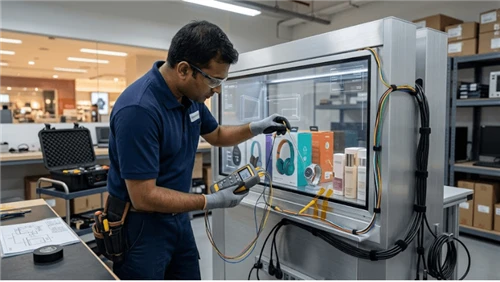
This requirement should be decided before hardware is ordered. Define installed-condition thermal validation. This matters because a screen can remain powered while content is unreadable, cropped, stale, overheated, or disconnected from the intended workflow. The project should soak-test the complete assembly after it is mounted with production content and neighboring equipment, and retain the most relevant parts of brightness measurements, thermal logs, content playback records, uptime logs, photographs, and acceptance test results as evidence. For a project team, this changes the decision: test the requirement under peak ambient conditions, long operating hours, and restricted service spaces, name the owner who accepts or escalates exceptions, and state whether the conclusion applies only to the tested configuration. Supplier documentation can define a starting boundary, but local validation is still required.
Teams that need the broader product context can review the bar LCD display buying guide before locking this requirement.
Set measurable acceptance criteria for installed-condition thermal validation
This is a system question rather than a single-component feature. Set measurable acceptance criteria for installed-condition thermal validation. This matters because a screen can remain powered while content is unreadable, cropped, stale, overheated, or disconnected from the intended workflow. The project should capture multi-point temperature trends, uptime logs, photographs, and signed test results and compare it with an approved baseline, and retain the most relevant parts of brightness measurements, thermal logs, content playback records, uptime logs, photographs, and acceptance test results as evidence. In a pilot, the difference becomes obvious: test the requirement under a representative pilot, worst-case content, and normal operating hours, name the owner who accepts or escalates exceptions, and state whether the conclusion applies only to the tested configuration. Supplier documentation can define a starting boundary, but local validation is still required.
Assign ownership and an exception path for installed-condition thermal validation
The specification only becomes useful when it is tied to a real operating condition. Assign ownership and an exception path for installed-condition thermal validation. This matters because a screen can remain powered while content is unreadable, cropped, stale, overheated, or disconnected from the intended workflow. The project should record who reviews failures, who authorizes changes, and how the result is retested, and retain the most relevant parts of brightness measurements, thermal logs, content playback records, uptime logs, photographs, and acceptance test results as evidence. Operations should translate the requirement into a repeatable check: test the requirement under handover, store changes, software releases, and supplier substitutions, name the owner who accepts or escalates exceptions, and state whether the conclusion applies only to the tested configuration. Supplier documentation can define a starting boundary, but local validation is still required.
This checkpoint should be read alongside the site's guidance on LCD bar display use cases, because adjacent decisions can change the result.
Control lifecycle changes
For bar LCD thermal management, this stage should produce a reviewable output rather than an informal agreement. The team should connect the requirement to the intended user, operating condition, owner, and acceptance evidence.
Define cleaning and lifecycle maintenance
A strong design separates the intended outcome from the method used to achieve it. Define cleaning and lifecycle maintenance. This matters because a screen can remain powered while content is unreadable, cropped, stale, overheated, or disconnected from the intended workflow. The project should define how staff inspect vents, replace filters, remove dust, and identify heat-related symptoms, and retain the most relevant parts of brightness measurements, thermal logs, content playback records, uptime logs, photographs, and acceptance test results as evidence. For a project team, this changes the decision: test the requirement under normal store cleaning, remodels, replacement players, and seasonal temperature changes, name the owner who accepts or escalates exceptions, and state whether the conclusion applies only to the tested configuration. Supplier documentation can define a starting boundary, but local validation is still required.
For related implementation context, use the commercial display versus consumer TV resource as a starting point and verify the local configuration.
Set measurable acceptance criteria for cleaning and lifecycle maintenance
The most common mistake is to approve the visible result without testing the process behind it. Set measurable acceptance criteria for cleaning and lifecycle maintenance. This matters because a screen can remain powered while content is unreadable, cropped, stale, overheated, or disconnected from the intended workflow. The project should capture maintenance records, inspection photos, alert history, and repeat-failure analysis and compare it with an approved baseline, and retain the most relevant parts of brightness measurements, thermal logs, content playback records, uptime logs, photographs, and acceptance test results as evidence. In a pilot, the difference becomes obvious: test the requirement under a representative pilot, worst-case content, and normal operating hours, name the owner who accepts or escalates exceptions, and state whether the conclusion applies only to the tested configuration. Supplier documentation can define a starting boundary, but local validation is still required.
Assign ownership and an exception path for cleaning and lifecycle maintenance
The buyer should define both the supported condition and the condition that triggers redesign. Assign ownership and an exception path for cleaning and lifecycle maintenance. This matters because a screen can remain powered while content is unreadable, cropped, stale, overheated, or disconnected from the intended workflow. The project should record who reviews failures, who authorizes changes, and how the result is retested, and retain the most relevant parts of brightness measurements, thermal logs, content playback records, uptime logs, photographs, and acceptance test results as evidence. Operations should translate the requirement into a repeatable check: test the requirement under handover, store changes, software releases, and supplier substitutions, name the owner who accepts or escalates exceptions, and state whether the conclusion applies only to the tested configuration. Supplier documentation can define a starting boundary, but local validation is still required.
The next linked decision is covered in smart LCD screen integration; keep the boundaries separate so one article does not substitute for a project test.
Implementation Checklist
Use this checklist as a planning aid, then adapt it to the exact product, site, jurisdiction, and service model.
- Inventory every internal heat source
- Document the intended heat path
- Keep intake and exhaust separated
- Test at maximum expected brightness
- Log temperatures at critical components
- Validate alerts and safe shutdown
- Define vent and filter maintenance
- Retest after component or enclosure changes
Common Project Mistakes
- Selecting a solution from a headline specification before defining how to prevent heat-related instability when a bar LCD is installed inside a shelf, cabinet, fascia, or custom enclosure.
- Testing an open bench sample while ignoring the final fixture, enclosure, content, network, and service environment.
- Accepting a supplier statement without recording the exact model, configuration, assumption, method, and evidence boundary.
- Treating a successful normal-flow demonstration as proof of failure detection, fallback, recovery, and reconciliation.
- Leaving ownership ambiguous across buyer, integrator, software team, store operations, facilities, and service provider.
- Approving rollout without version control, defect closure, training, spares, monitoring, and a retest trigger for future changes.
Questions to Ask Suppliers and Integrators
- Which exact panel, backlight, controller, player, power supply, firmware, and enclosure are included?
- Which values are typical, minimum, maximum, measured, or dependent on an unverified assumption?
- Can the supplier demonstrate the production configuration with native content and representative ambient conditions?
- How are playback, display state, temperature, software version, and failed recovery monitored?
- Which component substitutions require buyer approval and regression testing?
- What are the service unit, spare-part horizon, warranty exclusions, acceptance tolerances, and escalation route?
FAQ
Q: Does a bar LCD always need a fan?
A: No. Some assemblies can use passive conduction and natural convection, while compact or high-load enclosures may require active airflow. The decision should follow measured installed-condition temperatures.
Q: Where should temperature sensors be placed?
A: Place sensors near documented critical components and likely hot spots, not only in free air. Use supplier limits and thermal mapping to decide locations.
Q: Why can an open prototype pass while the final product overheats?
A: The production fascia, shelf cavity, cables, dust screens, neighboring equipment, and mounting orientation can restrict the heat path. Test the final assembly.
Q: How long should a thermal soak test run?
A: Long enough for temperatures to stabilize under the worst credible load and ambient condition. The required duration depends on enclosure mass, airflow, and duty cycle.
Q: What maintenance reduces thermal failures?
A: Keep vents clear, service filters, inspect fans where used, review temperature alerts, and retest after hardware, brightness, content, or fixture changes.
Conclusion
A defensible bar LCD thermal management decision connects the intended result to the complete installed system, a named operating owner, and evidence from realistic conditions. Start by defining how to prevent heat-related instability when a bar LCD is installed inside a shelf, cabinet, fascia, or custom enclosure; then document the configuration, run normal and failure tests, close defects, and retain the evidence used for approval. The strongest procurement outcome is not the longest specification. It is a controlled requirement set that suppliers can answer, project teams can test, and operations can sustain after handover.