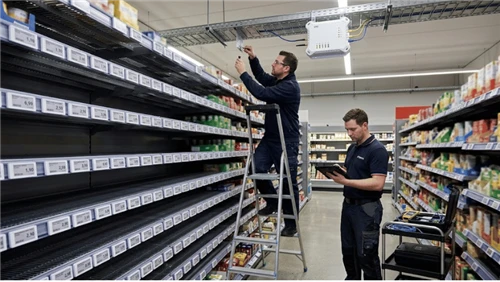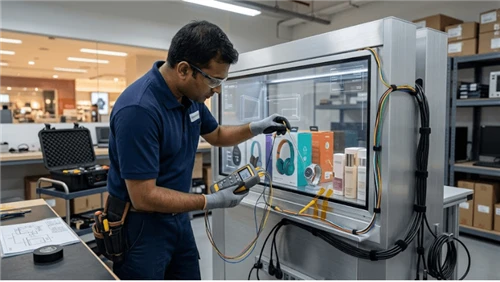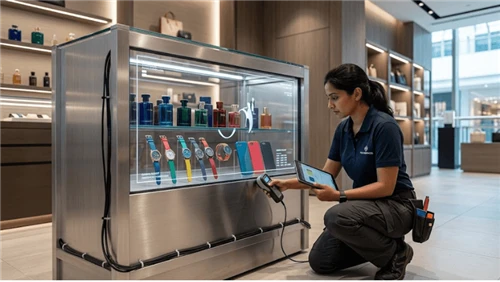
Electronic Shelf Label Spare Inventory: Replacement, Rebinding, and Field Service Planning is not a question that can be answered by one brochure value. For retail maintenance teams, store operations, procurement, IT support, and ESL program owners, the real decision is how to maintain enough compatible replacement stock without creating uncontrolled devices, aging inventory, or inconsistent field procedures. A reliable project therefore starts with the operating task, records the installed conditions, and converts every important claim into evidence that can be reviewed before rollout.
This guide uses a lifecycle inventory model based on device classes, failure history, lead times, store criticality, firmware compatibility, secure custody, and evidence-based replenishment. It does not assume that a particular product, architecture, certification, return, or performance level applies to every project. Published specifications should be tied to the exact model and configuration, while legal, safety, accessibility, payment, and cybersecurity obligations should be reviewed by qualified parties for the relevant market.

The recommended output is a decision package: scope, requirements, drawings or data maps, test method, expected result, captured evidence, defect ownership, recovery procedure, and the conditions that require retesting. That package gives procurement, engineering, content, operations, and suppliers a common basis for approval instead of relying on subjective impressions.
Define the operational risk
For electronic shelf label spare inventory, this stage should produce a reviewable output rather than an informal agreement. The team should connect the requirement to the intended user, operating condition, owner, and acceptance evidence.
Create an installed-base inventory
This requirement should be decided before hardware is ordered. Create an installed-base inventory. This matters because a shelf can show stale, unreadable, or incorrectly mapped information even when the device itself appears online. The project should record label model, size, hardware revision, firmware, mount type, store, location, binding status, and warranty, and retain the most relevant parts of update logs, endpoint acknowledgments, binding records, shelf audits, exception queues, and signed test results as evidence. For a project team, this changes the decision: test the requirement under all production and pilot devices, name the owner who accepts or escalates exceptions, and state whether the conclusion applies only to the tested configuration. Supplier documentation can define a starting boundary, but local validation is still required.
Teams that need the broader product context can review the electronic shelf label solutions before locking this requirement.
Classify replacement criticality
This is a system question rather than a single-component feature. Classify replacement criticality. This matters because a shelf can show stale, unreadable, or incorrectly mapped information even when the device itself appears online. The project should separate labels that can wait for routine service from labels whose failure creates immediate price or operational risk, and retain the most relevant parts of update logs, endpoint acknowledgments, binding records, shelf audits, exception queues, and signed test results as evidence. In a pilot, the difference becomes obvious: test the requirement under regulated products, high-volume promotions, and remote stores, name the owner who accepts or escalates exceptions, and state whether the conclusion applies only to the tested configuration. Supplier documentation can define a starting boundary, but local validation is still required.
Model demand from real causes
The specification only becomes useful when it is tied to a real operating condition. Model demand from real causes. This matters because a shelf can show stale, unreadable, or incorrectly mapped information even when the device itself appears online. The project should track electronic failures, physical damage, lost devices, battery events, remodels, and project growth separately, and retain the most relevant parts of update logs, endpoint acknowledgments, binding records, shelf audits, exception queues, and signed test results as evidence. Operations should translate the requirement into a repeatable check: test the requirement under monthly and seasonal history, name the owner who accepts or escalates exceptions, and state whether the conclusion applies only to the tested configuration. Supplier documentation can define a starting boundary, but local validation is still required.
This checkpoint should be read alongside the site's guidance on electronic shelf label product range, because adjacent decisions can change the result.
Detect exceptions early
For electronic shelf label spare inventory, this stage should produce a reviewable output rather than an informal agreement. The team should connect the requirement to the intended user, operating condition, owner, and acceptance evidence.
Segment spares by compatibility
A strong design separates the intended outcome from the method used to achieve it. Segment spares by compatibility. This matters because a shelf can show stale, unreadable, or incorrectly mapped information even when the device itself appears online. The project should stock by label family, display size, color capability, radio version, firmware support, and accessory interface, and retain the most relevant parts of update logs, endpoint acknowledgments, binding records, shelf audits, exception queues, and signed test results as evidence. For a project team, this changes the decision: test the requirement under mixed generations and supplier transitions, name the owner who accepts or escalates exceptions, and state whether the conclusion applies only to the tested configuration. Supplier documentation can define a starting boundary, but local validation is still required.
For related implementation context, use the retail electronic shelf labels resource as a starting point and verify the local configuration.
Include mounts and tools in the spare plan
The most common mistake is to approve the visible result without testing the process behind it. Include mounts and tools in the spare plan. This matters because a shelf can show stale, unreadable, or incorrectly mapped information even when the device itself appears online. The project should pair replacement labels with the correct holders, batteries where serviceable, release tools, and instructions, and retain the most relevant parts of update logs, endpoint acknowledgments, binding records, shelf audits, exception queues, and signed test results as evidence. In a pilot, the difference becomes obvious: test the requirement under field kits and store-level inventory, name the owner who accepts or escalates exceptions, and state whether the conclusion applies only to the tested configuration. Supplier documentation can define a starting boundary, but local validation is still required.
Protect storage conditions and identification
The buyer should define both the supported condition and the condition that triggers redesign. Protect storage conditions and identification. This matters because a shelf can show stale, unreadable, or incorrectly mapped information even when the device itself appears online. The project should use labeled bins, serial tracking, suitable temperature and humidity, and first-in/first-out review, and retain the most relevant parts of update logs, endpoint acknowledgments, binding records, shelf audits, exception queues, and signed test results as evidence. Operations should translate the requirement into a repeatable check: test the requirement under central depot and store back rooms, name the owner who accepts or escalates exceptions, and state whether the conclusion applies only to the tested configuration. Supplier documentation can define a starting boundary, but local validation is still required.
The next linked decision is covered in electronic shelf label technology; keep the boundaries separate so one article does not substitute for a project test.
Electronic Shelf Label Spare Inventory Decision Table
The table below turns the topic into a compact review structure. Add project-specific limits, test tools, owners, and approval signatures before using it as an acceptance record.
| Inventory decision | Data needed | Operational output |
|---|---|---|
| Spare quantity | Failure demand, lead time, criticality | Stock target by device class |
| Store allocation | Distance, incident history, local capability | Store kit or central-depot policy |
| Rebinding | Device and product identifiers | Controlled replacement record |
| Replenishment | On-hand, open incidents, forecast | Purchase trigger |
| Obsolescence | Support dates and compatibility | Migration or disposal plan |
Run the first response
For electronic shelf label spare inventory, this stage should produce a reviewable output rather than an informal agreement. The team should connect the requirement to the intended user, operating condition, owner, and acceptance evidence.
Define the replacement authorization
This requirement should be decided before hardware is ordered. Define the replacement authorization. This matters because a shelf can show stale, unreadable, or incorrectly mapped information even when the device itself appears online. The project should state who diagnoses, removes, rebinds, updates inventory, and closes the shelf exception, and retain the most relevant parts of update logs, endpoint acknowledgments, binding records, shelf audits, exception queues, and signed test results as evidence. For a project team, this changes the decision: test the requirement under store staff, help desk, field technician, and supplier roles, name the owner who accepts or escalates exceptions, and state whether the conclusion applies only to the tested configuration. Supplier documentation can define a starting boundary, but local validation is still required.
Teams that need the broader product context can review the electronic shelf edge labels before locking this requirement.
Use a controlled rebinding workflow
This is a system question rather than a single-component feature. Use a controlled rebinding workflow. This matters because a shelf can show stale, unreadable, or incorrectly mapped information even when the device itself appears online. The project should verify product and location, clear prior association, bind the replacement, send content, confirm acknowledgment, and audit the shelf, and retain the most relevant parts of update logs, endpoint acknowledgments, binding records, shelf audits, exception queues, and signed test results as evidence. In a pilot, the difference becomes obvious: test the requirement under every field replacement, name the owner who accepts or escalates exceptions, and state whether the conclusion applies only to the tested configuration. Supplier documentation can define a starting boundary, but local validation is still required.
Quarantine uncertain devices
The specification only becomes useful when it is tied to a real operating condition. Quarantine uncertain devices. This matters because a shelf can show stale, unreadable, or incorrectly mapped information even when the device itself appears online. The project should prevent returned, damaged, unknown, or security-relevant labels from reentering stock without inspection, and retain the most relevant parts of update logs, endpoint acknowledgments, binding records, shelf audits, exception queues, and signed test results as evidence. Operations should translate the requirement into a repeatable check: test the requirement under unbound devices and supplier returns, name the owner who accepts or escalates exceptions, and state whether the conclusion applies only to the tested configuration. Supplier documentation can define a starting boundary, but local validation is still required.
This checkpoint should be read alongside the site's guidance on electronic shelf labels in grocery stores, because adjacent decisions can change the result.
Recover service safely
For electronic shelf label spare inventory, this stage should produce a reviewable output rather than an informal agreement. The team should connect the requirement to the intended user, operating condition, owner, and acceptance evidence.
Measure replacement service levels
A strong design separates the intended outcome from the method used to achieve it. Measure replacement service levels. This matters because a shelf can show stale, unreadable, or incorrectly mapped information even when the device itself appears online. The project should track time from failure detection to correct shelf display, not only shipment time, and retain the most relevant parts of update logs, endpoint acknowledgments, binding records, shelf audits, exception queues, and signed test results as evidence. For a project team, this changes the decision: test the requirement under remote stores and high-priority departments, name the owner who accepts or escalates exceptions, and state whether the conclusion applies only to the tested configuration. Supplier documentation can define a starting boundary, but local validation is still required.
For related implementation context, use the how electronic shelf labels work resource as a starting point and verify the local configuration.
Reconcile physical and system inventory
The most common mistake is to approve the visible result without testing the process behind it. Reconcile physical and system inventory. This matters because a shelf can show stale, unreadable, or incorrectly mapped information even when the device itself appears online. The project should compare depot counts, store counts, device-management records, binding state, and warranty returns, and retain the most relevant parts of update logs, endpoint acknowledgments, binding records, shelf audits, exception queues, and signed test results as evidence. In a pilot, the difference becomes obvious: test the requirement under scheduled cycle counts, name the owner who accepts or escalates exceptions, and state whether the conclusion applies only to the tested configuration. Supplier documentation can define a starting boundary, but local validation is still required.

Analyze repeat failures
The buyer should define both the supported condition and the condition that triggers redesign. Analyze repeat failures. This matters because a shelf can show stale, unreadable, or incorrectly mapped information even when the device itself appears online. The project should identify locations, mounts, cleaning practices, temperature zones, or firmware versions associated with abnormal replacement demand, and retain the most relevant parts of update logs, endpoint acknowledgments, binding records, shelf audits, exception queues, and signed test results as evidence. Operations should translate the requirement into a repeatable check: test the requirement under quarterly reliability review, name the owner who accepts or escalates exceptions, and state whether the conclusion applies only to the tested configuration. Supplier documentation can define a starting boundary, but local validation is still required.
The next linked decision is covered in ESL refresh rates and display performance; keep the boundaries separate so one article does not substitute for a project test.
Measure and learn
For electronic shelf label spare inventory, this stage should produce a reviewable output rather than an informal agreement. The team should connect the requirement to the intended user, operating condition, owner, and acceptance evidence.
Plan for upgrades and end of support
This requirement should be decided before hardware is ordered. Plan for upgrades and end of support. This matters because a shelf can show stale, unreadable, or incorrectly mapped information even when the device itself appears online. The project should identify spares that cannot receive supported firmware or work with the current platform, and retain the most relevant parts of update logs, endpoint acknowledgments, binding records, shelf audits, exception queues, and signed test results as evidence. For a project team, this changes the decision: test the requirement under supplier lifecycle notices and platform migrations, name the owner who accepts or escalates exceptions, and state whether the conclusion applies only to the tested configuration. Supplier documentation can define a starting boundary, but local validation is still required.
Teams that need the broader product context can review the ESL gateway placement before locking this requirement.
Avoid overbuying obsolete stock
This is a system question rather than a single-component feature. Avoid overbuying obsolete stock. This matters because a shelf can show stale, unreadable, or incorrectly mapped information even when the device itself appears online. The project should use lead time, expected attrition, rollout horizon, and compatibility risk rather than a fixed blanket percentage, and retain the most relevant parts of update logs, endpoint acknowledgments, binding records, shelf audits, exception queues, and signed test results as evidence. In a pilot, the difference becomes obvious: test the requirement under long-lived deployments, name the owner who accepts or escalates exceptions, and state whether the conclusion applies only to the tested configuration. Supplier documentation can define a starting boundary, but local validation is still required.
Define disposal and data handling
The specification only becomes useful when it is tied to a real operating condition. Define disposal and data handling. This matters because a shelf can show stale, unreadable, or incorrectly mapped information even when the device itself appears online. The project should unregister, unbind, document, store securely, return, recycle, or destroy devices under an approved process, and retain the most relevant parts of update logs, endpoint acknowledgments, binding records, shelf audits, exception queues, and signed test results as evidence. Operations should translate the requirement into a repeatable check: test the requirement under retired and non-repairable labels, name the owner who accepts or escalates exceptions, and state whether the conclusion applies only to the tested configuration. Supplier documentation can define a starting boundary, but local validation is still required.
This checkpoint should be read alongside the site's guidance on ESL data readiness, because adjacent decisions can change the result.
Procure for supportability
For electronic shelf label spare inventory, this stage should produce a reviewable output rather than an informal agreement. The team should connect the requirement to the intended user, operating condition, owner, and acceptance evidence.
Request lifecycle data in procurement
A strong design separates the intended outcome from the method used to achieve it. Request lifecycle data in procurement. This matters because a shelf can show stale, unreadable, or incorrectly mapped information even when the device itself appears online. The project should ask for lead times, minimum orders, repair policy, warranty process, firmware support, replacement model, and end-of-life notice, and retain the most relevant parts of update logs, endpoint acknowledgments, binding records, shelf audits, exception queues, and signed test results as evidence. For a project team, this changes the decision: test the requirement under initial contract and renewals, name the owner who accepts or escalates exceptions, and state whether the conclusion applies only to the tested configuration. Supplier documentation can define a starting boundary, but local validation is still required.
For related implementation context, use the POS and ERP integration resource as a starting point and verify the local configuration.
Price the complete field-service path
The most common mistake is to approve the visible result without testing the process behind it. Price the complete field-service path. This matters because a shelf can show stale, unreadable, or incorrectly mapped information even when the device itself appears online. The project should include diagnosis, shipping, mounts, labor, travel, software actions, returns, and inventory administration, and retain the most relevant parts of update logs, endpoint acknowledgments, binding records, shelf audits, exception queues, and signed test results as evidence. In a pilot, the difference becomes obvious: test the requirement under total cost comparison, name the owner who accepts or escalates exceptions, and state whether the conclusion applies only to the tested configuration. Supplier documentation can define a starting boundary, but local validation is still required.
Write service evidence requirements
The buyer should define both the supported condition and the condition that triggers redesign. Write service evidence requirements. This matters because a shelf can show stale, unreadable, or incorrectly mapped information even when the device itself appears online. The project should require serial traceability, defect reports, turnaround status, and replacement compatibility confirmation, and retain the most relevant parts of update logs, endpoint acknowledgments, binding records, shelf audits, exception queues, and signed test results as evidence. Operations should translate the requirement into a repeatable check: test the requirement under supplier-managed spares or repair depots, name the owner who accepts or escalates exceptions, and state whether the conclusion applies only to the tested configuration. Supplier documentation can define a starting boundary, but local validation is still required.
The next linked decision is covered in ESL pilot checklist; keep the boundaries separate so one article does not substitute for a project test.
Implementation Checklist
Use this checklist as a planning aid, then adapt it to the exact product, site, jurisdiction, and service model.
- Maintain a serial-level installed-base record
- Separate spare stock by compatible device class
- Include holders and tools in field kits
- Control who may rebind labels
- Quarantine unknown or damaged returns
- Reconcile physical and system inventory
- Measure time to correct shelf display
- Review obsolete stock and end-of-life risk
Common Project Mistakes
- Selecting a solution from a headline specification before defining how to maintain enough compatible replacement stock without creating uncontrolled devices, aging inventory, or inconsistent field procedures.
- Testing an open bench sample while ignoring the final fixture, enclosure, content, network, and service environment.
- Accepting a supplier statement without recording the exact model, configuration, assumption, method, and evidence boundary.
- Treating a successful normal-flow demonstration as proof of failure detection, fallback, recovery, and reconciliation.
- Leaving ownership ambiguous across buyer, integrator, software team, store operations, facilities, and service provider.
- Approving rollout without version control, defect closure, training, spares, monitoring, and a retest trigger for future changes.
Questions to Ask Suppliers and Integrators
- Which exact label, gateway, mounting, firmware, and software configuration is being offered?
- Which operating limits and assumptions are documented for the proposed configuration?
- What evidence can be supplied from representative installed conditions rather than a demonstration?
- How are exceptions, failed updates, binding errors, and device replacement identified and closed?
- Which APIs, data fields, security roles, support responsibilities, and change-notification rules apply?
- What is the acceptance test, defect process, warranty boundary, spare strategy, and end-of-support policy?
FAQ
Q: How many spare ESLs should a retailer keep?
A: There is no defensible universal percentage. Set targets by device class using observed failure demand, supplier lead time, store criticality, rollout growth, compatibility, and the service level required.
Q: Should every store keep spare labels?
A: Not always. Remote or high-volume stores may need local kits, while nearby stores can use a central depot. The decision should include diagnosis capability, shipping time, custody, and inventory accuracy.
Q: What is rebinding?
A: Rebinding is the controlled association of a physical label with the correct product and often a shelf location. It should include verification, update confirmation, inventory changes, and a final shelf audit.
Q: Can returned labels go directly back into spare stock?
A: No. Inspect identity, condition, binding state, firmware compatibility, warranty status, and any security concerns before returning a device to available inventory.
Q: How should obsolete ESLs be handled?
A: Use an approved decommissioning process that unregisters and unbinds devices, records disposition, protects any stored information, and follows applicable return or recycling arrangements.
Conclusion
A defensible electronic shelf label spare inventory decision connects the intended result to the complete installed system, a named operating owner, and evidence from realistic conditions. Start by defining how to maintain enough compatible replacement stock without creating uncontrolled devices, aging inventory, or inconsistent field procedures; then document the configuration, run normal and failure tests, close defects, and retain the evidence used for approval. The strongest procurement outcome is not the longest specification. It is a controlled requirement set that suppliers can answer, project teams can test, and operations can sustain after handover.