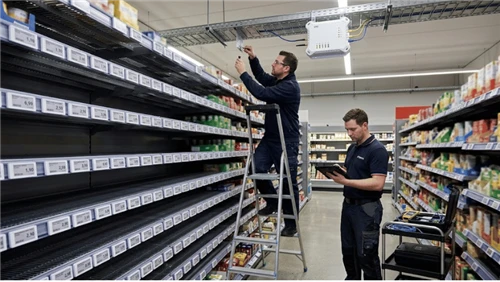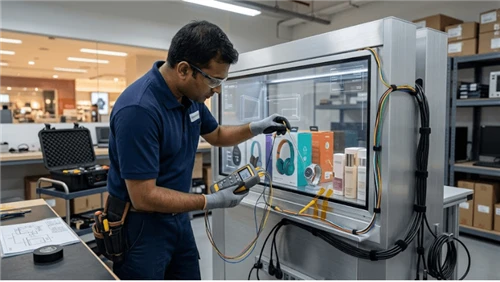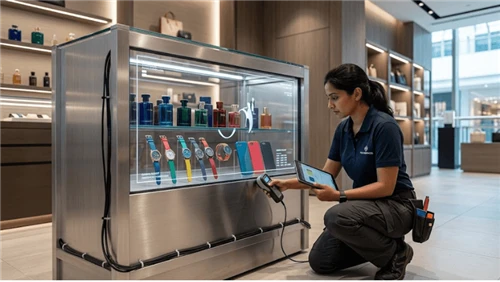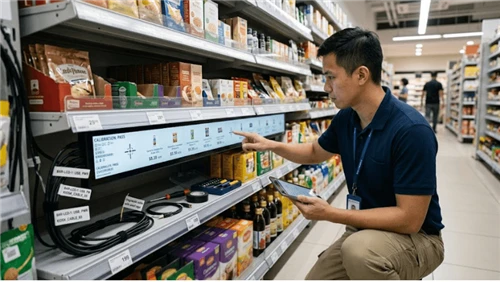
Electronic Shelf Labels in Freezers: Cold-Chain Deployment and Validation is not a question that can be answered by one brochure value. For grocery retailers, cold-chain operations, fixture engineers, ESL buyers, and deployment teams, the real decision is how to validate labels, mounts, wireless coverage, readability, cleaning, and service procedures in refrigerated and frozen environments. A reliable project therefore starts with the operating task, records the installed conditions, and converts every important claim into evidence that can be reviewed before rollout.
This guide uses an installed-condition test plan that separates published operating boundaries from the combined effects of temperature, condensation, doors, metal, refresh load, and staff workflows. It does not assume that a particular product, architecture, certification, return, or performance level applies to every project. Published specifications should be tied to the exact model and configuration, while legal, safety, accessibility, payment, and cybersecurity obligations should be reviewed by qualified parties for the relevant market.
The recommended output is a decision package: scope, requirements, drawings or data maps, test method, expected result, captured evidence, defect ownership, recovery procedure, and the conditions that require retesting. That package gives procurement, engineering, content, operations, and suppliers a common basis for approval instead of relying on subjective impressions.

Define acceptance scope
For electronic shelf labels in freezers, this stage should produce a reviewable output rather than an informal agreement. The team should connect the requirement to the intended user, operating condition, owner, and acceptance evidence.
Map cold zones by operating condition
This requirement should be decided before hardware is ordered. Map cold zones by operating condition. This matters because a shelf can show stale, unreadable, or incorrectly mapped information even when the device itself appears online. The project should separate open chillers, closed refrigerated cases, frozen cabinets, cold rooms, and transition zones, and retain the most relevant parts of update logs, endpoint acknowledgments, binding records, shelf audits, exception queues, and signed test results as evidence. For a project team, this changes the decision: test the requirement under normal temperature cycles, defrost, loading, and door opening, name the owner who accepts or escalates exceptions, and state whether the conclusion applies only to the tested configuration. Supplier documentation can define a starting boundary, but local validation is still required.
Teams that need the broader product context can review the electronic shelf label solutions before locking this requirement.
Define the label exposure
This is a system question rather than a single-component feature. Define the label exposure. This matters because a shelf can show stale, unreadable, or incorrectly mapped information even when the device itself appears online. The project should record air temperature, surface contact, condensation, airflow, cleaning chemicals, and time outside the zone, and retain the most relevant parts of update logs, endpoint acknowledgments, binding records, shelf audits, exception queues, and signed test results as evidence. In a pilot, the difference becomes obvious: test the requirement under exact mounting position rather than room average, name the owner who accepts or escalates exceptions, and state whether the conclusion applies only to the tested configuration. Supplier documentation can define a starting boundary, but local validation is still required.
Select only within documented device boundaries
The specification only becomes useful when it is tied to a real operating condition. Select only within documented device boundaries. This matters because a shelf can show stale, unreadable, or incorrectly mapped information even when the device itself appears online. The project should obtain supplier limits for operation, storage, battery, display refresh, and recovery, and retain the most relevant parts of update logs, endpoint acknowledgments, binding records, shelf audits, exception queues, and signed test results as evidence. Operations should translate the requirement into a repeatable check: test the requirement under proposed label model and firmware, name the owner who accepts or escalates exceptions, and state whether the conclusion applies only to the tested configuration. Supplier documentation can define a starting boundary, but local validation is still required.
This checkpoint should be read alongside the site's guidance on electronic shelf label product range, because adjacent decisions can change the result.
Prepare evidence and test fixtures
For electronic shelf labels in freezers, this stage should produce a reviewable output rather than an informal agreement. The team should connect the requirement to the intended user, operating condition, owner, and acceptance evidence.
Choose mounts for cold material behavior
A strong design separates the intended outcome from the method used to achieve it. Choose mounts for cold material behavior. This matters because a shelf can show stale, unreadable, or incorrectly mapped information even when the device itself appears online. The project should test clip retention, brittleness, contraction, adhesive performance, and removal, and retain the most relevant parts of update logs, endpoint acknowledgments, binding records, shelf audits, exception queues, and signed test results as evidence. For a project team, this changes the decision: test the requirement under lowest expected temperature and repeated cleaning, name the owner who accepts or escalates exceptions, and state whether the conclusion applies only to the tested configuration. Supplier documentation can define a starting boundary, but local validation is still required.
For related implementation context, use the retail electronic shelf labels resource as a starting point and verify the local configuration.
Control visibility through doors and reflections
The most common mistake is to approve the visible result without testing the process behind it. Control visibility through doors and reflections. This matters because a shelf can show stale, unreadable, or incorrectly mapped information even when the device itself appears online. The project should set label angle and position to remain readable through glazing, anti-fog coatings, and store lighting, and retain the most relevant parts of update logs, endpoint acknowledgments, binding records, shelf audits, exception queues, and signed test results as evidence. In a pilot, the difference becomes obvious: test the requirement under customer approach and staff restocking positions, name the owner who accepts or escalates exceptions, and state whether the conclusion applies only to the tested configuration. Supplier documentation can define a starting boundary, but local validation is still required.
Avoid blocking airflow or equipment service
The buyer should define both the supported condition and the condition that triggers redesign. Avoid blocking airflow or equipment service. This matters because a shelf can show stale, unreadable, or incorrectly mapped information even when the device itself appears online. The project should confirm mounts and labels do not interfere with vents, seals, shelf movement, defrost, or maintenance access, and retain the most relevant parts of update logs, endpoint acknowledgments, binding records, shelf audits, exception queues, and signed test results as evidence. Operations should translate the requirement into a repeatable check: test the requirement under case manufacturer requirements, name the owner who accepts or escalates exceptions, and state whether the conclusion applies only to the tested configuration. Supplier documentation can define a starting boundary, but local validation is still required.
The next linked decision is covered in electronic shelf label technology; keep the boundaries separate so one article does not substitute for a project test.
Electronic Shelf Labels In Freezers Decision Table
The table below turns the topic into a compact review structure. Add project-specific limits, test tools, owners, and approval signatures before using it as an acceptance record.
| Cold-chain factor |
Why it changes the result |
Validation |
|---|---|---|
| Temperature cycle | Display, battery, and materials may behave differently | Update test across operating cycle |
| Condensation | Can affect visibility, surfaces, and service | Repeated transition and cleaning test |
| Metal and doors | Can alter radio path and viewing angle | Loaded-case coverage survey |
| Mount material | May contract or become brittle | Retention and removal test |
| Service access | Replacement may take longer | Timed field procedure |
Run functional tests
For electronic shelf labels in freezers, this stage should produce a reviewable output rather than an informal agreement. The team should connect the requirement to the intended user, operating condition, owner, and acceptance evidence.
Plan installation around temperature transitions
This requirement should be decided before hardware is ordered. Plan installation around temperature transitions. This matters because a shelf can show stale, unreadable, or incorrectly mapped information even when the device itself appears online. The project should define acclimation, surface preparation, condensation control, and safe work duration, and retain the most relevant parts of update logs, endpoint acknowledgments, binding records, shelf audits, exception queues, and signed test results as evidence. For a project team, this changes the decision: test the requirement under labels and mounts moving between warehouse, store, and cold zone, name the owner who accepts or escalates exceptions, and state whether the conclusion applies only to the tested configuration. Supplier documentation can define a starting boundary, but local validation is still required.
Teams that need the broader product context can review the electronic shelf edge labels before locking this requirement.
Verify binding and product alignment before closing the case
This is a system question rather than a single-component feature. Verify binding and product alignment before closing the case. This matters because a shelf can show stale, unreadable, or incorrectly mapped information even when the device itself appears online. The project should use a controlled sequence that prevents labels being hidden or associated with the wrong facing, and retain the most relevant parts of update logs, endpoint acknowledgments, binding records, shelf audits, exception queues, and signed test results as evidence. In a pilot, the difference becomes obvious: test the requirement under dense frozen assortments and repeated packages, name the owner who accepts or escalates exceptions, and state whether the conclusion applies only to the tested configuration. Supplier documentation can define a starting boundary, but local validation is still required.
Train staff on cold-zone replacement
The specification only becomes useful when it is tied to a real operating condition. Train staff on cold-zone replacement. This matters because a shelf can show stale, unreadable, or incorrectly mapped information even when the device itself appears online. The project should provide approved tools, gloves-compatible steps, temporary signage, and escalation, and retain the most relevant parts of update logs, endpoint acknowledgments, binding records, shelf audits, exception queues, and signed test results as evidence. Operations should translate the requirement into a repeatable check: test the requirement under failed labels during trading hours, name the owner who accepts or escalates exceptions, and state whether the conclusion applies only to the tested configuration. Supplier documentation can define a starting boundary, but local validation is still required.
This checkpoint should be read alongside the site's guidance on electronic shelf labels in grocery stores, because adjacent decisions can change the result.
Run environmental and failure tests
For electronic shelf labels in freezers, this stage should produce a reviewable output rather than an informal agreement. The team should connect the requirement to the intended user, operating condition, owner, and acceptance evidence.
Test updates at representative temperatures
A strong design separates the intended outcome from the method used to achieve it. Test updates at representative temperatures. This matters because a shelf can show stale, unreadable, or incorrectly mapped information even when the device itself appears online. The project should measure completion, acknowledgment, visible refresh behavior, and exception reporting, and retain the most relevant parts of update logs, endpoint acknowledgments, binding records, shelf audits, exception queues, and signed test results as evidence. For a project team, this changes the decision: test the requirement under normal, lowest expected, and defrost-cycle conditions, name the owner who accepts or escalates exceptions, and state whether the conclusion applies only to the tested configuration. Supplier documentation can define a starting boundary, but local validation is still required.
For related implementation context, use the how electronic shelf labels work resource as a starting point and verify the local configuration.
Test wireless coverage with doors and stock in place
The most common mistake is to approve the visible result without testing the process behind it. Test wireless coverage with doors and stock in place. This matters because a shelf can show stale, unreadable, or incorrectly mapped information even when the device itself appears online. The project should survey after full merchandising because metal, product, and door state can alter the result, and retain the most relevant parts of update logs, endpoint acknowledgments, binding records, shelf audits, exception queues, and signed test results as evidence. In a pilot, the difference becomes obvious: test the requirement under closed doors, open doors, and peak stocking levels, name the owner who accepts or escalates exceptions, and state whether the conclusion applies only to the tested configuration. Supplier documentation can define a starting boundary, but local validation is still required.
Test condensation and cleaning cycles
The buyer should define both the supported condition and the condition that triggers redesign. Test condensation and cleaning cycles. This matters because a shelf can show stale, unreadable, or incorrectly mapped information even when the device itself appears online. The project should inspect readability, seals, mounts, corrosion, residue, and touch behavior where applicable, and retain the most relevant parts of update logs, endpoint acknowledgments, binding records, shelf audits, exception queues, and signed test results as evidence. Operations should translate the requirement into a repeatable check: test the requirement under repeated operational cycles rather than one exposure, name the owner who accepts or escalates exceptions, and state whether the conclusion applies only to the tested configuration. Supplier documentation can define a starting boundary, but local validation is still required.
The next linked decision is covered in ESL refresh rates and display performance; keep the boundaries separate so one article does not substitute for a project test.
Record defects and retest
For electronic shelf labels in freezers, this stage should produce a reviewable output rather than an informal agreement. The team should connect the requirement to the intended user, operating condition, owner, and acceptance evidence.
Set cold-zone monitoring and audit rules
This requirement should be decided before hardware is ordered. Set cold-zone monitoring and audit rules. This matters because a shelf can show stale, unreadable, or incorrectly mapped information even when the device itself appears online. The project should track stale labels, failed updates, mount issues, battery events, and readability complaints by case type, and retain the most relevant parts of update logs, endpoint acknowledgments, binding records, shelf audits, exception queues, and signed test results as evidence. For a project team, this changes the decision: test the requirement under ongoing operations, name the owner who accepts or escalates exceptions, and state whether the conclusion applies only to the tested configuration. Supplier documentation can define a starting boundary, but local validation is still required.
Teams that need the broader product context can review the ESL gateway placement before locking this requirement.

Use a controlled exception response
This is a system question rather than a single-component feature. Use a controlled exception response. This matters because a shelf can show stale, unreadable, or incorrectly mapped information even when the device itself appears online. The project should define temporary price display, product verification, replacement priority, and reconciliation, and retain the most relevant parts of update logs, endpoint acknowledgments, binding records, shelf audits, exception queues, and signed test results as evidence. In a pilot, the difference becomes obvious: test the requirement under critical price changes and unavailable devices, name the owner who accepts or escalates exceptions, and state whether the conclusion applies only to the tested configuration. Supplier documentation can define a starting boundary, but local validation is still required.
Review after fixture or temperature changes
The specification only becomes useful when it is tied to a real operating condition. Review after fixture or temperature changes. This matters because a shelf can show stale, unreadable, or incorrectly mapped information even when the device itself appears online. The project should revalidate when cases, shelves, door systems, lighting, stock density, or cleaning processes change, and retain the most relevant parts of update logs, endpoint acknowledgments, binding records, shelf audits, exception queues, and signed test results as evidence. Operations should translate the requirement into a repeatable check: test the requirement under remodels and equipment replacement, name the owner who accepts or escalates exceptions, and state whether the conclusion applies only to the tested configuration. Supplier documentation can define a starting boundary, but local validation is still required.
This checkpoint should be read alongside the site's guidance on ESL data readiness, because adjacent decisions can change the result.
Approve handover and support
For electronic shelf labels in freezers, this stage should produce a reviewable output rather than an informal agreement. The team should connect the requirement to the intended user, operating condition, owner, and acceptance evidence.
Ask suppliers for cold-condition evidence
A strong design separates the intended outcome from the method used to achieve it. Ask suppliers for cold-condition evidence. This matters because a shelf can show stale, unreadable, or incorrectly mapped information even when the device itself appears online. The project should request model-specific documentation, relevant tests, mounting guidance, battery assumptions, and support exclusions, and retain the most relevant parts of update logs, endpoint acknowledgments, binding records, shelf audits, exception queues, and signed test results as evidence. For a project team, this changes the decision: test the requirement under the exact configuration offered, name the owner who accepts or escalates exceptions, and state whether the conclusion applies only to the tested configuration. Supplier documentation can define a starting boundary, but local validation is still required.
For related implementation context, use the POS and ERP integration resource as a starting point and verify the local configuration.
Include cold zones in pilot acceptance
The most common mistake is to approve the visible result without testing the process behind it. Include cold zones in pilot acceptance. This matters because a shelf can show stale, unreadable, or incorrectly mapped information even when the device itself appears online. The project should do not infer freezer performance from ambient-aisle results, and retain the most relevant parts of update logs, endpoint acknowledgments, binding records, shelf audits, exception queues, and signed test results as evidence. In a pilot, the difference becomes obvious: test the requirement under multiple case types and locations, name the owner who accepts or escalates exceptions, and state whether the conclusion applies only to the tested configuration. Supplier documentation can define a starting boundary, but local validation is still required.
Price cold-zone service separately
The buyer should define both the supported condition and the condition that triggers redesign. Price cold-zone service separately. This matters because a shelf can show stale, unreadable, or incorrectly mapped information even when the device itself appears online. The project should include access time, approved mounts, protective equipment, replacement difficulty, and after-hours work, and retain the most relevant parts of update logs, endpoint acknowledgments, binding records, shelf audits, exception queues, and signed test results as evidence. Operations should translate the requirement into a repeatable check: test the requirement under lifecycle cost and service-level planning, name the owner who accepts or escalates exceptions, and state whether the conclusion applies only to the tested configuration. Supplier documentation can define a starting boundary, but local validation is still required.
The next linked decision is covered in ESL pilot checklist; keep the boundaries separate so one article does not substitute for a project test.
Implementation Checklist
Use this checklist as a planning aid, then adapt it to the exact product, site, jurisdiction, and service model.
- Document the exact cold-zone exposure
- Confirm model-specific operating limits
- Test mounts at the lowest expected condition
- Survey RF coverage with stock and doors in place
- Validate updates during temperature cycles
- Run condensation and cleaning tests
- Define temporary price-display procedures
- Revalidate after fixture or process changes
Common Project Mistakes
- Selecting a solution from a headline specification before defining how to validate labels, mounts, wireless coverage, readability, cleaning, and service procedures in refrigerated and frozen environments.
- Testing an open bench sample while ignoring the final fixture, enclosure, content, network, and service environment.
- Accepting a supplier statement without recording the exact model, configuration, assumption, method, and evidence boundary.
- Treating a successful normal-flow demonstration as proof of failure detection, fallback, recovery, and reconciliation.
- Leaving ownership ambiguous across buyer, integrator, software team, store operations, facilities, and service provider.
- Approving rollout without version control, defect closure, training, spares, monitoring, and a retest trigger for future changes.
Questions to Ask Suppliers and Integrators
- Which exact label, gateway, mounting, firmware, and software configuration is being offered?
- Which operating limits and assumptions are documented for the proposed configuration?
- What evidence can be supplied from representative installed conditions rather than a demonstration?
- How are exceptions, failed updates, binding errors, and device replacement identified and closed?
- Which APIs, data fields, security roles, support responsibilities, and change-notification rules apply?
- What is the acceptance test, defect process, warranty boundary, spare strategy, and end-of-support policy?
FAQ
Q: Can any ESL be installed in a freezer?
A: No. Use a label and mounting system whose documented operating and storage limits fit the application, then validate the complete installed condition.
Q: Why is a freezer RF test different from an aisle test?
A: Metal cases, doors, product density, changing stock, and gateway position can alter communication. Test after merchandising and in normal door states.
Q: Do low temperatures always reduce battery life?
A: Temperature and update behavior can affect battery performance, but the impact depends on cell chemistry, device design, refresh pattern, and operating profile. Use supplier evidence and local testing rather than a generic estimate.
Q: How should a failed freezer label be handled?
A: Use a controlled replacement and temporary-price procedure. Confirm the authoritative price, protect shoppers, replace or rebind the device safely, and verify shelf/POS agreement.
Q: What should be included in freezer ESL acceptance?
A: Include model documentation, temperature and update tests, loaded-case RF coverage, mount retention, readability through doors, condensation/cleaning exposure, replacement workflow, and exception monitoring.
Conclusion
A defensible electronic shelf labels in freezers decision connects the intended result to the complete installed system, a named operating owner, and evidence from realistic conditions. Start by defining how to validate labels, mounts, wireless coverage, readability, cleaning, and service procedures in refrigerated and frozen environments; then document the configuration, run normal and failure tests, close defects, and retain the evidence used for approval. The strongest procurement outcome is not the longest specification. It is a controlled requirement set that suppliers can answer, project teams can test, and operations can sustain after handover.