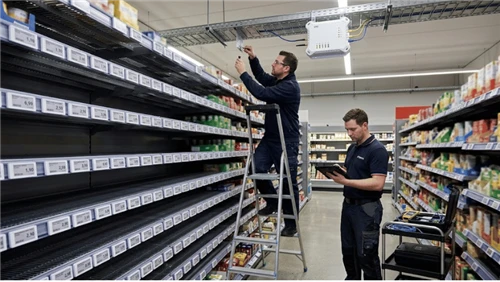
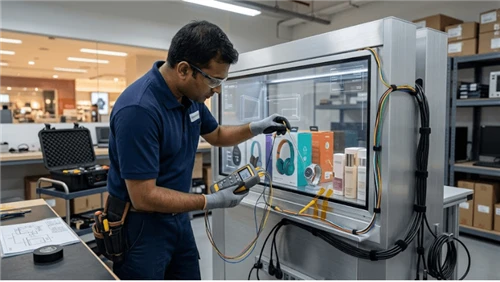
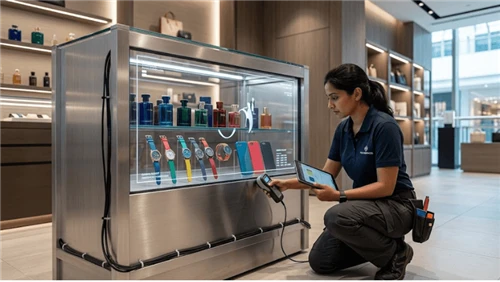
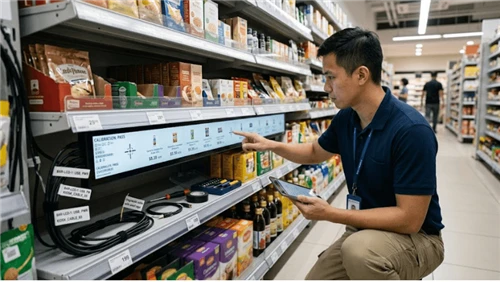
Bar LCD CMS Integration: Content Publishing, Device Control, and Store Operations is not a question that can be answered by one brochure value. For retail IT teams, digital-signage operators, integrators, content owners, and bar LCD procurement teams, the real decision is how to connect ultra-wide displays to a controlled content workflow that can publish, verify, recover, and audit store-level playback. A reliable project therefore starts with the operating task, records the installed conditions, and converts every important claim into evidence that can be reviewed before rollout.
This guide uses an operating architecture that separates content creation, scheduling, distribution, player control, proof of playback, device monitoring, and local exception handling. It does not assume that a particular product, architecture, certification, return, or performance level applies to every project. Published specifications should be tied to the exact model and configuration, while legal, safety, accessibility, payment, and cybersecurity obligations should be reviewed by qualified parties for the relevant market.
The recommended output is a decision package: scope, requirements, drawings or data maps, test method, expected result, captured evidence, defect ownership, recovery procedure, and the conditions that require retesting. That package gives procurement, engineering, content, operations, and suppliers a common basis for approval instead of relying on subjective impressions.
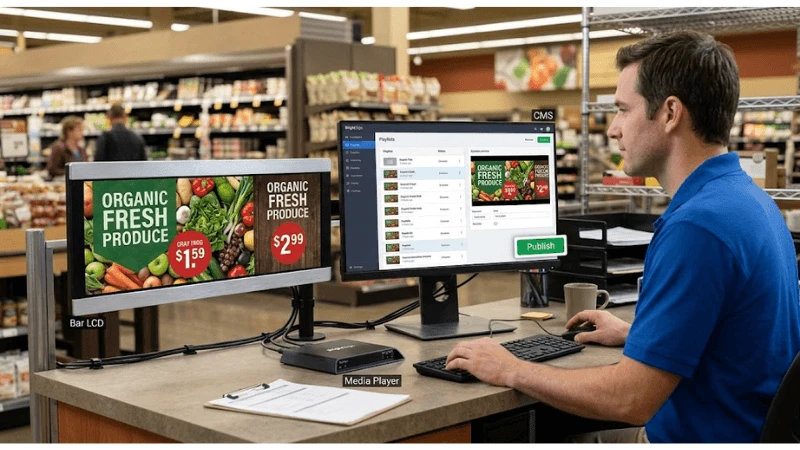
Define system boundaries
For bar LCD CMS integration, this stage should produce a reviewable output rather than an informal agreement. The team should connect the requirement to the intended user, operating condition, owner, and acceptance evidence.
Define the CMS system boundary
This requirement should be decided before hardware is ordered. Define the CMS system boundary. This matters because a screen can remain powered while content is unreadable, cropped, stale, overheated, or disconnected from the intended workflow. The project should map authoring, asset storage, scheduling, player software, device management, network, identity, and store support, and retain the most relevant parts of brightness measurements, thermal logs, content playback records, uptime logs, photographs, and acceptance test results as evidence. For a project team, this changes the decision: test the requirement under cloud-hosted, on-premises, and hybrid operating models, name the owner who accepts or escalates exceptions, and state whether the conclusion applies only to the tested configuration. Supplier documentation can define a starting boundary, but local validation is still required.
Teams that need the broader product context can review the bar-shaped LCD screen solution before locking this requirement.
Set measurable acceptance criteria for the CMS system boundary
This is a system question rather than a single-component feature. Set measurable acceptance criteria for the CMS system boundary. This matters because a screen can remain powered while content is unreadable, cropped, stale, overheated, or disconnected from the intended workflow. The project should capture architecture diagrams, data-flow maps, and ownership matrices and compare it with an approved baseline, and retain the most relevant parts of brightness measurements, thermal logs, content playback records, uptime logs, photographs, and acceptance test results as evidence. In a pilot, the difference becomes obvious: test the requirement under a representative pilot, worst-case content, and normal operating hours, name the owner who accepts or escalates exceptions, and state whether the conclusion applies only to the tested configuration. Supplier documentation can define a starting boundary, but local validation is still required.
Assign ownership and an exception path for the CMS system boundary
The specification only becomes useful when it is tied to a real operating condition. Assign ownership and an exception path for the CMS system boundary. This matters because a screen can remain powered while content is unreadable, cropped, stale, overheated, or disconnected from the intended workflow. The project should record who reviews failures, who authorizes changes, and how the result is retested, and retain the most relevant parts of brightness measurements, thermal logs, content playback records, uptime logs, photographs, and acceptance test results as evidence. Operations should translate the requirement into a repeatable check: test the requirement under handover, store changes, software releases, and supplier substitutions, name the owner who accepts or escalates exceptions, and state whether the conclusion applies only to the tested configuration. Supplier documentation can define a starting boundary, but local validation is still required.
This checkpoint should be read alongside the site's guidance on LCD display screen product range, because adjacent decisions can change the result.
Map interfaces and ownership
For bar LCD CMS integration, this stage should produce a reviewable output rather than an informal agreement. The team should connect the requirement to the intended user, operating condition, owner, and acceptance evidence.
Define content packaging and validation
A strong design separates the intended outcome from the method used to achieve it. Define content packaging and validation. This matters because a screen can remain powered while content is unreadable, cropped, stale, overheated, or disconnected from the intended workflow. The project should enforce native resolution, codec, duration, safe zones, naming, and metadata before an asset can be scheduled, and retain the most relevant parts of brightness measurements, thermal logs, content playback records, uptime logs, photographs, and acceptance test results as evidence. For a project team, this changes the decision: test the requirement under ultra-wide canvases, multiple screen sizes, and emergency content, name the owner who accepts or escalates exceptions, and state whether the conclusion applies only to the tested configuration. Supplier documentation can define a starting boundary, but local validation is still required.
For related implementation context, use the 28-inch bar display resource as a starting point and verify the local configuration.
Set measurable acceptance criteria for content packaging and validation
The most common mistake is to approve the visible result without testing the process behind it. Set measurable acceptance criteria for content packaging and validation. This matters because a screen can remain powered while content is unreadable, cropped, stale, overheated, or disconnected from the intended workflow. The project should capture automated validation reports, rejected-file logs, and approved proofs and compare it with an approved baseline, and retain the most relevant parts of brightness measurements, thermal logs, content playback records, uptime logs, photographs, and acceptance test results as evidence. In a pilot, the difference becomes obvious: test the requirement under a representative pilot, worst-case content, and normal operating hours, name the owner who accepts or escalates exceptions, and state whether the conclusion applies only to the tested configuration. Supplier documentation can define a starting boundary, but local validation is still required.
Assign ownership and an exception path for content packaging and validation
The buyer should define both the supported condition and the condition that triggers redesign. Assign ownership and an exception path for content packaging and validation. This matters because a screen can remain powered while content is unreadable, cropped, stale, overheated, or disconnected from the intended workflow. The project should record who reviews failures, who authorizes changes, and how the result is retested, and retain the most relevant parts of brightness measurements, thermal logs, content playback records, uptime logs, photographs, and acceptance test results as evidence. Operations should translate the requirement into a repeatable check: test the requirement under handover, store changes, software releases, and supplier substitutions, name the owner who accepts or escalates exceptions, and state whether the conclusion applies only to the tested configuration. Supplier documentation can define a starting boundary, but local validation is still required.
The next linked decision is covered in 35.5-inch bar display; keep the boundaries separate so one article does not substitute for a project test.
Bar Lcd Cms Integration Decision Table
The table below turns the topic into a compact review structure. Add project-specific limits, test tools, owners, and approval signatures before using it as an acceptance record.
| CMS layer | Key control | Evidence |
|---|---|---|
| Asset intake | Format and aspect-ratio validation | Automated validation report |
| Approval | Role separation and version control | Approval history |
| Distribution | Receipt and activation status | Player delivery log |
| Playback | Visible output confirmation | Screenshot or proof-of-play record |
| Recovery | Cache, fallback, and resync | Offline recovery test |
Choose the architecture
For bar LCD CMS integration, this stage should produce a reviewable output rather than an informal agreement. The team should connect the requirement to the intended user, operating condition, owner, and acceptance evidence.
Define publishing approval and scheduling
This requirement should be decided before hardware is ordered. Define publishing approval and scheduling. This matters because a screen can remain powered while content is unreadable, cropped, stale, overheated, or disconnected from the intended workflow. The project should separate creator, reviewer, approver, and publisher rights while supporting regional and store-level schedules, and retain the most relevant parts of brightness measurements, thermal logs, content playback records, uptime logs, photographs, and acceptance test results as evidence. For a project team, this changes the decision: test the requirement under campaign launches, local overrides, expirations, and time-zone differences, name the owner who accepts or escalates exceptions, and state whether the conclusion applies only to the tested configuration. Supplier documentation can define a starting boundary, but local validation is still required.
Teams that need the broader product context can review the 36.8-inch digital signage display before locking this requirement.
Set measurable acceptance criteria for publishing approval and scheduling
This is a system question rather than a single-component feature. Set measurable acceptance criteria for publishing approval and scheduling. This matters because a screen can remain powered while content is unreadable, cropped, stale, overheated, or disconnected from the intended workflow. The project should capture role records, approval history, schedule previews, and expiration tests and compare it with an approved baseline, and retain the most relevant parts of brightness measurements, thermal logs, content playback records, uptime logs, photographs, and acceptance test results as evidence. In a pilot, the difference becomes obvious: test the requirement under a representative pilot, worst-case content, and normal operating hours, name the owner who accepts or escalates exceptions, and state whether the conclusion applies only to the tested configuration. Supplier documentation can define a starting boundary, but local validation is still required.
Assign ownership and an exception path for publishing approval and scheduling
The specification only becomes useful when it is tied to a real operating condition. Assign ownership and an exception path for publishing approval and scheduling. This matters because a screen can remain powered while content is unreadable, cropped, stale, overheated, or disconnected from the intended workflow. The project should record who reviews failures, who authorizes changes, and how the result is retested, and retain the most relevant parts of brightness measurements, thermal logs, content playback records, uptime logs, photographs, and acceptance test results as evidence. Operations should translate the requirement into a repeatable check: test the requirement under handover, store changes, software releases, and supplier substitutions, name the owner who accepts or escalates exceptions, and state whether the conclusion applies only to the tested configuration. Supplier documentation can define a starting boundary, but local validation is still required.
This checkpoint should be read alongside the site's guidance on 43.9-inch bar display, because adjacent decisions can change the result.
Implement data and device controls
For bar LCD CMS integration, this stage should produce a reviewable output rather than an informal agreement. The team should connect the requirement to the intended user, operating condition, owner, and acceptance evidence.
Define distribution and proof of playback
A strong design separates the intended outcome from the method used to achieve it. Define distribution and proof of playback. This matters because a screen can remain powered while content is unreadable, cropped, stale, overheated, or disconnected from the intended workflow. The project should track asset delivery, player receipt, playlist activation, screen state, and actual playback evidence, and retain the most relevant parts of brightness measurements, thermal logs, content playback records, uptime logs, photographs, and acceptance test results as evidence. For a project team, this changes the decision: test the requirement under intermittent connectivity, large media files, and store opening hours, name the owner who accepts or escalates exceptions, and state whether the conclusion applies only to the tested configuration. Supplier documentation can define a starting boundary, but local validation is still required.
For related implementation context, use the 49.5-inch bar display resource as a starting point and verify the local configuration.
Set measurable acceptance criteria for distribution and proof of playback
The most common mistake is to approve the visible result without testing the process behind it. Set measurable acceptance criteria for distribution and proof of playback. This matters because a screen can remain powered while content is unreadable, cropped, stale, overheated, or disconnected from the intended workflow. The project should capture delivery status, checksums, player logs, screenshots, and exception queues and compare it with an approved baseline, and retain the most relevant parts of brightness measurements, thermal logs, content playback records, uptime logs, photographs, and acceptance test results as evidence. In a pilot, the difference becomes obvious: test the requirement under a representative pilot, worst-case content, and normal operating hours, name the owner who accepts or escalates exceptions, and state whether the conclusion applies only to the tested configuration. Supplier documentation can define a starting boundary, but local validation is still required.
Assign ownership and an exception path for distribution and proof of playback
The buyer should define both the supported condition and the condition that triggers redesign. Assign ownership and an exception path for distribution and proof of playback. This matters because a screen can remain powered while content is unreadable, cropped, stale, overheated, or disconnected from the intended workflow. The project should record who reviews failures, who authorizes changes, and how the result is retested, and retain the most relevant parts of brightness measurements, thermal logs, content playback records, uptime logs, photographs, and acceptance test results as evidence. Operations should translate the requirement into a repeatable check: test the requirement under handover, store changes, software releases, and supplier substitutions, name the owner who accepts or escalates exceptions, and state whether the conclusion applies only to the tested configuration. Supplier documentation can define a starting boundary, but local validation is still required.
The next linked decision is covered in double-sided bar LCD display; keep the boundaries separate so one article does not substitute for a project test.
Test failures and recovery
For bar LCD CMS integration, this stage should produce a reviewable output rather than an informal agreement. The team should connect the requirement to the intended user, operating condition, owner, and acceptance evidence.
Define offline behavior and recovery
This requirement should be decided before hardware is ordered. Define offline behavior and recovery. This matters because a screen can remain powered while content is unreadable, cropped, stale, overheated, or disconnected from the intended workflow. The project should cache approved content, define fallback playlists, protect schedule integrity, and resynchronize safely after reconnect, and retain the most relevant parts of brightness measurements, thermal logs, content playback records, uptime logs, photographs, and acceptance test results as evidence. For a project team, this changes the decision: test the requirement under WAN loss, player restart, corrupted asset, and CMS outage, name the owner who accepts or escalates exceptions, and state whether the conclusion applies only to the tested configuration. Supplier documentation can define a starting boundary, but local validation is still required.
Teams that need the broader product context can review the bar LCD display buying guide before locking this requirement.
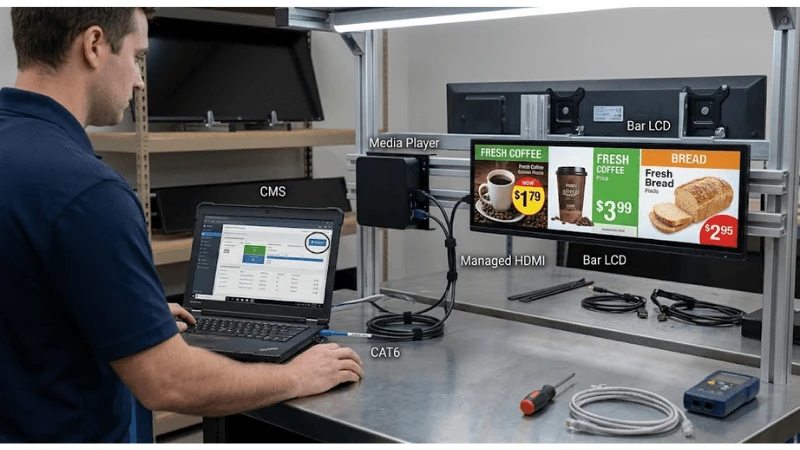
Set measurable acceptance criteria for offline behavior and recovery
This is a system question rather than a single-component feature. Set measurable acceptance criteria for offline behavior and recovery. This matters because a screen can remain powered while content is unreadable, cropped, stale, overheated, or disconnected from the intended workflow. The project should capture offline test results, recovery timing, and content-version reconciliation and compare it with an approved baseline, and retain the most relevant parts of brightness measurements, thermal logs, content playback records, uptime logs, photographs, and acceptance test results as evidence. In a pilot, the difference becomes obvious: test the requirement under a representative pilot, worst-case content, and normal operating hours, name the owner who accepts or escalates exceptions, and state whether the conclusion applies only to the tested configuration. Supplier documentation can define a starting boundary, but local validation is still required.
Assign ownership and an exception path for offline behavior and recovery
The specification only becomes useful when it is tied to a real operating condition. Assign ownership and an exception path for offline behavior and recovery. This matters because a screen can remain powered while content is unreadable, cropped, stale, overheated, or disconnected from the intended workflow. The project should record who reviews failures, who authorizes changes, and how the result is retested, and retain the most relevant parts of brightness measurements, thermal logs, content playback records, uptime logs, photographs, and acceptance test results as evidence. Operations should translate the requirement into a repeatable check: test the requirement under handover, store changes, software releases, and supplier substitutions, name the owner who accepts or escalates exceptions, and state whether the conclusion applies only to the tested configuration. Supplier documentation can define a starting boundary, but local validation is still required.
This checkpoint should be read alongside the site's guidance on LCD bar display use cases, because adjacent decisions can change the result.
Operate and change the integration
For bar LCD CMS integration, this stage should produce a reviewable output rather than an informal agreement. The team should connect the requirement to the intended user, operating condition, owner, and acceptance evidence.
Define device operations and lifecycle control
A strong design separates the intended outcome from the method used to achieve it. Define device operations and lifecycle control. This matters because a screen can remain powered while content is unreadable, cropped, stale, overheated, or disconnected from the intended workflow. The project should monitor player health, storage, temperature, screen status, software version, and remote actions under change control, and retain the most relevant parts of brightness measurements, thermal logs, content playback records, uptime logs, photographs, and acceptance test results as evidence. For a project team, this changes the decision: test the requirement under fleet expansion, player replacement, security updates, and end-of-life migration, name the owner who accepts or escalates exceptions, and state whether the conclusion applies only to the tested configuration. Supplier documentation can define a starting boundary, but local validation is still required.
For related implementation context, use the commercial display versus consumer TV resource as a starting point and verify the local configuration.
Set measurable acceptance criteria for device operations and lifecycle control
The most common mistake is to approve the visible result without testing the process behind it. Set measurable acceptance criteria for device operations and lifecycle control. This matters because a screen can remain powered while content is unreadable, cropped, stale, overheated, or disconnected from the intended workflow. The project should capture device inventory, alert records, release notes, and rollback evidence and compare it with an approved baseline, and retain the most relevant parts of brightness measurements, thermal logs, content playback records, uptime logs, photographs, and acceptance test results as evidence. In a pilot, the difference becomes obvious: test the requirement under a representative pilot, worst-case content, and normal operating hours, name the owner who accepts or escalates exceptions, and state whether the conclusion applies only to the tested configuration. Supplier documentation can define a starting boundary, but local validation is still required.
Assign ownership and an exception path for device operations and lifecycle control
The buyer should define both the supported condition and the condition that triggers redesign. Assign ownership and an exception path for device operations and lifecycle control. This matters because a screen can remain powered while content is unreadable, cropped, stale, overheated, or disconnected from the intended workflow. The project should record who reviews failures, who authorizes changes, and how the result is retested, and retain the most relevant parts of brightness measurements, thermal logs, content playback records, uptime logs, photographs, and acceptance test results as evidence. Operations should translate the requirement into a repeatable check: test the requirement under handover, store changes, software releases, and supplier substitutions, name the owner who accepts or escalates exceptions, and state whether the conclusion applies only to the tested configuration. Supplier documentation can define a starting boundary, but local validation is still required.
The next linked decision is covered in smart LCD screen integration; keep the boundaries separate so one article does not substitute for a project test.
Implementation Checklist
Use this checklist as a planning aid, then adapt it to the exact product, site, jurisdiction, and service model.
- Draw the full CMS and player architecture
- Define native content specifications
- Separate authoring and publishing permissions
- Set automatic expiry for campaigns
- Confirm receipt and proof of playback
- Test WAN loss and player restart
- Maintain a versioned device inventory
- Document rollback and store escalation
Common Project Mistakes
- Selecting a solution from a headline specification before defining how to connect ultra-wide displays to a controlled content workflow that can publish, verify, recover, and audit store-level playback.
- Testing an open bench sample while ignoring the final fixture, enclosure, content, network, and service environment.
- Accepting a supplier statement without recording the exact model, configuration, assumption, method, and evidence boundary.
- Treating a successful normal-flow demonstration as proof of failure detection, fallback, recovery, and reconciliation.
- Leaving ownership ambiguous across buyer, integrator, software team, store operations, facilities, and service provider.
- Approving rollout without version control, defect closure, training, spares, monitoring, and a retest trigger for future changes.
Questions to Ask Suppliers and Integrators
- Which exact panel, backlight, controller, player, power supply, firmware, and enclosure are included?
- Which values are typical, minimum, maximum, measured, or dependent on an unverified assumption?
- Can the supplier demonstrate the production configuration with native content and representative ambient conditions?
- How are playback, display state, temperature, software version, and failed recovery monitored?
- Which component substitutions require buyer approval and regression testing?
- What are the service unit, spare-part horizon, warranty exclusions, acceptance tolerances, and escalation route?
FAQ
Q: Is content delivery the same as proof of playback?
A: No. Delivery shows that a file reached a player; proof of playback shows that the intended playlist ran, and visible verification may still be needed to confirm the screen output.
Q: Should stores be allowed to publish local content?
A: Only through defined roles, approved templates, scope limits, expiry rules, and audit logs. Uncontrolled local publishing creates brand, legal, and operational risk.
Q: What should a bar LCD play when the network is down?
A: Use a locally cached, approved fallback playlist with clear expiry and resynchronization rules. Avoid relying on a live connection for every frame.
Q: How can a CMS prevent wrong-aspect-ratio content?
A: Validate pixel dimensions, aspect ratio, codec, duration, safe zones, and file metadata before approval, then preview on the target device profile.
Q: What belongs in CMS acceptance testing?
A: Test role permissions, asset validation, scheduling, delivery, proof of playback, offline caching, reconnect behavior, alerts, remote actions, versioning, and rollback.
Conclusion
A defensible bar LCD CMS integration decision connects the intended result to the complete installed system, a named operating owner, and evidence from realistic conditions. Start by defining how to connect ultra-wide displays to a controlled content workflow that can publish, verify, recover, and audit store-level playback; then document the configuration, run normal and failure tests, close defects, and retain the evidence used for approval. The strongest procurement outcome is not the longest specification. It is a controlled requirement set that suppliers can answer, project teams can test, and operations can sustain after handover.