This guide gives you lifespan estimates by scenario, a practical cost framework for electronic shelf labels battery replacement at scale, and a clear comparison of the two most common cell types - so you can plan maintenance before it becomes a problem.
1. What Powers an ESL and Why Batteries Last So Long
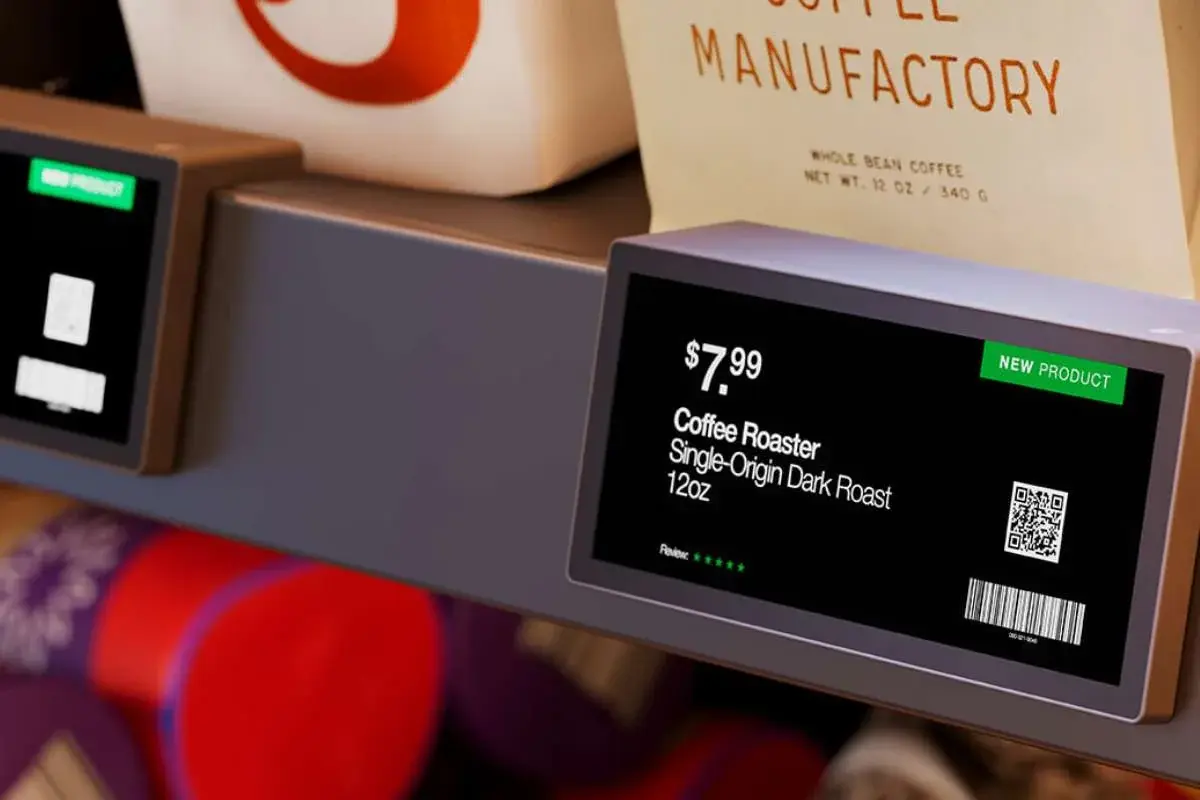
E-paper display technology is the core reason ESL batteries last years rather than days. Unlike an LCD, an e-ink screen only draws power when the image changes. Once a price update completes, the display holds that image indefinitely with zero energy consumption. That zero-idle-draw characteristic is what makes a small coin cell a credible long-term power source.
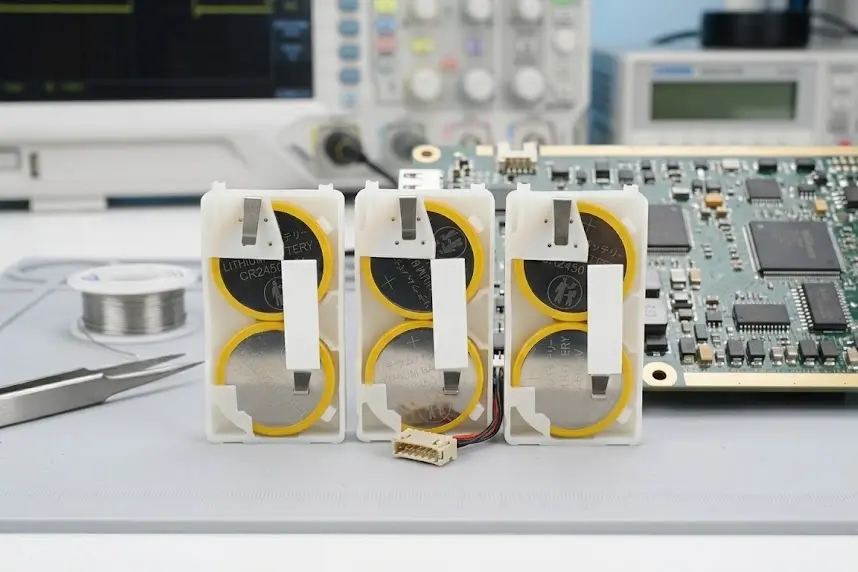
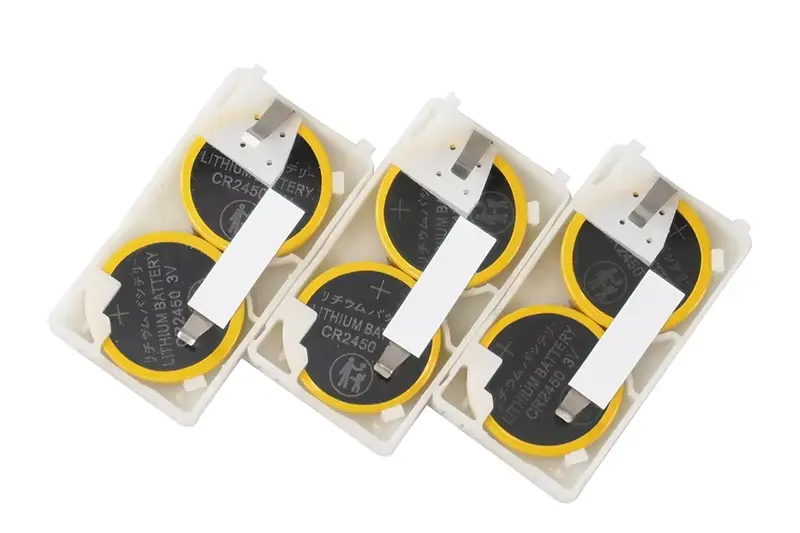
The batteries used are lithium manganese dioxide (Li-MnO₂) coin cells - the CR series. They deliver a stable 3V output and lose less than 1% of their charge per year when idle, per published manufacturer specifications (Energizer CR2450 datasheet). Three models cover the vast majority of deployments:
- CR2032 - 220mAh, 20mm diameter. Fits small labels (1.5"–2.9"). Best for low update frequency environments.
- CR2450 - 550mAh, 24.5mm diameter. The standard choice for 4.2" to 7.3" labels in most retail settings.
- CR2477 - 1000mAh, 24.5mm diameter, 7.7mm thick. Used in large-format labels, cold chain sections, or high-update-frequency deployments.
Important before ordering: ESL housings are engineered for one specific cell format. Confirm the compatible model with your hardware supplier before purchasing replacement stock - not every chassis that accepts CR2450 will physically fit a CR2477.
2. How Long Do ESL Batteries Actually Last?
To understand how ESL systems work at the power level, three variables drive nearly all of the variation you will see in real deployments.
Update frequency is the dominant factor. Every price push wakes the wireless radio and redraws the display - both draw current. A label updated once per day consumes a fraction of what a label updated ten times per day uses over a year.
Communication protocol affects how long the radio stays active per transmission. BLE 5.0 wakes briefly and returns to sleep almost immediately, making it the most battery-efficient option in common use. Sub-GHz RF offers better wall penetration but typically keeps the radio active slightly longer per update cycle. A detailed comparison is covered in our separate piece on Bluetooth vs Wi-Fi vs Sub-GHz ESL.
Ambient temperature reduces accessible capacity at low temperatures - covered in the next section.
The table below shows reference lifespan estimates based on BLE 5.0 communication, standard e-paper display, and room temperature operation (15–25°C). These are planning benchmarks derived from manufacturer specifications and typical deployment parameters, not guaranteed performance figures. Your actual results will vary by hardware model.
|
Updates per Day |
CR2032 (220mAh) | CR2450 (550mAh) | CR2477 (1000mAh) |
|---|---|---|---|
| 1–2 | ~4–5 years | ~7–8 years | 10+ years |
| 3–5 | ~2–3 years | ~4–5 years | ~7 years |
| 6–10 | ~1–1.5 years | ~2–3 years | ~4–5 years |
| 10+ | Under 1 year | ~1–2 years | ~3 years |
Reference estimates based on BLE 5.0 deployment parameters and published Li-MnO₂ specifications. Consult your ESL supplier for model-specific data.
A common misconception is that the "10-year battery" claim applies broadly. It assumes a low-frequency update schedule (1–2 per day), a high-capacity CR2477, and room temperature. Retailers running daily promotional cycles, dynamic pricing, or competitor-matched pricing will see significantly shorter real-world lifespans - which is not a problem, as long as you plan for it.
3. Cold Chain: ESL Battery Life in Refrigerated and Frozen Sections
Cold chain retail - grocery refrigerated cases, pharmacy cold storage, food service frozen sections - is one of the fastest-growing ESL deployment categories, and the one where battery planning is most often underestimated.
Li-MnO₂ chemistry performs better in cold than alkaline cells, but it is not immune to temperature. Lower temperatures slow the electrochemical reaction, reducing the accessible capacity even though the stored energy has not changed. Per the performance characteristics described in IEC 60086-4 (the international standard for primary lithium batteries), capacity retention at sub-zero temperatures can be significantly lower than at rated conditions.
In practical terms:
- Refrigerated case (0–5°C): Expect roughly 75–85% of room-temperature capacity. A CR2450 that delivers five years at ambient may deliver three to four years in a dairy or deli case.
- Deep freeze (-18°C to -25°C): Capacity retention drops to approximately 50–60%. The same CR2450 may last two to three years.
When sourcing ESLs for cold chain sections, look for:
- Operating temperature rating: Standard ESLs are rated 0°C to 40°C. Frozen sections require labels rated to at least -20°C.
- IP67 sealing or higher: Condensation forms when labels move between temperature zones. An IP67 seal prevents moisture from reaching the battery contacts. Our 5.8" ESL with NFC and IP-rated sealing is one option used in refrigerated environments.
- CR2477 as the default cell: The higher capacity provides a buffer against low-temperature capacity loss. Some manufacturers offer cold-optimized cells with modified electrolyte formulas for deep-freeze applications.
For grocery cold chain deployments, reduce your expected battery lifespan by 30–40% compared to ambient estimates and factor that into your maintenance schedule from the start.
4. What Electronic Shelf Label Battery Replacement Actually Costs
Battery replacement is the one recurring maintenance cost that procurement teams most often underestimate. The actual number is more manageable than most buyers expect - but it needs to be calculated honestly.
The CR2450 cell costs roughly $0.30–0.60 per unit at bulk pricing. For a 1,000-label store, that is $300–600 in materials over a replacement cycle - trivial relative to the system investment. The real cost is labor.
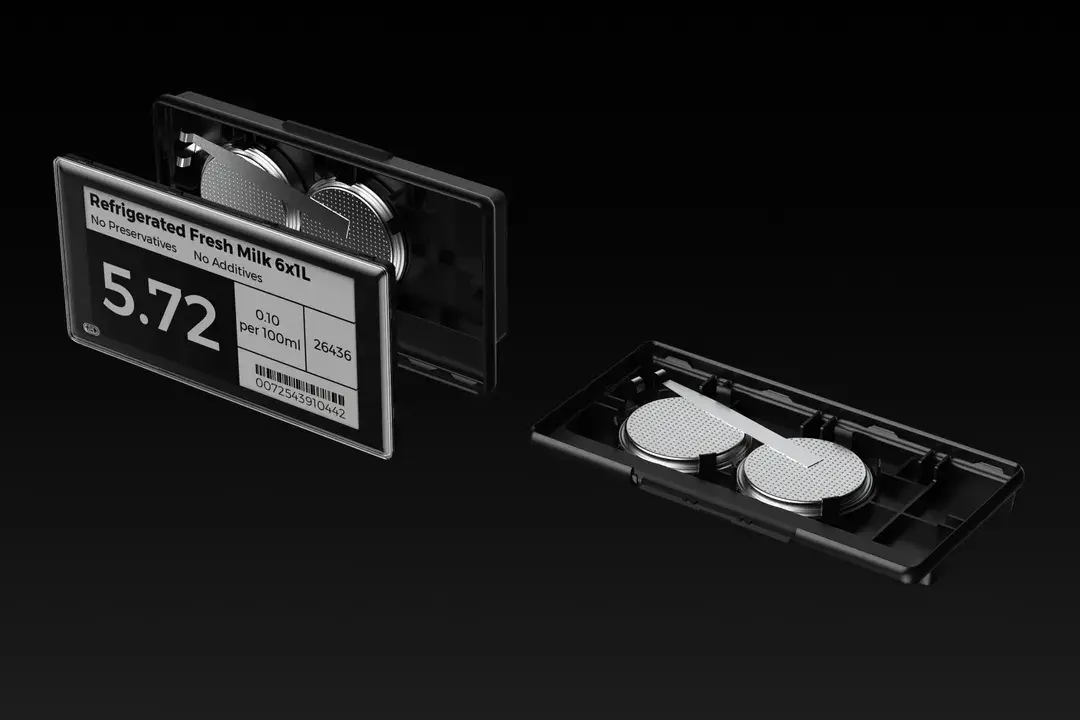
Replacing an ESL battery requires locating the label, opening the housing, swapping the cell, and confirming the label reconnects. An experienced staff member working efficiently completes this in approximately 90 seconds to two minutes per label, depending on housing design and shelf accessibility.
| Cost Category | Estimate |
|---|---|
| Deployment size | 1,000 labels |
| Assumed battery (CR2450, 3–5 updates/day) | ~5-year lifespan |
| Time per replacement | ~1.5 minutes |
| Total staff time | ~25 hours |
| Labor cost (at $20/hr) | ~$500 |
| Battery material cost (bulk) | ~$400 |
| Total 5-year battery cost | ~$900 |
| Per label, per year | ~$0.18 |
Illustrative estimate based on bulk cell pricing and industry labor benchmarks. Adjust labor rate and replacement frequency to your specific environment.
For a fuller picture of how this fits into total deployment economics, see our ESL ROI calculator and the ESL cost breakdown guide.
Three factors push this cost upward in practice: not having battery monitoring (so staff spend time diagnosing dark labels rather than executing planned swaps), high cold chain concentration, and poor shelf accessibility on bottom shelves or inside refrigerated cases.
5. Managing Battery Replacement Across a Store
Waiting until labels go dark before acting is the most expensive approach to battery maintenance - both in labor and in operational risk. A label that stops displaying mid-shift creates a pricing compliance risk: in many jurisdictions, customers are legally entitled to the lower of the shelf price and the register price. A dark label removes that reference point entirely.
The practical alternative is using your ESL management platform to monitor battery health proactively. Most modern systems display charge level for every label in the network and support threshold alerts. Set your alert at 20–25% remaining capacity - that typically gives you several weeks of lead time before a label risks going offline.
With that data, you can batch replacements by shelf section rather than responding to individual failures. One approach that works well in practice: divide the store into six to eight maintenance zones, check one zone per month as part of a regular floor walk, and flag any label below threshold for replacement during that same visit. This spreads the labor evenly across the year and eliminates the risk of a large wave of simultaneous failures.
For stores where labels are not updating as expected, battery level is the first variable to check - alongside signal strength and gateway status. A label sitting at 15% charge in a cold section may already be showing intermittent connectivity issues before the display goes fully dark.
6. CR2450 vs CR2032: Matching the Cell to Your Store
For most retail ESL deployments, CR2450 is the correct default. The decision to use CR2032 instead is typically driven by hardware constraints - small-format labels that physically cannot accommodate the larger 24.5mm cell - not by preference.
| Factor | CR2032 | CR2450 |
|---|---|---|
| Capacity | 220mAh | 550mAh |
| Diameter | 20mm | 24.5mm |
| Label size compatibility | 1.5"–2.9" small tags | 4.2"–7.3" standard & large |
| Best update frequency | 1–2 times/day | 1–5 times/day |
| Best store type | Convenience stores, low-promotion retail | Supermarkets, pharmacies, electronics retail |
| Cold chain suitability | Not recommended | Refrigerated cases; use CR2477 for frozen |
| Relative lifespan (same conditions) | Baseline | Approximately 2.5× longer |
One practical note: avoid mixing battery types across labels of the same model without a clear labeling system. Mixing CR2032 and CR2450 cells in adjacent housings creates confusion during replacement rounds and risks staff fitting the wrong cell.
When to choose CR2477: high-update environments (10+ price changes per day), large-format labels, or any cold chain section operating below 0°C. The capacity premium is worth it in those scenarios.
FAQ
How long do ESL batteries last on average?
Under typical retail conditions - 1 to 3 price updates per day, BLE 5.0, room temperature - a CR2450 will last approximately 5 to 7 years. High update frequency or cold temperatures will shorten that range. The "up to 10 years" figure assumes a low-frequency schedule with a high-capacity CR2477 cell.
Can store staff replace ESL batteries without a technician?
Yes, in the vast majority of systems. Most ESL housings use a press-tab or slide cover - no tools required. The label reconnects to the network automatically within seconds to two minutes after the new cell is inserted. Some industrial mounting brackets use a single screw, but that is still a one-minute task that requires no technical training.
How do you know when an ESL battery needs replacing?
Through your ESL management platform, which reports real-time battery level for every label in the network. Set a low-battery alert at 20–25% to get advance notice of weeks, not hours. Waiting for a label to go visually dark is a reactive approach that creates both operational and compliance risk.
What happens when an ESL battery runs out completely?
E-paper displays retain the last image drawn without any power - so a fully depleted label will continue showing the last price it received rather than going blank. However, it cannot receive new updates until the battery is replaced. Your management platform will show the label as offline, and the displayed price will gradually become inaccurate as prices change in your system. This is why proactive monitoring matters more than the display going dark.
Do ESL batteries drain faster in freezers?
Yes, noticeably. A CR2450 that delivers five years at room temperature may last three to four years in a refrigerated case (0–5°C) and two to three years in a deep-freeze environment (-18°C). For frozen sections, use a CR2477 in a label rated for low-temperature operation and plan more frequent maintenance checks - quarterly rather than annually.
What is the total battery replacement cost for a 1,000-label store over five years?
Using CR2450 cells at bulk pricing and approximately 1.5 minutes of staff time per swap, the total over a five-year cycle is approximately $800–1,000 - or about $0.18 per label per year. This is low relative to the labor savings generated by eliminating manual paper tag changes over the same period.
Does update frequency really affect battery life that much?
More than most buyers expect. A label updated once per day can last nearly four times longer than the same label updated ten times per day on an identical battery. Retailers running promotional-heavy or dynamic pricing environments should select CR2477 from the start and set their replacement planning accordingly.
Can the same ESL hardware use different battery models?
Only if the physical slot dimensions support it, which is uncommon. Most labels are engineered for one specific coin cell format. Always confirm compatibility with your hardware supplier before ordering replacement stock in bulk.
The Bottom Line on ESL Battery Replacement
Battery replacement is not the maintenance burden it first appears to be. At roughly $0.18 per label per year in a standard deployment, the cost is low - but it requires planning rather than reaction. The stores that handle it well are the ones that set up monitoring alerts on day one, build rolling replacement schedules by zone, and choose the right cell for the right environment rather than defaulting to the smallest option.
The single most common error we see is using CR2032 cells in mid-to-large labels because they are cheaper per unit, then dealing with two to three times the replacement frequency. The total cost of that decision almost always exceeds the upfront saving.
If you are evaluating ESL systems and want to understand how battery specifications interact with your specific update frequency and store layout - including cold chain sections - the full ESL product range and deployment solutions pages cover the hardware options in detail. For a direct conversation about your project, request a quote and we will work through the configuration with you.