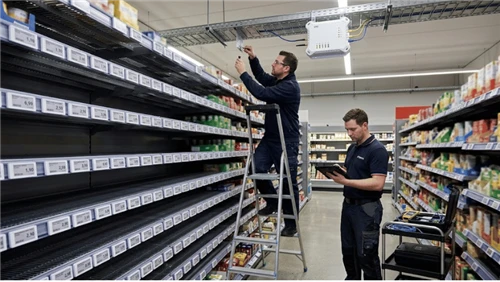
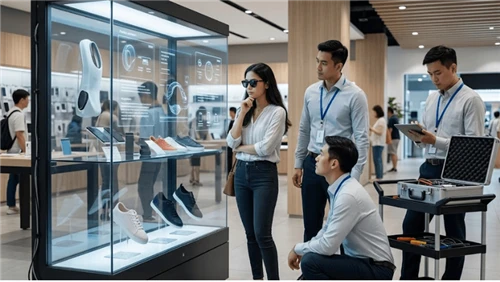
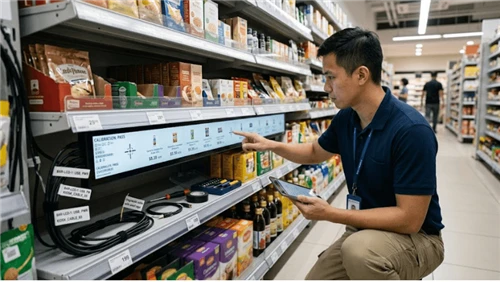
When Aldi Nord and Aldi Süd began testing electronic shelf labels across their German stores, they didn't pick one vendor and run with it. They ran extended proof-of-concept trials with SoluM, SES-imagotag, Hanshow, and Pricer simultaneously - different labels in different stores, different protocols, different software stacks, same shelf. Lidl apparently went a different route and committed to SES-imagotag early. Kaufland, Lidl's sister company, equipped around 1,200 stores with digital price tags for produce alone before expanding further.
That pattern - large retailers testing multiple ESL manufacturers head-to-head before committing - has become the norm, not the exception. And the shortlist almost always comes down to the same three names. SES-imagotag (now operating as VusionGroup) holds the largest installed base globally. SoluM, a Samsung Electro-Mechanics spinoff, has climbed to the number-two position worldwide. Pricer, the Swedish company that helped commercialize ESL technology back in the 1990s, remains a dominant force in European grocery.
The spec sheets from all three look similar at a glance. Dig into the infrastructure requirements, and the differences start to matter a lot - especially if you're planning a rollout across hundreds of locations with e-ink electronic shelf labels at scale.
Where Each Company Actually Comes From - and Why That Shapes Their Product
VusionGroup's backstory is unusual in this industry. The company started as SES-imagotag in France, then BOE Technology Group acquired a controlling stake in 2019. That deal connected SES to BOE's manufacturing facility in Chongqing, which according to company disclosures has a production capacity exceeding 300 million ESL units - and sits on the China-Europe rail corridor, cutting shipping times roughly in half versus sea freight. Today the company reports over 72 million ESLs connected to its cloud platform across more than 15,500 stores, according to its 2023 corporate filings.

SoluM's origin story sounds almost accidental. Samsung Electro-Mechanics had an ESL division that the parent company shelved as non-core. In 2015 it was spun off. CEO Jun Sung-ho pulled engineers from Samsung Electronics, rebuilt the team around software competence, and repositioned SoluM as a full turn-key provider - design, production, distribution, and integration under one roof. SoluM is the only top-three ESL vendor that owns its manufacturing lines outright, which translates into pricing flexibility and faster lead times. By 2024, SoluM had overtaken Pricer for the number-two global position, with contracts spanning Volkswagen's factory in Dresden, SpaceX facilities, and grocery chains like Loblaws and ShopRite across North America.
Pricer doesn't have the flashiest growth narrative, and that's partly the point. The company has been building electronic shelf label hardware in Stockholm since the mid-1990s - before most retailers knew what ESL meant. Its institutional knowledge in physical-layer communication challenges runs deep. Customer relationships with Scandinavian and Western European grocery chains go back decades, and those retailers aren't switching because someone else published a nicer cloud dashboard.
How the Top Electronic Shelf Label Manufacturers Differ on Protocol
Ask any systems integrator what separates these three manufacturers in practice, and the answer usually isn't display quality or label size. It's how the labels talk to the backend. Get this wrong, and you're dealing with dropped updates, dead zones behind metal shelving, and a rollout that stalls at 50 stores.
VusionGroup has pushed hardest into broad interoperability. The VUSION platform supports proprietary high-frequency communication as well as BLE SIG Core 5.4, with integration partnerships spanning Cisco-Meraki, HP-Aruba, Mist (Juniper), Huawei, and Microsoft Azure. Retailers running one of those networking stacks can use existing Wi-Fi access points as ESL communication bridges, cutting dedicated infrastructure costs. Based on public financial disclosures, SES invested roughly four times what Pricer spent on R&D during the VUSION 2022 development cycle.
SoluM takes a different architectural approach. Its system communicates over proprietary 2.4 GHz wireless through USB dongle-based access points - plug a dongle into a Mist AP, configure the ESL bridge in the dashboard, and the Newton labels start receiving updates. The system is fast. Newton labels are known for quick refresh cycles relative to e-paper display constraints, and the architecture handles bulk pushes to tens of thousands of tags without queuing delays that plague some BLE-first systems.
Then there's Pricer's infrared communication - the oldest protocol still in active deployment, and the hardest to dismiss. Radio-based systems share one vulnerability: RF interference from metal shelving, coolers, and concrete walls. In a grocery environment full of steel gondolas and refrigerated cases, these aren't edge cases - they're normal. Pricer's optical path sidesteps RF interference entirely. The trade-off is line-of-sight requirements between transmitters and labels. But where other vendors report intermittent update failures, Pricer's reliability is why their European clients stay.
What's on the Label - and What's Behind It
All three manufacturers build on E Ink electrophoretic displays, so the basic visual output looks similar. The differentiation sits in the product line depth and the edge-case engineering.
SoluM's Newton series is probably the widest product range in the industry. Sizes from 1.6 to 11.6 inches, with a freezer variant rated to -25°C, an IP67-rated industrial version, a multi-color model using E Ink Spectra, and Newton TOUCH with capacitive interaction on the surface. Battery life reaches up to 10 years under standard refresh conditions (1–3 updates per day), per SoluM's product specifications - roughly double what most competitors promise.
VusionGroup's hardware strategy leans toward ecosystem integration over label-level specs. Their labels are reliable and support color through E Ink Spectra. But the real pitch is what sits alongside them: AI-powered shelf-monitoring cameras for planogram compliance, AdShelf video rails for shelf-edge media, and the VUSION Cloud platform tying pricing, analytics, and operations into one dashboard. If you evaluate SES purely on label hardware, you're missing the strategy. They're selling digital store infrastructure - the label is the entry point.
Pricer's standout hardware feature is SmartFLASH - an LED on each label that flashes specific color patterns when triggered by the management system. The practical use case: online order fulfillment. A store associate picks orders by walking aisles, SmartFLASH lights up the right label, and pick time drops dramatically. According to Pricer's published case data, roughly half the stores running SmartFLASH saw measurable reductions in out-of-stock rates because the same system doubles as a restocking alert.
Picking the Right Vendor - It Depends on the Store, Not the Brochure
The honest answer is that none of these three vendors is universally best. The right choice depends on conditions that no comparison table can capture.
A 600-store supermarket chain running Cisco Meraki and planning aggressive omnichannel dynamic pricing? VusionGroup's VUSION platform - cloud, AI shelf monitoring, network partner integrations - is difficult to match at that scale. Walmart's ESL deployment across 2,300 U.S. stores proved SES can execute at continental scale.
A mid-market retailer focused on total cost of ownership over a decade? SoluM's manufacturing ownership gives them pricing leverage, and Newton's 10-year battery life means no mass replacements at year five. Practical cost considerations matter more than cloud features if your IT team is three people.
A European grocery chain with metal-intensive shelving and high-density cooler layouts? Pricer's infrared protocol eliminates the RF dead zones that plague radio-based systems in these environments. Twenty-plus years of refinement means fewer surprises on day one.
| Vendor | Communication | Core Strength | Best Fit |
|---|---|---|---|
| SES-imagotag (VusionGroup) | BLE 5.4 / proprietary HF / Wi-Fi bridge | Cloud platform + ecosystem partnerships | Enterprise chains, 500+ stores, omnichannel pricing |
| SoluM | Proprietary 2.4 GHz via USB dongle | Vertically integrated manufacturing, 10-year battery | Mid-to-large chains, cost-sensitive rollouts, industrial |
| Pricer | Infrared optical | RF-immune reliability, SmartFLASH LED pick |
Dense grocery, metal shelving, cooler-heavy layouts |

What About Everyone Else?
SES, SoluM, and Pricer dominate the conversation - but they don't own the entire electronic shelf label market. A growing tier of ESL vendors focuses on deployment realities that enterprise manufacturers sometimes overlook: regional chains with 20–80 stores, operators on thinner margins, and retailers who need reliable e-ink displays and wireless price sync without paying for a global cloud platform they'll never fully use.
These mid-market electronic shelf label systems typically offer modular architectures - start with one store, expand without replatforming. Hardware comes from the same E Ink supply chain that feeds the big three. The software is simpler, the support model is more hands-on, and the per-label cost runs lower. For a regional grocery operator or a specialty retailer running a first ESL pilot, that combination can matter more than any enterprise feature roadmap. The underlying e-paper and communication technology is proven. The question is whether the vendor understands your scale.
Beyond the Price Tag
The ESL market is moving fast. The global installed base is expanding above 6% CAGR according to multiple industry forecasts, with nearly half of investment flowing toward AI-integrated platforms. All three vendors are pushing into AI-driven dynamic pricing, NFC-based customer interaction, and shelf-edge retail media monetization.
NFC in particular is changing what a label can do. A shopper taps their phone against an NFC-enabled e-ink label and pulls up nutritional data, loyalty offers, or a direct product page link - no app required. All three vendors support NFC in current hardware, but the depth of software integration behind each tap varies considerably.
ESL infrastructure is also converging with broader shelf-edge digital systems. Retailers are now pairing LCD digital signage with e-paper labels - a 10.1-inch dual-screen LCD display on the endcap, thousands of small e-ink tags along the gondola. The behavioral science behind shelf-edge pricing presentation is becoming a capability that ESL platform vendors embed directly into their software.
The vendors who win the next phase won't be the ones with the best label. They'll be the ones whose platform makes the shelf edge intelligent - responsive to demand, integrated with inventory, and capable of serving both operations and marketing on the same hardware.
Frequently Asked Questions
Q: Which electronic shelf label manufacturer has the largest market share?
A: VusionGroup (formerly SES-imagotag) holds the largest global installed base, with over 72 million labels deployed across 15,500+ stores according to its 2023 filings. SoluM ranks second and leads in North America. Pricer holds a strong position across European grocery.
Q: How should I evaluate ESL vendors for my store?
A: Four factors matter most: your store's physical environment (metal shelving and cooler density affect RF-based systems), existing IT infrastructure (network vendor compatibility), planned rollout scale (single pilot vs. multi-hundred-store deployment), and total cost of ownership over 7–10 years including battery replacement and software licensing.
Q: Can I mix electronic shelf labels from different manufacturers in the same store?
A: Technically possible but rarely advisable. Each vendor's labels communicate through proprietary protocols and require their own access points and management software. Running two systems in parallel doubles infrastructure complexity and support overhead. Most retailers standardize on a single ESL manufacturer per store format.
Q: What's a realistic ROI timeline for electronic shelf labels?
A: Most retailers report payback within 18 to 36 months, driven primarily by labor savings on price changes and reductions in pricing errors. Stores with frequent promotions or high SKU counts tend to recoup the investment faster. Dynamic pricing capabilities and retail media revenue from shelf-edge screens can shorten the timeline further.