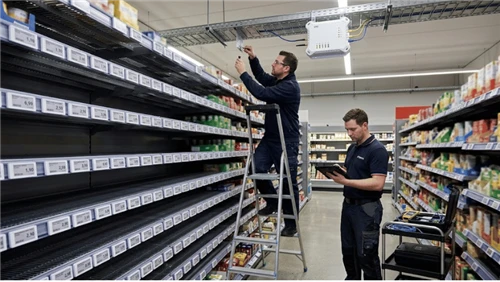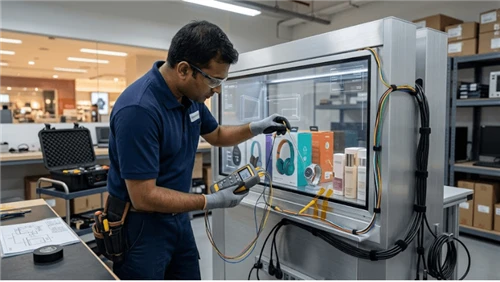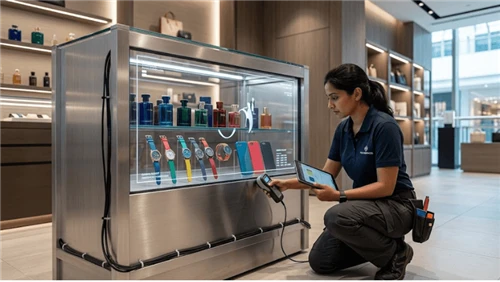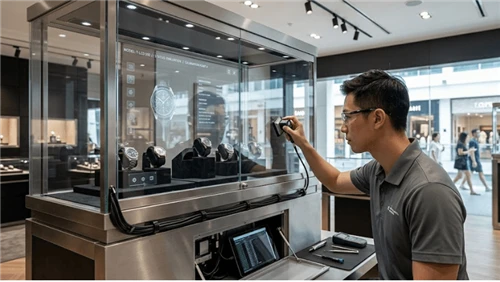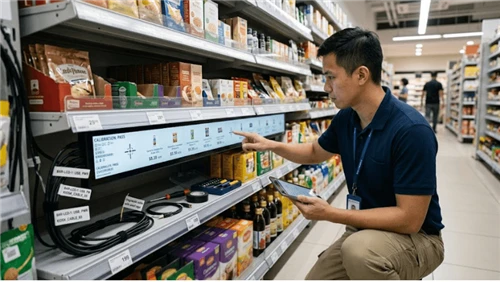
Transparent LCD Cabinet Thermal Design: Protect the Panel, Lighting, and Player is not a question that can be answered by one brochure value. For exhibit fabricators, enclosure engineers, system integrators, retail operations teams, and transparent-display buyers, the real decision is how to manage combined heat from the panel, backlight, product lighting, player, power supplies, and enclosed merchandise space. A reliable project therefore starts with the operating task, records the installed conditions, and converts every important claim into evidence that can be reviewed before rollout.
This guide uses a zone-based thermal design that protects electronics and products while preserving optical quality, quiet operation, dust control, and service access. It does not assume that a particular product, architecture, certification, return, or performance level applies to every project. Published specifications should be tied to the exact model and configuration, while legal, safety, accessibility, payment, and cybersecurity obligations should be reviewed by qualified parties for the relevant market.
The recommended output is a decision package: scope, requirements, drawings or data maps, test method, expected result, captured evidence, defect ownership, recovery procedure, and the conditions that require retesting. That package gives procurement, engineering, content, operations, and suppliers a common basis for approval instead of relying on subjective impressions.
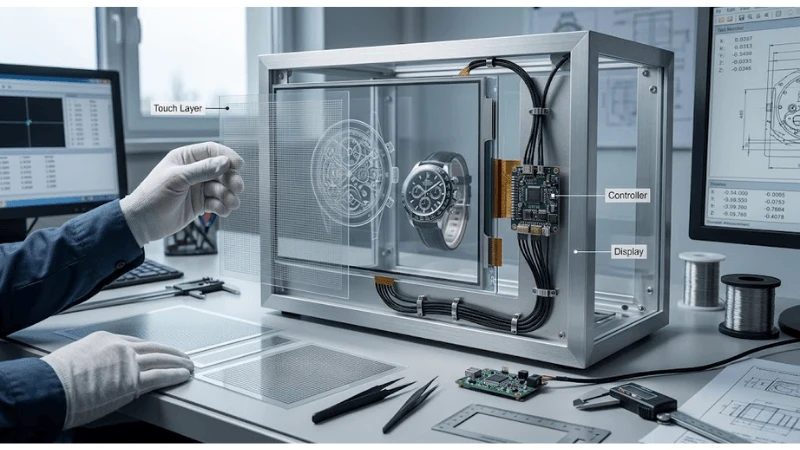
Define the design job
For transparent LCD cabinet thermal design, this stage should produce a reviewable output rather than an informal agreement. The team should connect the requirement to the intended user, operating condition, owner, and acceptance evidence.
Define the thermal zones and heat sources
This requirement should be decided before hardware is ordered. Define the thermal zones and heat sources. This matters because the display can technically play video while the physical product becomes difficult to see or the digital overlay loses contrast. The project should separate panel electronics, lighting, player, power conversion, product chamber, intake, and exhaust instead of using one cabinet temperature, and retain the most relevant parts of viewing tests, luminance and temperature readings, touch calibration records, content proofs, photographs, and service-access checks as evidence. For a project team, this changes the decision: test the requirement under maximum display brightness, lighting scene, processing load, and ambient condition, name the owner who accepts or escalates exceptions, and state whether the conclusion applies only to the tested configuration. Supplier documentation can define a starting boundary, but local validation is still required.
Teams that need the broader product context can review the transparent display case solution before locking this requirement.
Set measurable acceptance criteria for the thermal zones and heat sources
This is a system question rather than a single-component feature. Set measurable acceptance criteria for the thermal zones and heat sources. This matters because the display can technically play video while the physical product becomes difficult to see or the digital overlay loses contrast. The project should capture power inventory, thermal images, and multi-point temperature readings and compare it with an approved baseline, and retain the most relevant parts of viewing tests, luminance and temperature readings, touch calibration records, content proofs, photographs, and service-access checks as evidence. In a pilot, the difference becomes obvious: test the requirement under a representative pilot, worst-case content, and normal operating hours, name the owner who accepts or escalates exceptions, and state whether the conclusion applies only to the tested configuration. Supplier documentation can define a starting boundary, but local validation is still required.
Assign ownership and an exception path for the thermal zones and heat sources
The specification only becomes useful when it is tied to a real operating condition. Assign ownership and an exception path for the thermal zones and heat sources. This matters because the display can technically play video while the physical product becomes difficult to see or the digital overlay loses contrast. The project should record who reviews failures, who authorizes changes, and how the result is retested, and retain the most relevant parts of viewing tests, luminance and temperature readings, touch calibration records, content proofs, photographs, and service-access checks as evidence. Operations should translate the requirement into a repeatable check: test the requirement under handover, store changes, software releases, and supplier substitutions, name the owner who accepts or escalates exceptions, and state whether the conclusion applies only to the tested configuration. Supplier documentation can define a starting boundary, but local validation is still required.
This checkpoint should be read alongside the site's guidance on transparent display product range, because adjacent decisions can change the result.
Translate the job into measurable requirements
For transparent LCD cabinet thermal design, this stage should produce a reviewable output rather than an informal agreement. The team should connect the requirement to the intended user, operating condition, owner, and acceptance evidence.
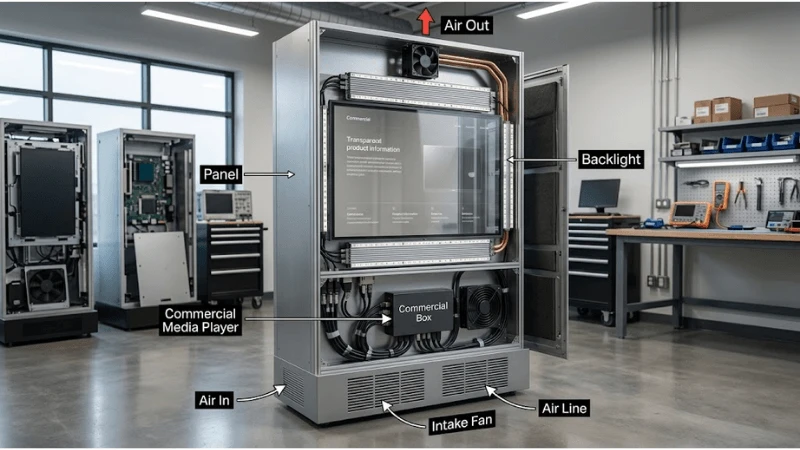
Define the heat path and air separation
A strong design separates the intended outcome from the method used to achieve it. Define the heat path and air separation. This matters because the display can technically play video while the physical product becomes difficult to see or the digital overlay loses contrast. The project should guide heat away from the viewing chamber and prevent short-circuit airflow, hot exhaust recirculation, and direct air on sensitive products, and retain the most relevant parts of viewing tests, luminance and temperature readings, touch calibration records, content proofs, photographs, and service-access checks as evidence. For a project team, this changes the decision: test the requirement under shallow cabinets, sealed doors, wall recesses, and adjacent equipment, name the owner who accepts or escalates exceptions, and state whether the conclusion applies only to the tested configuration. Supplier documentation can define a starting boundary, but local validation is still required.
For related implementation context, use the 27x10 transparent touch screen resource as a starting point and verify the local configuration.
Set measurable acceptance criteria for the heat path and air separation
The most common mistake is to approve the visible result without testing the process behind it. Set measurable acceptance criteria for the heat path and air separation. This matters because the display can technically play video while the physical product becomes difficult to see or the digital overlay loses contrast. The project should capture airflow diagrams, smoke visualization, and enclosure drawings and compare it with an approved baseline, and retain the most relevant parts of viewing tests, luminance and temperature readings, touch calibration records, content proofs, photographs, and service-access checks as evidence. In a pilot, the difference becomes obvious: test the requirement under a representative pilot, worst-case content, and normal operating hours, name the owner who accepts or escalates exceptions, and state whether the conclusion applies only to the tested configuration. Supplier documentation can define a starting boundary, but local validation is still required.
Assign ownership and an exception path for the heat path and air separation
The buyer should define both the supported condition and the condition that triggers redesign. Assign ownership and an exception path for the heat path and air separation. This matters because the display can technically play video while the physical product becomes difficult to see or the digital overlay loses contrast. The project should record who reviews failures, who authorizes changes, and how the result is retested, and retain the most relevant parts of viewing tests, luminance and temperature readings, touch calibration records, content proofs, photographs, and service-access checks as evidence. Operations should translate the requirement into a repeatable check: test the requirement under handover, store changes, software releases, and supplier substitutions, name the owner who accepts or escalates exceptions, and state whether the conclusion applies only to the tested configuration. Supplier documentation can define a starting boundary, but local validation is still required.
The next linked decision is covered in transparent screen display; keep the boundaries separate so one article does not substitute for a project test.
Transparent Lcd Cabinet Thermal Design Decision Table
The table below turns the topic into a compact review structure. Add project-specific limits, test tools, owners, and approval signatures before using it as an acceptance record.
| Thermal zone | Primary concern | Evidence |
|---|---|---|
| Panel zone | Electronics and optical layers | Panel-area temperature trend |
| Lighting zone | LED and driver heat | Driver and diffuser readings |
| Player zone | Compute and storage stability | Player health and thermal log |
| Product zone | Merchandise limits and comfort | Product-plane measurement |
| Air path | Recirculation and blockage | Flow visualization |
Build the content or physical design
For transparent LCD cabinet thermal design, this stage should produce a reviewable output rather than an informal agreement. The team should connect the requirement to the intended user, operating condition, owner, and acceptance evidence.
Define passive versus active cooling
This requirement should be decided before hardware is ordered. Define passive versus active cooling. This matters because the display can technically play video while the physical product becomes difficult to see or the digital overlay loses contrast. The project should compare conduction, natural convection, fans, ducts, filters, and remote electronics against noise and maintenance needs, and retain the most relevant parts of viewing tests, luminance and temperature readings, touch calibration records, content proofs, photographs, and service-access checks as evidence. For a project team, this changes the decision: test the requirement under customer-facing spaces, dust, long hours, and limited vent area, name the owner who accepts or escalates exceptions, and state whether the conclusion applies only to the tested configuration. Supplier documentation can define a starting boundary, but local validation is still required.
Teams that need the broader product context can review the wood display with transparent screen before locking this requirement.
Set measurable acceptance criteria for passive versus active cooling
This is a system question rather than a single-component feature. Set measurable acceptance criteria for passive versus active cooling. This matters because the display can technically play video while the physical product becomes difficult to see or the digital overlay loses contrast. The project should capture temperature tests, airflow measurements, acoustic observations, and maintenance models and compare it with an approved baseline, and retain the most relevant parts of viewing tests, luminance and temperature readings, touch calibration records, content proofs, photographs, and service-access checks as evidence. In a pilot, the difference becomes obvious: test the requirement under a representative pilot, worst-case content, and normal operating hours, name the owner who accepts or escalates exceptions, and state whether the conclusion applies only to the tested configuration. Supplier documentation can define a starting boundary, but local validation is still required.
Assign ownership and an exception path for passive versus active cooling
The specification only becomes useful when it is tied to a real operating condition. Assign ownership and an exception path for passive versus active cooling. This matters because the display can technically play video while the physical product becomes difficult to see or the digital overlay loses contrast. The project should record who reviews failures, who authorizes changes, and how the result is retested, and retain the most relevant parts of viewing tests, luminance and temperature readings, touch calibration records, content proofs, photographs, and service-access checks as evidence. Operations should translate the requirement into a repeatable check: test the requirement under handover, store changes, software releases, and supplier substitutions, name the owner who accepts or escalates exceptions, and state whether the conclusion applies only to the tested configuration. Supplier documentation can define a starting boundary, but local validation is still required.
This checkpoint should be read alongside the site's guidance on transparent OLED screen, because adjacent decisions can change the result.
Prototype under realistic conditions
For transparent LCD cabinet thermal design, this stage should produce a reviewable output rather than an informal agreement. The team should connect the requirement to the intended user, operating condition, owner, and acceptance evidence.
Define product and optical protection
A strong design separates the intended outcome from the method used to achieve it. Define product and optical protection. This matters because the display can technically play video while the physical product becomes difficult to see or the digital overlay loses contrast. The project should control temperatures around merchandise, diffuser materials, adhesives, films, glass, and touch layers as well as electronic components, and retain the most relevant parts of viewing tests, luminance and temperature readings, touch calibration records, content proofs, photographs, and service-access checks as evidence. For a project team, this changes the decision: test the requirement under heat-sensitive products, glossy surfaces, and high-output lighting, name the owner who accepts or escalates exceptions, and state whether the conclusion applies only to the tested configuration. Supplier documentation can define a starting boundary, but local validation is still required.
For related implementation context, use the transparent LCD solutions for retail showcases resource as a starting point and verify the local configuration.
Set measurable acceptance criteria for product and optical protection
The most common mistake is to approve the visible result without testing the process behind it. Set measurable acceptance criteria for product and optical protection. This matters because the display can technically play video while the physical product becomes difficult to see or the digital overlay loses contrast. The project should capture product-zone logs, optical inspections, and material-limit records and compare it with an approved baseline, and retain the most relevant parts of viewing tests, luminance and temperature readings, touch calibration records, content proofs, photographs, and service-access checks as evidence. In a pilot, the difference becomes obvious: test the requirement under a representative pilot, worst-case content, and normal operating hours, name the owner who accepts or escalates exceptions, and state whether the conclusion applies only to the tested configuration. Supplier documentation can define a starting boundary, but local validation is still required.
Assign ownership and an exception path for product and optical protection
The buyer should define both the supported condition and the condition that triggers redesign. Assign ownership and an exception path for product and optical protection. This matters because the display can technically play video while the physical product becomes difficult to see or the digital overlay loses contrast. The project should record who reviews failures, who authorizes changes, and how the result is retested, and retain the most relevant parts of viewing tests, luminance and temperature readings, touch calibration records, content proofs, photographs, and service-access checks as evidence. Operations should translate the requirement into a repeatable check: test the requirement under handover, store changes, software releases, and supplier substitutions, name the owner who accepts or escalates exceptions, and state whether the conclusion applies only to the tested configuration. Supplier documentation can define a starting boundary, but local validation is still required.
The next linked decision is covered in transparent LCD procurement considerations; keep the boundaries separate so one article does not substitute for a project test.
Validate readability and usability
For transparent LCD cabinet thermal design, this stage should produce a reviewable output rather than an informal agreement. The team should connect the requirement to the intended user, operating condition, owner, and acceptance evidence.
Define monitoring and safe response
This requirement should be decided before hardware is ordered. Define monitoring and safe response. This matters because the display can technically play video while the physical product becomes difficult to see or the digital overlay loses contrast. The project should place sensors, log trends, define alerts, dimming or shutdown actions, and recovery checks, and retain the most relevant parts of viewing tests, luminance and temperature readings, touch calibration records, content proofs, photographs, and service-access checks as evidence. For a project team, this changes the decision: test the requirement under blocked vents, fan failure, door left open, and high ambient temperature, name the owner who accepts or escalates exceptions, and state whether the conclusion applies only to the tested configuration. Supplier documentation can define a starting boundary, but local validation is still required.
Teams that need the broader product context can review the clear LCD screen comparison before locking this requirement.
Set measurable acceptance criteria for monitoring and safe response
This is a system question rather than a single-component feature. Set measurable acceptance criteria for monitoring and safe response. This matters because the display can technically play video while the physical product becomes difficult to see or the digital overlay loses contrast. The project should capture alert tests, safe-state demonstrations, and recovery records and compare it with an approved baseline, and retain the most relevant parts of viewing tests, luminance and temperature readings, touch calibration records, content proofs, photographs, and service-access checks as evidence. In a pilot, the difference becomes obvious: test the requirement under a representative pilot, worst-case content, and normal operating hours, name the owner who accepts or escalates exceptions, and state whether the conclusion applies only to the tested configuration. Supplier documentation can define a starting boundary, but local validation is still required.
Assign ownership and an exception path for monitoring and safe response
The specification only becomes useful when it is tied to a real operating condition. Assign ownership and an exception path for monitoring and safe response. This matters because the display can technically play video while the physical product becomes difficult to see or the digital overlay loses contrast. The project should record who reviews failures, who authorizes changes, and how the result is retested, and retain the most relevant parts of viewing tests, luminance and temperature readings, touch calibration records, content proofs, photographs, and service-access checks as evidence. Operations should translate the requirement into a repeatable check: test the requirement under handover, store changes, software releases, and supplier substitutions, name the owner who accepts or escalates exceptions, and state whether the conclusion applies only to the tested configuration. Supplier documentation can define a starting boundary, but local validation is still required.
This checkpoint should be read alongside the site's guidance on transparent LCD showcase technology, because adjacent decisions can change the result.
Control lifecycle changes
For transparent LCD cabinet thermal design, this stage should produce a reviewable output rather than an informal agreement. The team should connect the requirement to the intended user, operating condition, owner, and acceptance evidence.
Define cleaning and service access
A strong design separates the intended outcome from the method used to achieve it. Define cleaning and service access. This matters because the display can technically play video while the physical product becomes difficult to see or the digital overlay loses contrast. The project should make filters, fans, vents, drivers, and players reachable without damaging the panel, recalibration, or disturbing merchandise, and retain the most relevant parts of viewing tests, luminance and temperature readings, touch calibration records, content proofs, photographs, and service-access checks as evidence. For a project team, this changes the decision: test the requirement under routine maintenance, emergency replacement, and cabinet relocation, name the owner who accepts or escalates exceptions, and state whether the conclusion applies only to the tested configuration. Supplier documentation can define a starting boundary, but local validation is still required.
For related implementation context, use the see-through LCD retail displays resource as a starting point and verify the local configuration.
Set measurable acceptance criteria for cleaning and service access
The most common mistake is to approve the visible result without testing the process behind it. Set measurable acceptance criteria for cleaning and service access. This matters because the display can technically play video while the physical product becomes difficult to see or the digital overlay loses contrast. The project should capture timed service trials, access drawings, cleaning records, and post-service tests and compare it with an approved baseline, and retain the most relevant parts of viewing tests, luminance and temperature readings, touch calibration records, content proofs, photographs, and service-access checks as evidence. In a pilot, the difference becomes obvious: test the requirement under a representative pilot, worst-case content, and normal operating hours, name the owner who accepts or escalates exceptions, and state whether the conclusion applies only to the tested configuration. Supplier documentation can define a starting boundary, but local validation is still required.
Assign ownership and an exception path for cleaning and service access
The buyer should define both the supported condition and the condition that triggers redesign. Assign ownership and an exception path for cleaning and service access. This matters because the display can technically play video while the physical product becomes difficult to see or the digital overlay loses contrast. The project should record who reviews failures, who authorizes changes, and how the result is retested, and retain the most relevant parts of viewing tests, luminance and temperature readings, touch calibration records, content proofs, photographs, and service-access checks as evidence. Operations should translate the requirement into a repeatable check: test the requirement under handover, store changes, software releases, and supplier substitutions, name the owner who accepts or escalates exceptions, and state whether the conclusion applies only to the tested configuration. Supplier documentation can define a starting boundary, but local validation is still required.
The next linked decision is covered in custom LCD for retail signage; keep the boundaries separate so one article does not substitute for a project test.
Implementation Checklist
Use this checklist as a planning aid, then adapt it to the exact product, site, jurisdiction, and service model.
- Inventory panel, lighting, player, and PSU heat
- Map separate cabinet temperature zones
- Keep intake and exhaust paths distinct
- Validate the maximum lighting scene
- Monitor both electronics and product plane
- Test blocked-vent and fan-failure response
- Design tool-safe service access
- Retest after product or component changes
Common Project Mistakes
- Selecting a solution from a headline specification before defining how to manage combined heat from the panel, backlight, product lighting, player, power supplies, and enclosed merchandise space.
- Testing an open bench sample while ignoring the final fixture, enclosure, content, network, and service environment.
- Accepting a supplier statement without recording the exact model, configuration, assumption, method, and evidence boundary.
- Treating a successful normal-flow demonstration as proof of failure detection, fallback, recovery, and reconciliation.
- Leaving ownership ambiguous across buyer, integrator, software team, store operations, facilities, and service provider.
- Approving rollout without version control, defect closure, training, spares, monitoring, and a retest trigger for future changes.
Questions to Ask Suppliers and Integrators
- Which exact transparent panel, optical stack, lighting system, player, enclosure, and touch option are proposed?
- What product, lighting, content, angle, temperature, and ambient-light assumptions support the visual claim?
- Can the supplier provide a production-size sample with the buyer's real product and content?
- How are lighting, thermal zones, optical defects, touch settings, and service access controlled?
- What changes to panel, glass, lighting, adhesive, controller, or enclosure trigger reapproval?
- What FAT/SAT evidence, cosmetic criteria, warranty, spare model, and lifecycle notice will be provided?
FAQ
Q: Why can a transparent showcase run hotter than a standard monitor?
A: It combines a display, product lighting, enclosure, player, power supplies, and often limited vent space. The transparent visual design can also constrain airflow.
Q: Should the product chamber share airflow with electronics?
A: Not automatically. Shared airflow may expose products to heat, dust, or drafts. Define zones and validate the complete enclosure against product and component requirements.
Q: Can dimming be used as a thermal response?
A: Dimming may reduce part of the heat load, but it must be designed, tested, and logged as one protective action rather than a substitute for an adequate thermal path.
Q: Where should temperature be measured?
A: Measure likely hot spots near the panel electronics, lighting drivers, player, power supplies, exhaust, and product plane. A single ambient sensor is rarely enough.
Q: What changes require thermal retesting?
A: Retest after changing panel, player, power supply, lighting, diffuser, cabinet vents, filters, mounting location, content brightness, product arrangement, or operating schedule.
Conclusion
A defensible transparent LCD cabinet thermal design decision connects the intended result to the complete installed system, a named operating owner, and evidence from realistic conditions. Start by defining how to manage combined heat from the panel, backlight, product lighting, player, power supplies, and enclosed merchandise space; then document the configuration, run normal and failure tests, close defects, and retain the evidence used for approval. The strongest procurement outcome is not the longest specification. It is a controlled requirement set that suppliers can answer, project teams can test, and operations can sustain after handover.