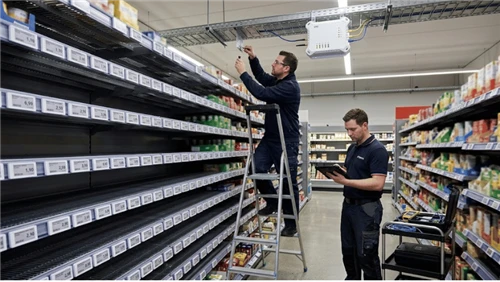
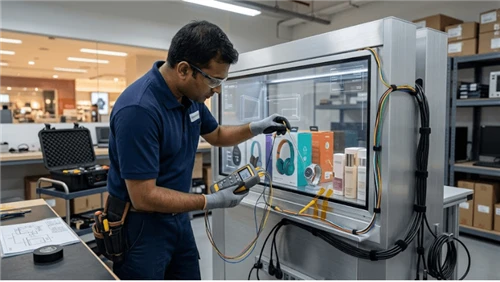
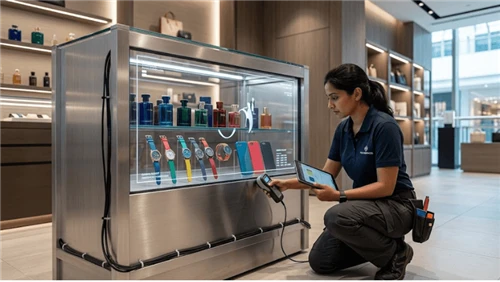
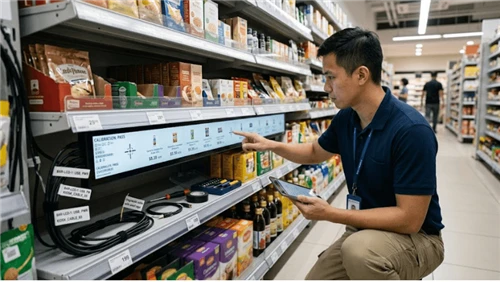
This guide covers the full environmental picture-what ESLs genuinely change, where the numbers are meaningful, and where the tradeoffs are worth understanding before you commit.
Why Retail Has a Paper Problem Worth Taking Seriously
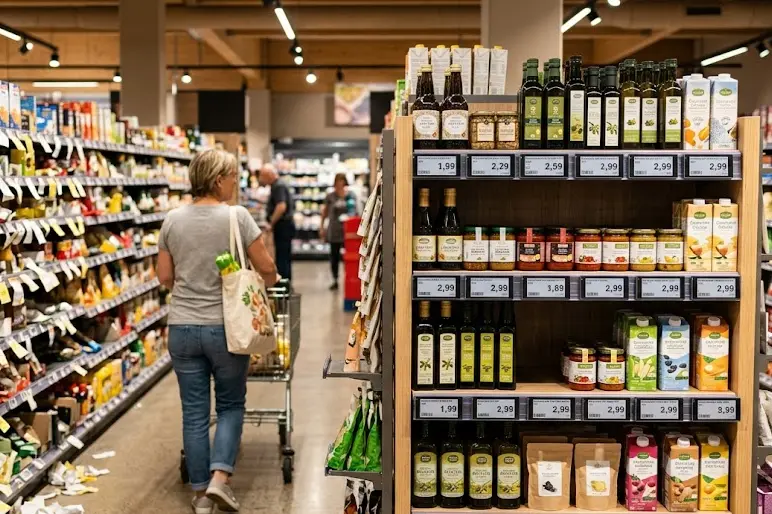
Retail's paper footprint is easy to underestimate. The visible culprits-carrier bags, product packaging-get most of the attention. But price labeling is a quieter, continuous source of waste that compounds across stores, promotions, and seasons.
Traditional paper labels have an intentionally short useful life. Prices change, promotions rotate, regulatory requirements get updated-and every change triggers another print run. The label itself is just the visible part. Behind it sits a supply chain of thermal paper rolls, ink or toner cartridges, printing hardware, and the staff time to manage the cycle.
To put the scale in perspective: a grocery retailer with 5,000 SKUs running weekly promotional cycles on 20% of its range generates roughly 52,000 individual label changes per year, per store. For a 50-store chain, that approaches 2.6 million label events annually-before seasonal resets, compliance updates, or everyday price corrections. These are illustrative estimates based on typical promotional frequencies, not measured figures, but they reflect a real operational reality that most store managers will recognize immediately.
If you're new to how the technology works before getting into the environmental side, this overview of how electronic shelf labels work covers the basics. For grocery-specific context, the picture is even more pronounced-electronic shelf labels in grocery stores face some of the highest label change volumes in retail.
The Environmental Benefits of Electronic Shelf Labels: A Full Breakdown
The case for ESLs isn't built on one benefit-it's built on several that work across different parts of the retail operation. Each one is worth understanding on its own terms.
Eliminating Paper and Ink Consumption at the Source
A single ESL unit, once installed, handles all price and content changes electronically for the duration of its operational life-typically seven to ten years, according to leading ESL manufacturers. During that same period, a paper-based system serving the same shelf position would have consumed hundreds of individual labels, plus the thermal paper stock, ink, and packaging materials used to produce them.
For retailers running active promotional calendars, this reduction isn't marginal. It removes an entire material stream: label stock procurement, storage, distribution to stores, and disposal after use. Printing hardware and its ongoing maintenance costs disappear alongside it.
Ultra-Low Energy Use: What E-Ink Technology Actually Does
The energy story is more interesting than most people expect, and it comes down to how e-ink display technology works at a physical level.
Unlike LED or LCD screens, which need a constant backlight to remain visible, e-ink displays only draw power at the moment content changes. Once a new price is written to the screen, the display holds that image indefinitely with no ongoing power draw-you could disconnect the battery and the label would continue showing its last update. This means an ESL that refreshes its display twice a day uses a tiny fraction of the electricity required to run an equivalent label printing operation.
In practical terms, the operational energy cost of an ESL network is dramatically lower than the paper alternative it replaces-not because ESLs are "energy-efficient" in a vague marketing sense, but because the core display technology is built around a fundamentally different power model. For a deeper look at how display refresh rates affect energy performance in different retail environments, see ESL refresh rates and display performance. A comparison of e-ink against other display technologies is also covered in e-ink vs. OLED: which display technology fits retail?
Long Battery Life and the Electronic Waste Question
It's fair to ask whether ESLs simply trade paper waste for electronic waste. The answer is that the comparison doesn't hold up when measured over time.
With typical usage patterns-a handful of updates per day-batteries in current-generation ESLs last between seven and ten years before needing replacement. The display and housing are designed to outlast the battery, so a single hardware unit can serve a shelf position for a decade or more with one battery swap. Over that same period, the paper-based alternative for that position would have generated hundreds to thousands of individual label units headed for the waste stream.
Most major ESL manufacturers also operate take-back and recycling programs for end-of-life hardware, and design their housings using recyclable materials. The e-waste question is legitimate and worth raising with any supplier you evaluate-but the net comparison, measured across a realistic operating lifespan, consistently favors ESLs.
Reducing Food Waste Through Real-Time Markdown Pricing
This is the environmental connection that rarely appears in standard ESL coverage, and it matters more than it might seem.
According to the Food and Agriculture Organization of the United Nations, approximately one-third of all food produced globally is lost or wasted. A meaningful portion of that happens at the retail level-products that reach their best-before date on the shelf and get discarded because there wasn't time or mechanism to sell them down.
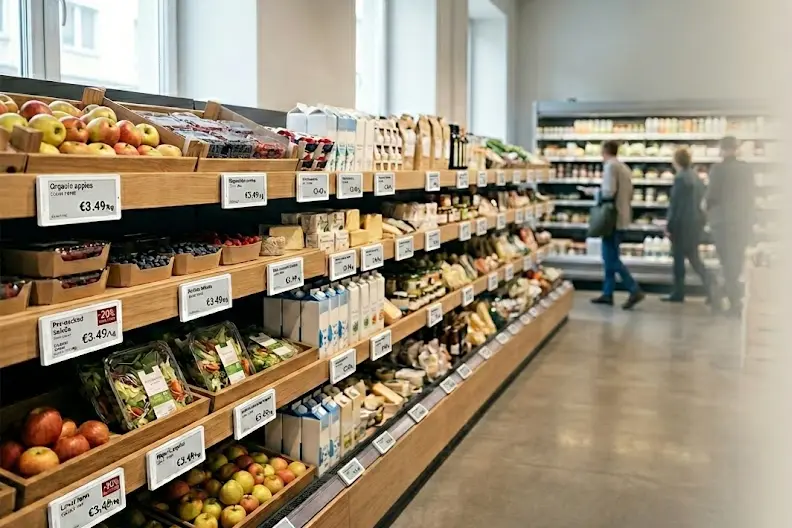
ESLs don't solve food waste on their own. But they make something practical that paper labels make nearly impossible: instant, item-level price reductions across every store in a network simultaneously. A retailer can identify near-expiry stock and push a markdown within minutes, not hours. That speed creates a genuine window to move product that would otherwise be written off. ESL dynamic pricing covers this operational capability in more detail.
The environmental connection is direct. Food that gets purchased rather than discarded doesn't decompose in landfill-which matters because organic waste in landfill is a significant source of methane, a potent greenhouse gas.
Reducing Carbon Tied to Label Logistics
For a single store, this benefit is modest. For retail chains with dozens or hundreds of locations, it becomes more meaningful.
Paper-based labeling requires a physical supply chain: label stock printed centrally or at distribution hubs, then shipped to individual stores on a recurring basis. ESLs move that supply chain to the network layer. Price updates travel over a wireless connection from a central management system to shelf-edge displays. No physical transport, no consumable restocking runs, no packaging for label rolls. The reduction in label-related logistics doesn't translate easily into a single number, but for large retail networks, it represents a genuine reduction in the operational carbon attached to routine price management.
ESL vs. Paper Labels: A Side-by-Side Environmental Comparison
The table below summarizes the key environmental differences. Figures represent general industry estimates based on typical retail deployments; actual results will vary by store size, label change frequency, and ESL system specification. For a broader operational and cost comparison, see electronic shelf labels vs. paper labels: a practical breakdown.
| Environmental Dimension | Paper Labels | Electronic Shelf Labels |
|---|---|---|
| Paper consumption | High - reprinted with every price or content change | Near zero - one unit serves the position for years |
| Ink and toner use | Ongoing - consumables required per print run | None during operation |
| Energy use | High - printer operation for every update cycle | Ultra-low - e-ink draws power only on content change |
| Waste generated | Continuous - discarded labels, spent cartridges, packaging | Minimal - hardware lasts 7–10 years |
| Label logistics carbon | Ongoing - supply chain and in-store distribution | One-time - hardware installation only |
| Food waste impact | None - price changes are too slow for near-expiry response | Positive - real-time markdowns reduce unsold perishables |
| End-of-life | Landfill (paper, ink residue) | Recyclable via manufacturer take-back programs |
| Manufacturing footprint | Low per label, significant in aggregate over time | Higher upfront, amortized over 7–10 year lifespan |
For more on the technical underpinning of ESL systems, electronic shelf label technology covers the infrastructure in detail.
How ESL Deployment Supports ESG and Sustainability Reporting
For retailers with formal sustainability programs or ESG disclosure obligations, the shift to electronic shelf labels offers something that general environmental commitments often lack: measurable, documentable reduction in specific resource categories.
This matters because sustainability reporting frameworks-including the GRI Standards for material consumption and energy disclosure-require quantifiable data, not qualitative claims. ESL deployment generates that data as a byproduct of normal operations.
Metrics That Can Go Into a Sustainability Report
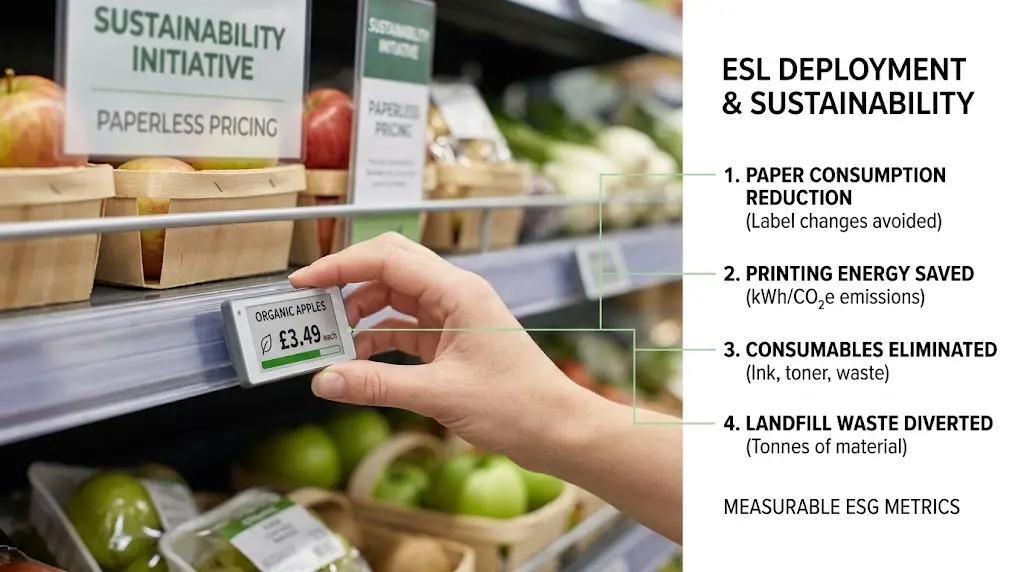
If you're preparing to include ESL deployment in ESG documentation, the following categories are reasonable to calculate and report:
- Annual paper consumption reduction - Calculate the number of label changes your previous system generated, multiply by the average paper weight per label, and report the total in kilograms or tonnes eliminated.
- Printing energy saved - Estimate the annual kWh consumed by label printers that are no longer in operation. Apply your local grid emissions factor to convert to a CO₂ equivalent figure.
- Consumables eliminated - Ink cartridges, toner, thermal paper rolls, and associated packaging each carry a documented carbon footprint from their own supply chains. These can be estimated and reported as supply chain emissions reductions.
- Waste diverted from landfill - Calculate the total weight of label stock and packaging that would have entered the waste stream under your previous system on an annual basis.
A note on reporting accuracy: These figures should be presented as reasonable estimates unless you have detailed baseline data from your previous labeling system. Overstating precision in sustainability disclosures creates compliance risk. If ESL data will appear in audited reports, work with your sustainability team or a third-party verifier to establish methodology.
For retailers also evaluating the financial return alongside the environmental case, the ESL ROI calculator provides a framework for estimating operational savings that can be reported alongside sustainability metrics.
What ESLs Don't Solve: A Realistic Assessment
Any honest sustainability case for ESLs has to include this part-and the fact that most vendor content skips it is a good reason to read it carefully.
Hardware manufacturing carries an upfront footprint.
ESL units contain circuit boards, displays, batteries, and housing materials. Manufacturing these components has a carbon cost that a single paper label doesn't. The environmental case for ESLs depends entirely on the long operating lifespan justifying that upfront investment. That's a reasonable argument-but it requires honest framing, not just "ESLs are green."
Battery replacement is not zero-impact.
Even with a 7–10 year battery life, batteries eventually need replacing. The environmental impact is small relative to the paper alternative, but responsible disposal and recycling of spent batteries matters and should be part of any deployment plan.
End-of-life requires active management.
ESL hardware contains materials that need proper recycling. This only happens if both the retailer and the supplier have functioning take-back programs in place. Before committing to a supplier, ask specifically about their end-of-life process-don't assume it exists.
ESLs address one part of retail's paper footprint.
They eliminate shelf price labels. They don't address product packaging, receipts, promotional print materials, or other paper streams. ESL deployment is a meaningful sustainability contribution, not a complete solution.
For a fuller picture of where ESLs help and where they fall short, the advantages and disadvantages of electronic shelf labels covers both sides in detail.
Industries Where the Environmental Impact Is Most Significant
ESL sustainability gains scale with label volume and change frequency. In practice, some industries see substantially larger environmental benefits than others.
Grocery and supermarkets sit at the top of the list. High SKU counts, weekly promotional cycles, regulatory unit-pricing requirements, and perishables management all combine to create some of the highest label change volumes in retail. A large-format supermarket can generate tens of thousands of label events per week. The paper reduction from a full ESL deployment at this scale is substantial, and the food waste reduction opportunity through real-time markdown pricing is arguably the most significant environmental benefit of all. More on grocery-specific deployment considerations is covered under retail electronic shelf labels.
Pharmacies and healthcare retail face a different driver: regulatory compliance. Labels in these environments often need updating not just for pricing but for dosage information, product category classifications, and contraindication details. That compliance-driven change frequency amplifies the paper reduction benefit considerably compared to lower-turnover retail formats.
Electronics and appliance retail operates in a pricing environment where competitor activity, manufacturer rebates, and stock clearance create frequent, unpredictable price changes. Dynamic pricing is a natural operational fit, and the promotional label volume at busy periods can be substantial.
Warehousing and logistics represent a less obvious but equally strong use case. Location labels, bin assignments, and inventory status displays change as stock moves through a facility. In an active warehouse, the turnover rate on location labels can be surprisingly high. How electronic shelf labels improve warehouse operations goes into the operational specifics.
Frequently Asked Questions
Are electronic shelf labels better for the environment than paper labels?
Measured across a realistic operating lifespan, yes. ESLs eliminate the continuous consumption of paper, ink, and printing energy that paper labels require. The main tradeoff is a higher upfront manufacturing footprint for the hardware, but this is spread across a 7–10 year operational life. On most dimensions-paper use, operational energy, logistics, and food waste reduction-ESLs compare favorably to the paper systems they replace.
How much paper does switching to ESLs actually save?
The volume depends on your label change frequency and the number of SKUs you manage. A retailer running 1,000 label changes per week across 5,000 SKUs eliminates roughly 52,000 individual label events per year, per store. For a multi-location chain, that number scales proportionally. The associated reduction in thermal paper stock, ink cartridges, and packaging material is additional.
Do electronic shelf labels use a significant amount of electricity?
No. E-ink displays draw power only when content changes-once a new price is rendered, the display holds it with no ongoing power consumption. The annual electricity use for an ESL network is a small fraction of the energy required to run the printing infrastructure it replaces.
What happens to ESL hardware at the end of its life?
Most major manufacturers offer take-back or recycling programs for end-of-life units. Housing materials are typically designed to be recyclable. Battery disposal should follow local regulations for the cell chemistry used-lithium or alkaline, depending on the unit. Confirm the specifics with your supplier before deployment, not after.
Can ESLs actually help reduce food waste?
Indirectly, yes-but only if retailers actively use the dynamic pricing capability. ESLs make it operationally practical to push instant markdowns on near-expiry products across all stores simultaneously. Products that would otherwise expire unsold have a genuine chance of selling. The environmental benefit is real but depends on how the system is used, not just that it's installed.
Are ESLs recognized as a legitimate sustainability initiative for ESG reporting?
ESL deployment can contribute to several categories of ESG disclosure-primarily material consumption reduction (paper and ink) and operational energy use. The data is measurable and verifiable, which makes it suitable for inclusion in sustainability reports aligned with GRI Standards or similar frameworks. Whether it constitutes a "material" sustainability initiative in the GRI sense depends on the scale of deployment relative to your overall environmental footprint.
How long do electronic shelf labels last?
With standard usage patterns, current-generation ESL batteries last between seven and ten years according to manufacturers. The hardware itself is designed to outlast the battery-meaning the unit can continue operating after a battery replacement rather than requiring a full hardware swap. This longevity is central to the environmental argument: the upfront manufacturing footprint is spread across a decade of operation.
The Bottom Line
The environmental case for electronic shelf labels is more substantial than the "paperless retail" headline suggests-but it's also more honest when you include the tradeoffs. Hardware manufacturing has a real upfront cost. Batteries need replacing and disposing of responsibly. ESLs solve the labeling problem, not retail's entire sustainability challenge.
What they do deliver, measured across a realistic deployment lifespan, is a genuine and measurable reduction in paper consumption, printing energy, label logistics, and-with active use of dynamic pricing-food waste at the shelf. For retailers building ESG programs that require documented, quantifiable progress, that combination is harder to find than it looks.
If you're at the stage of evaluating whether ESLs make operational and financial sense before the environmental argument, the installation and implementation guide is a practical starting point for understanding what deployment actually involves.