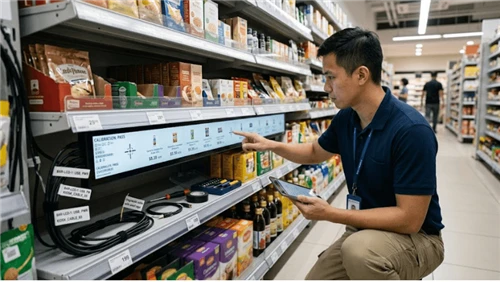
Kiosk Remote Monitoring and Preventive Maintenance: Build an Actionable Service Model is not a question that can be answered by one brochure value. For kiosk fleet operators, IT teams, service providers, procurement managers, and field-maintenance leaders, the real decision is how to detect real service degradation across screens, touch, applications, networks, payment devices, printers, scanners, and enclosure systems. A reliable project therefore starts with the operating task, records the installed conditions, and converts every important claim into evidence that can be reviewed before rollout.
This guide uses an outcome-based monitoring model that turns component telemetry into user-impact alerts, remote recovery, preventive work, spares, service levels, and continuous improvement. It does not assume that a particular product, architecture, certification, return, or performance level applies to every project. Published specifications should be tied to the exact model and configuration, while legal, safety, accessibility, payment, and cybersecurity obligations should be reviewed by qualified parties for the relevant market.
The recommended output is a decision package: scope, requirements, drawings or data maps, test method, expected result, captured evidence, defect ownership, recovery procedure, and the conditions that require retesting. That package gives procurement, engineering, content, operations, and suppliers a common basis for approval instead of relying on subjective impressions.

Define the operational risk
For kiosk remote monitoring, this stage should produce a reviewable output rather than an informal agreement. The team should connect the requirement to the intended user, operating condition, owner, and acceptance evidence.
Define the service state and user-impact model
This requirement should be decided before hardware is ordered. Define the service state and user-impact model. This matters because a kiosk can look operational while a scanner, printer, payment device, touch zone, or backend dependency has already failed. The project should define available, degraded, unavailable, maintenance, and unknown states from the user journey rather than a simple power heartbeat, and retain the most relevant parts of user-flow tests, peripheral logs, remote alerts, thermal records, accessibility reviews, transaction traces, and signed acceptance results as evidence. For a project team, this changes the decision: test the requirement under check-in, payment, printing, scanning, identity, dispensing, and assisted fallback tasks, name the owner who accepts or escalates exceptions, and state whether the conclusion applies only to the tested configuration. Supplier documentation can define a starting boundary, but local validation is still required.
Teams that need the broader product context can review the self-service terminal solution before locking this requirement.
Set measurable acceptance criteria for the service state and user-impact model
This is a system question rather than a single-component feature. Set measurable acceptance criteria for the service state and user-impact model. This matters because a kiosk can look operational while a scanner, printer, payment device, touch zone, or backend dependency has already failed. The project should capture state definitions, synthetic transactions, component telemetry, and user-flow checks and compare it with an approved baseline, and retain the most relevant parts of user-flow tests, peripheral logs, remote alerts, thermal records, accessibility reviews, transaction traces, and signed acceptance results as evidence. In a pilot, the difference becomes obvious: test the requirement under a representative pilot, worst-case content, and normal operating hours, name the owner who accepts or escalates exceptions, and state whether the conclusion applies only to the tested configuration. Supplier documentation can define a starting boundary, but local validation is still required.
Assign ownership and an exception path for the service state and user-impact model
The specification only becomes useful when it is tied to a real operating condition. Assign ownership and an exception path for the service state and user-impact model. This matters because a kiosk can look operational while a scanner, printer, payment device, touch zone, or backend dependency has already failed. The project should record who reviews failures, who authorizes changes, and how the result is retested, and retain the most relevant parts of user-flow tests, peripheral logs, remote alerts, thermal records, accessibility reviews, transaction traces, and signed acceptance results as evidence. Operations should translate the requirement into a repeatable check: test the requirement under handover, store changes, software releases, and supplier substitutions, name the owner who accepts or escalates exceptions, and state whether the conclusion applies only to the tested configuration. Supplier documentation can define a starting boundary, but local validation is still required.
This checkpoint should be read alongside the site's guidance on kiosk display product range, because adjacent decisions can change the result.
Detect exceptions early
For kiosk remote monitoring, this stage should produce a reviewable output rather than an informal agreement. The team should connect the requirement to the intended user, operating condition, owner, and acceptance evidence.
Define telemetry and alert coverage
A strong design separates the intended outcome from the method used to achieve it. Define telemetry and alert coverage. This matters because a kiosk can look operational while a scanner, printer, payment device, touch zone, or backend dependency has already failed. The project should collect health data from compute, application, display, touch, network, storage, temperature, doors, peripherals, consumables, and security events, and retain the most relevant parts of user-flow tests, peripheral logs, remote alerts, thermal records, accessibility reviews, transaction traces, and signed acceptance results as evidence. For a project team, this changes the decision: test the requirement under normal operation, low supplies, intermittent faults, and total failure, name the owner who accepts or escalates exceptions, and state whether the conclusion applies only to the tested configuration. Supplier documentation can define a starting boundary, but local validation is still required.
For related implementation context, use the Android smart service touchscreen display resource as a starting point and verify the local configuration.
Set measurable acceptance criteria for telemetry and alert coverage
The most common mistake is to approve the visible result without testing the process behind it. Set measurable acceptance criteria for telemetry and alert coverage. This matters because a kiosk can look operational while a scanner, printer, payment device, touch zone, or backend dependency has already failed. The project should capture telemetry inventory, alert tests, event timestamps, and data-retention rules and compare it with an approved baseline, and retain the most relevant parts of user-flow tests, peripheral logs, remote alerts, thermal records, accessibility reviews, transaction traces, and signed acceptance results as evidence. In a pilot, the difference becomes obvious: test the requirement under a representative pilot, worst-case content, and normal operating hours, name the owner who accepts or escalates exceptions, and state whether the conclusion applies only to the tested configuration. Supplier documentation can define a starting boundary, but local validation is still required.
Assign ownership and an exception path for telemetry and alert coverage
The buyer should define both the supported condition and the condition that triggers redesign. Assign ownership and an exception path for telemetry and alert coverage. This matters because a kiosk can look operational while a scanner, printer, payment device, touch zone, or backend dependency has already failed. The project should record who reviews failures, who authorizes changes, and how the result is retested, and retain the most relevant parts of user-flow tests, peripheral logs, remote alerts, thermal records, accessibility reviews, transaction traces, and signed acceptance results as evidence. Operations should translate the requirement into a repeatable check: test the requirement under handover, store changes, software releases, and supplier substitutions, name the owner who accepts or escalates exceptions, and state whether the conclusion applies only to the tested configuration. Supplier documentation can define a starting boundary, but local validation is still required.
The next linked decision is covered in self-service ticketing interactive kiosk; keep the boundaries separate so one article does not substitute for a project test.
Kiosk Remote Monitoring Decision Table
The table below turns the topic into a compact review structure. Add project-specific limits, test tools, owners, and approval signatures before using it as an acceptance record.
| Monitoring object | Useful signal | Action |
|---|---|---|
| Application | Synthetic user-flow result | Restart, rollback, or escalate |
| Printer | Paper, jam, cutter, queue | Replenish or dispatch |
| Payment | Device and integration status | Remove payment path or service |
| Thermal system | Temperature and fan state | Dim, shut down, or maintain |
| Network | Connectivity and latency | Use fallback or troubleshoot link |
Run the first response
For kiosk remote monitoring, this stage should produce a reviewable output rather than an informal agreement. The team should connect the requirement to the intended user, operating condition, owner, and acceptance evidence.
Define alert quality and ownership
This requirement should be decided before hardware is ordered. Define alert quality and ownership. This matters because a kiosk can look operational while a scanner, printer, payment device, touch zone, or backend dependency has already failed. The project should set thresholds, persistence, suppression, correlation, severity, routing, acknowledgment, and escalation so teams act on useful signals, and retain the most relevant parts of user-flow tests, peripheral logs, remote alerts, thermal records, accessibility reviews, transaction traces, and signed acceptance results as evidence. For a project team, this changes the decision: test the requirement under fleet-wide outages, single-device faults, repeated flapping, and planned maintenance, name the owner who accepts or escalates exceptions, and state whether the conclusion applies only to the tested configuration. Supplier documentation can define a starting boundary, but local validation is still required.
Teams that need the broader product context can review the car wash payment kiosk display before locking this requirement.
Set measurable acceptance criteria for alert quality and ownership
This is a system question rather than a single-component feature. Set measurable acceptance criteria for alert quality and ownership. This matters because a kiosk can look operational while a scanner, printer, payment device, touch zone, or backend dependency has already failed. The project should capture alert matrix, on-call records, false-positive review, and escalation tests and compare it with an approved baseline, and retain the most relevant parts of user-flow tests, peripheral logs, remote alerts, thermal records, accessibility reviews, transaction traces, and signed acceptance results as evidence. In a pilot, the difference becomes obvious: test the requirement under a representative pilot, worst-case content, and normal operating hours, name the owner who accepts or escalates exceptions, and state whether the conclusion applies only to the tested configuration. Supplier documentation can define a starting boundary, but local validation is still required.
Assign ownership and an exception path for alert quality and ownership
The specification only becomes useful when it is tied to a real operating condition. Assign ownership and an exception path for alert quality and ownership. This matters because a kiosk can look operational while a scanner, printer, payment device, touch zone, or backend dependency has already failed. The project should record who reviews failures, who authorizes changes, and how the result is retested, and retain the most relevant parts of user-flow tests, peripheral logs, remote alerts, thermal records, accessibility reviews, transaction traces, and signed acceptance results as evidence. Operations should translate the requirement into a repeatable check: test the requirement under handover, store changes, software releases, and supplier substitutions, name the owner who accepts or escalates exceptions, and state whether the conclusion applies only to the tested configuration. Supplier documentation can define a starting boundary, but local validation is still required.
This checkpoint should be read alongside the site's guidance on self-service reception kiosk, because adjacent decisions can change the result.
Recover service safely
For kiosk remote monitoring, this stage should produce a reviewable output rather than an informal agreement. The team should connect the requirement to the intended user, operating condition, owner, and acceptance evidence.
Define remote diagnosis and recovery
A strong design separates the intended outcome from the method used to achieve it. Define remote diagnosis and recovery. This matters because a kiosk can look operational while a scanner, printer, payment device, touch zone, or backend dependency has already failed. The project should provide approved logs, screenshots, device commands, service restart, application reset, power control, and configuration checks with access control, and retain the most relevant parts of user-flow tests, peripheral logs, remote alerts, thermal records, accessibility reviews, transaction traces, and signed acceptance results as evidence. For a project team, this changes the decision: test the requirement under frozen applications, printer queues, network reconnection, low storage, and display faults, name the owner who accepts or escalates exceptions, and state whether the conclusion applies only to the tested configuration. Supplier documentation can define a starting boundary, but local validation is still required.
For related implementation context, use the digital kiosk manufacturing guide resource as a starting point and verify the local configuration.
Set measurable acceptance criteria for remote diagnosis and recovery
The most common mistake is to approve the visible result without testing the process behind it. Set measurable acceptance criteria for remote diagnosis and recovery. This matters because a kiosk can look operational while a scanner, printer, payment device, touch zone, or backend dependency has already failed. The project should capture audit logs, recovery runbooks, timed exercises, and success/failure outcomes and compare it with an approved baseline, and retain the most relevant parts of user-flow tests, peripheral logs, remote alerts, thermal records, accessibility reviews, transaction traces, and signed acceptance results as evidence. In a pilot, the difference becomes obvious: test the requirement under a representative pilot, worst-case content, and normal operating hours, name the owner who accepts or escalates exceptions, and state whether the conclusion applies only to the tested configuration. Supplier documentation can define a starting boundary, but local validation is still required.
Assign ownership and an exception path for remote diagnosis and recovery
The buyer should define both the supported condition and the condition that triggers redesign. Assign ownership and an exception path for remote diagnosis and recovery. This matters because a kiosk can look operational while a scanner, printer, payment device, touch zone, or backend dependency has already failed. The project should record who reviews failures, who authorizes changes, and how the result is retested, and retain the most relevant parts of user-flow tests, peripheral logs, remote alerts, thermal records, accessibility reviews, transaction traces, and signed acceptance results as evidence. Operations should translate the requirement into a repeatable check: test the requirement under handover, store changes, software releases, and supplier substitutions, name the owner who accepts or escalates exceptions, and state whether the conclusion applies only to the tested configuration. Supplier documentation can define a starting boundary, but local validation is still required.
The next linked decision is covered in custom supermarket touchscreen kiosk; keep the boundaries separate so one article does not substitute for a project test.
Measure and learn
For kiosk remote monitoring, this stage should produce a reviewable output rather than an informal agreement. The team should connect the requirement to the intended user, operating condition, owner, and acceptance evidence.
Define preventive maintenance and consumables
This requirement should be decided before hardware is ordered. Define preventive maintenance and consumables. This matters because a kiosk can look operational while a scanner, printer, payment device, touch zone, or backend dependency has already failed. The project should schedule cleaning, inspection, calibration, filter or fan service, printer maintenance, paper replenishment, cable checks, and software health review by actual risk, and retain the most relevant parts of user-flow tests, peripheral logs, remote alerts, thermal records, accessibility reviews, transaction traces, and signed acceptance results as evidence. For a project team, this changes the decision: test the requirement under site environment, transaction volume, component guidance, and incident history, name the owner who accepts or escalates exceptions, and state whether the conclusion applies only to the tested configuration. Supplier documentation can define a starting boundary, but local validation is still required.
Teams that need the broader product context can review the outdoor touchscreen kiosk before locking this requirement.
Set measurable acceptance criteria for preventive maintenance and consumables
This is a system question rather than a single-component feature. Set measurable acceptance criteria for preventive maintenance and consumables. This matters because a kiosk can look operational while a scanner, printer, payment device, touch zone, or backend dependency has already failed. The project should capture completed work orders, before/after readings, consumable trends, and repeat-failure analysis and compare it with an approved baseline, and retain the most relevant parts of user-flow tests, peripheral logs, remote alerts, thermal records, accessibility reviews, transaction traces, and signed acceptance results as evidence. In a pilot, the difference becomes obvious: test the requirement under a representative pilot, worst-case content, and normal operating hours, name the owner who accepts or escalates exceptions, and state whether the conclusion applies only to the tested configuration. Supplier documentation can define a starting boundary, but local validation is still required.
Assign ownership and an exception path for preventive maintenance and consumables
The specification only becomes useful when it is tied to a real operating condition. Assign ownership and an exception path for preventive maintenance and consumables. This matters because a kiosk can look operational while a scanner, printer, payment device, touch zone, or backend dependency has already failed. The project should record who reviews failures, who authorizes changes, and how the result is retested, and retain the most relevant parts of user-flow tests, peripheral logs, remote alerts, thermal records, accessibility reviews, transaction traces, and signed acceptance results as evidence. Operations should translate the requirement into a repeatable check: test the requirement under handover, store changes, software releases, and supplier substitutions, name the owner who accepts or escalates exceptions, and state whether the conclusion applies only to the tested configuration. Supplier documentation can define a starting boundary, but local validation is still required.
This checkpoint should be read alongside the site's guidance on touch screen kiosk supplier selection, because adjacent decisions can change the result.
Procure for supportability
For kiosk remote monitoring, this stage should produce a reviewable output rather than an informal agreement. The team should connect the requirement to the intended user, operating condition, owner, and acceptance evidence.
Define service levels and lifecycle learning
A strong design separates the intended outcome from the method used to achieve it. Define service levels and lifecycle learning. This matters because a kiosk can look operational while a scanner, printer, payment device, touch zone, or backend dependency has already failed. The project should measure user-impact downtime, detection, diagnosis, remote recovery, dispatch, repair, repeat incidents, parts use, and root causes, and retain the most relevant parts of user-flow tests, peripheral logs, remote alerts, thermal records, accessibility reviews, transaction traces, and signed acceptance results as evidence. For a project team, this changes the decision: test the requirement under store hours, critical transaction types, remote sites, and supplier support windows, name the owner who accepts or escalates exceptions, and state whether the conclusion applies only to the tested configuration. Supplier documentation can define a starting boundary, but local validation is still required.
For related implementation context, use the touchscreen monitor kiosk applications resource as a starting point and verify the local configuration.
Set measurable acceptance criteria for service levels and lifecycle learning
The most common mistake is to approve the visible result without testing the process behind it. Set measurable acceptance criteria for service levels and lifecycle learning. This matters because a kiosk can look operational while a scanner, printer, payment device, touch zone, or backend dependency has already failed. The project should capture service dashboards, incident records, trend reviews, and corrective-action plans and compare it with an approved baseline, and retain the most relevant parts of user-flow tests, peripheral logs, remote alerts, thermal records, accessibility reviews, transaction traces, and signed acceptance results as evidence. In a pilot, the difference becomes obvious: test the requirement under a representative pilot, worst-case content, and normal operating hours, name the owner who accepts or escalates exceptions, and state whether the conclusion applies only to the tested configuration. Supplier documentation can define a starting
boundary, but local validation is still required.
Assign ownership and an exception path for service levels and lifecycle learning
The buyer should define both the supported condition and the condition that triggers redesign. Assign ownership and an exception path for service levels and lifecycle learning. This matters because a kiosk can look operational while a scanner, printer, payment device, touch zone, or backend dependency has already failed. The project should record who reviews failures, who authorizes changes, and how the result is retested, and retain the most relevant parts of user-flow tests, peripheral logs, remote alerts, thermal records, accessibility reviews, transaction traces, and signed acceptance results as evidence. Operations should translate the requirement into a repeatable check: test the requirement under handover, store changes, software releases, and supplier substitutions, name the owner who accepts or escalates exceptions, and state whether the conclusion applies only to the tested configuration. Supplier documentation can define a starting boundary, but local validation is still required.
The next linked decision is covered in restaurant self-service kiosk guide; keep the boundaries separate so one article does not substitute for a project test.
Implementation Checklist
Use this checklist as a planning aid, then adapt it to the exact product, site, jurisdiction, and service model.
- Define user-impact service states
- Inventory every required telemetry source
- Test alert routing and acknowledgment
- Suppress noise without hiding persistent faults
- Secure and audit remote actions
- Create component-specific recovery runbooks
- Schedule preventive work from risk
- Measure repeat failures and true downtime
Common Project Mistakes
- Selecting a solution from a headline specification before defining how to detect real service degradation across screens, touch, applications, networks, payment devices, printers, scanners, and enclosure systems.
- Testing an open bench sample while ignoring the final fixture, enclosure, content, network, and service environment.
- Accepting a supplier statement without recording the exact model, configuration, assumption, method, and evidence boundary.
- Treating a successful normal-flow demonstration as proof of failure detection, fallback, recovery, and reconciliation.
- Leaving ownership ambiguous across buyer, integrator, software team, store operations, facilities, and service provider.
- Approving rollout without version control, defect closure, training, spares, monitoring, and a retest trigger for future changes.
Questions to Ask Suppliers and Integrators
- Which exact display, touch stack, compute unit, enclosure, peripheral, software, and device-management versions are offered?
- Who owns each interface, certification obligation, backend dependency, security control, and field-support boundary?
- Can the supplier demonstrate complete and interrupted user transactions on a production-representative unit?
- How are component health, user-impact failures, remote actions, consumables, and service events monitored?
- What is the approved replacement, configuration restore, calibration, test, and inventory process?
- Which FAT/SAT gates, defect rules, warranty terms, spare parts, training, and end-of-life notices are contractual?
FAQ
Q: Is a ping enough to monitor a kiosk?
A: No. A kiosk can answer a network ping while its application, touch screen, payment device, scanner, printer, or backend workflow is unusable.
Q: What is a synthetic kiosk transaction?
A: It is an automated or controlled check that exercises important parts of the user flow without completing an inappropriate real transaction. Design it carefully for each service.
Q: Which faults can be fixed remotely?
A: Some application, connectivity, storage, queue, and service faults can be diagnosed or recovered remotely. Mechanical damage, consumables, jams, and certain security events may require on-site service.
Q: How should alert thresholds be set?
A: Use component guidance, observed baseline behavior, user impact, persistence, correlation, and maintenance history. Review false positives and missed failures regularly.
Q: What maintenance metrics matter most?
A: Measure user-impact downtime, detection time, remote recovery rate, dispatch time, first-time fix, repeat incidents, parts consumption, and unresolved root causes.
Conclusion
A defensible kiosk remote monitoring decision connects the intended result to the complete installed system, a named operating owner, and evidence from realistic conditions. Start by defining how to detect real service degradation across screens, touch, applications, networks, payment devices, printers, scanners, and enclosure systems; then document the configuration, run normal and failure tests, close defects, and retain the evidence used for approval. The strongest procurement outcome is not the longest specification. It is a controlled requirement set that suppliers can answer, project teams can test, and operations can sustain after handover.