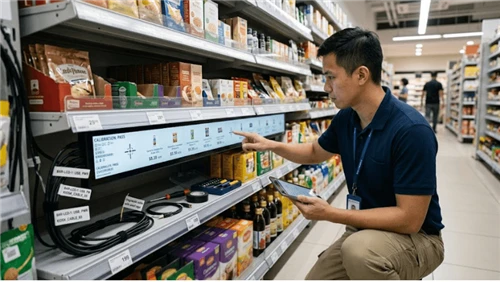
This guide takes a tiered approach: low-cost process fixes first, physical layout improvements second, and technology investments third. The goal is to help you find your entry point regardless of budget, and build from there.

Why Picking Errors Happen: Three Root Causes Worth Separating
Most picking errors aren't caused by careless staff-they're caused by systems that make it easy to pick wrong. Before reaching for a solution, it helps to identify which category your problems fall into.
Human factors
Fatigue is the most underestimated driver. A picker two hours into a late shift processes information differently than one who just started. This isn't a motivation problem; it's a cognitive load problem. Long travel distances, too many simultaneous orders, noisy environments, and reliance on memory rather than verified location data all compound fatigue's effect on accuracy.
Process gaps
When there's no defined picking route, no single-SKU-per-bin discipline, and no protocol for substitutions or short picks, errors become structurally inevitable-regardless of how careful individual pickers are. The workflow itself creates ambiguity, and ambiguity produces mistakes.
System and data errors
A picker can follow every instruction correctly and still send the wrong item if the WMS is pointing them to the wrong location. Inventory inaccuracy-driven by put-away mistakes at goods-in, missed replenishment entries, or returns not re-processed-is consistently one of the top root causes reported by distribution centre managers. These errors are invisible to the picker and can't be fixed by training alone.
What a Picking Error Actually Costs
The visible cost of a mispick is the reshipped order. The full cost includes customer service time, return label and processing, inventory reconciliation, and the downstream effect on marketplace seller ratings. Amazon and eBay both penalise sellers with sustained high error rates, which compounds the financial impact further.
A useful starting estimate: Monthly error cost = daily order volume × error rate × cost per error. For a mid-size operation running 500 orders per day at a 2% error rate, with an average resolution cost of $15 per incident, that's around $4,500 per month-before accounting for the harder-to-quantify effects on customer retention. The actual cost-per-error figure varies by operation; pharmaceutical and medical device warehouses often report figures ten times higher due to regulatory documentation and rework requirements.
Running this calculation on your own numbers is the single most useful thing you can do before deciding how much to invest in accuracy improvements. It also helps you build the internal case for budget approval.
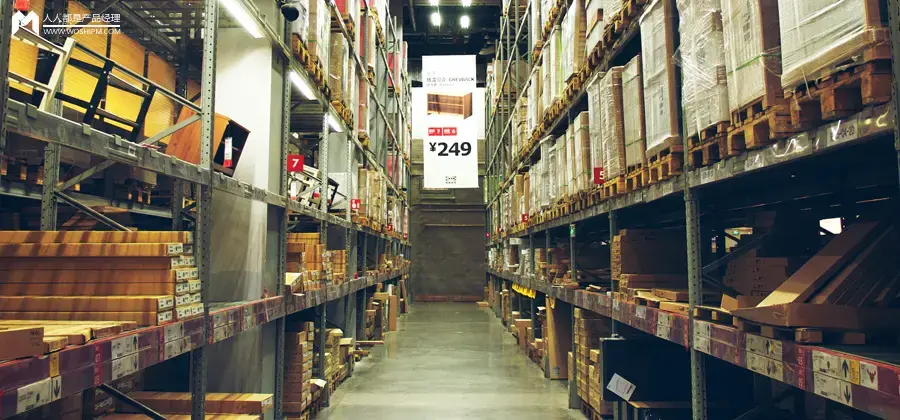
Tier 1: Process Fixes That Cost Nothing Except Discipline
These changes don't require capital. They require consistency-which is often harder to achieve, but produces lasting results when maintained.
Measure before you change anything
Without a baseline, you have no way of knowing whether a change worked. Pick a metric you can track weekly: percentage of orders picked correctly on the first attempt, or errors per thousand lines. Customer return data can supplement this but lags real-time performance by days or weeks. Whatever you choose, measure it consistently before implementing anything else.
Map where in the process errors actually originate
Many operations assume picking is the problem, but a significant proportion of errors enter the system earlier-during goods-in, put-away, or returns processing. Walking an order from WMS entry to dispatch bay and identifying every point where a discrepancy could first occur often reveals that the pick step itself isn't the primary failure point. This changes where you focus.
One SKU per bin, enforced in the WMS
Storing multiple SKUs in the same location is one of the most reliable ways to generate mispicks, regardless of picker experience. It's equally problematic to spread a single SKU across multiple locations without clear WMS logic. One SKU per bin is a rule, not a preference-and it should be enforced systematically, not left to individual discipline. Good warehouse rack labeling practices make this rule far easier to maintain in practice.
Set picking routes that eliminate navigation decisions
When pickers are deciding the most efficient path through a zone on the fly, cognitive load goes into navigation rather than verification. Defined picking routes remove that overhead and make travel time predictable. They also make it easier to identify when something is wrong-if a route that normally takes eight minutes is taking fifteen, that's a signal worth investigating.
Surface orders by age, not default sort order
A common failure mode: pickers default to the newest orders because they appear at the top of the queue, while older ones age in the system until a customer complaint surfaces them. Configure your WMS or pick management tool to prioritise by dispatch deadline or receipt time. It's a small configuration change with a disproportionate impact on fulfilment reliability.
Build a protocol for short picks and substitutions
An order that can't be fully picked creates a downstream mess without a defined procedure. What happens to the items already picked? Does the customer get notified? Does stock return to the bin? Without answers enforced in the system, half-picked orders generate secondary inventory discrepancies and often feed back into your error statistics the following week.
Tier 2: Physical Layout Changes With Low Capital Requirement
The physical environment directly affects both error rates and staff fatigue. These changes typically require some labour time to implement but little to no hardware spend.
Slot by velocity-fast movers close to packing bays
ABC analysis (categorising SKUs by sales velocity) is a standard approach: A-tier items-typically 20% of SKUs generating 80% of picks-belong in the positions closest to pack stations. Shorter travel distances reduce physical strain, which means fewer late-shift errors. It also makes replenishment anomalies easier to spot: a fast-moving location that looks sparse mid-shift is a visible signal that something is wrong.
Physically separate easily confused SKUs
Review your error data for patterns. If two SKUs appear together in mispick records more than chance would suggest, they're likely stored adjacent to each other and look or feel similar. Moving one of them to a different row is a zero-cost fix. Many warehouses generate a disproportionate share of their errors from a handful of SKU pairs that were never deliberately separated.
Zone ergonomics as an accuracy lever
The best pick zones keep operators moving laterally within a waist-to-shoulder reach envelope, with short travel distances between picks. Zones requiring frequent bending, overhead reaching, or extended walking between locations push pickers to carry more physical and mental load than the task warrants. Ergonomic layout design isn't just a wellbeing consideration-it directly correlates with sustained accuracy over the course of a long shift.
Use the right picking bins for your SKU profile
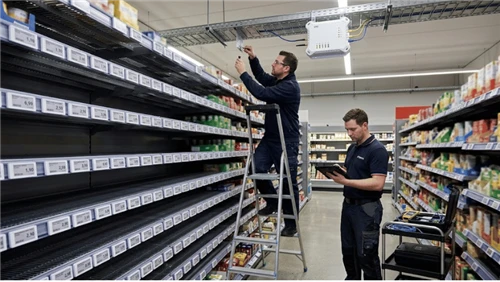
Oversized bins allow mixed contents to accumulate. Bins without label holders make location identification unreliable. Divided or partitioned bins can enforce SKU separation within a shelf slot even in high-density environments. How electronic shelf labels improve warehouse operations extends to the bin level: clear, up-to-date location labels tied to live inventory data remove a significant source of put-away and pick errors simultaneously.

Tier 3: Technology for Sustained High Accuracy
Process and layout improvements can typically move most operations from 95–96% to 97–98% accuracy. Reaching and sustaining 99%+ almost always requires a technology layer.
WMS: the accuracy foundation
A warehouse management system is not primarily a picking tool-it's an inventory truth system. When correctly configured with accurate location data, replenishment triggers, and real-time confirmation, it removes the dependency on memory and paper that generates most process-layer errors. Picking technology integrated with a WMS consistently outperforms the same hardware operating without one. If you're running above a few hundred orders per day without a WMS, that's the first investment to consider.
Barcode scanning: accessible and immediate
RF barcode scanning requires pickers to scan both the storage location and the item before a pick is confirmed. This single verification step eliminates the class of errors caused by reaching into the wrong bin or grabbing an adjacent SKU by mistake. Hardware cost per position is relatively low, training requirements are minimal, and it doesn't require WMS replacement. For operations not yet ready for more sophisticated directed-picking technology, barcode scanning is the most accessible technology upgrade available.
Pick to light: visual guidance at the pick face
Pick to light systems mount LED display modules at each storage location. When an order is released, the modules at the correct locations illuminate-showing exactly where to pick and how many units to take. The picker confirms with a button press, generating a timestamped record that updates the WMS in real time. According to MHI's Solutions Guide, pick-to-light delivers 99.9%+ accuracy rates alongside shorter order cycle times and significantly reduced training time for new operators.
The practical advantage over paper or RF-based methods is that it removes reading and memory from the pick step entirely. There's no list to interpret, no mental map required. Interlake Mecalux reports that because verification is immediate, accuracy rates of 99.5% and above are routinely achieved. It's also the assisted picking technology with the lowest onboarding requirement-new operators can reach productive accuracy within a single shift.
Pick to light is most cost-effective in operations running 1,000+ order lines per day with 500–20,000 active SKUs. High staff turnover and seasonal peaks-where new hires need to pick accurately from day one-make the ROI case particularly strong. Optimizing warehouse accuracy with display technology at the shelf level is increasingly a combined approach: ESL modules and pick-to-light hardware can serve dual functions-acting as dynamic location labels during non-picking hours and switching to guided pick mode during fulfilment windows.
Voice picking: suited to different environments
Voice-directed picking guides operators verbally, leaving hands and eyes free-a significant advantage in case-picking environments where both hands are needed to handle product. It works best in large-format operations with long travel distances and low SKU density per zone. In high-density, short-travel zones, the verbal confirmation loop introduces latency that visual guidance handles more efficiently.
Technology comparison at a glance
| Method | Typical Accuracy | Training Time | Best Fit | Main Limitation |
|---|---|---|---|---|
| RF Barcode Scanning | 97–98% | 1–2 days | Wide SKU range, limited budget | Attention split between screen and shelf |
| Pick to Light | 99.5–99.9% | Under 30 minutes | High-volume, medium-SKU zones | Hardware cost per position; fixed locations |
| Voice Picking | 99–99.5% | A few hours to 1 day | Large footprint, case-picking operations | Slower in high-density zones |

Peak Season: Why Error Rates Spike and What to Do Before They Do
Accuracy typically deteriorates during peak periods-not primarily because of volume, but because of staff composition. When a significant share of your picking team consists of temporary workers who joined in the past week, their unfamiliarity with your location structure, SKU conventions, and exception procedures drives the error rate up more than the additional order volume does.
Directed picking technology-particularly pick to light-directly addresses this. When the system illuminates the correct location and quantity, familiarity with the warehouse layout becomes largely irrelevant. New operators can pick accurately from their first shift. The difference between a three-to-five-day ramp-up (paper or RF-based methods) and a sub-shift ramp-up (pick to light) matters significantly when you're onboarding twenty temporary staff in two days.
Before your next peak season, confirm:
- Slotting has been reviewed and high-velocity SKUs repositioned if needed
- All bin labels are legible and WMS location data is current-the display performance of shelf labels degrades over time if not maintained
- Pick to light modules have been tested and any faulty units replaced before peak begins
- Short-pick and substitution protocols have been refreshed with all staff, including temporaries
- A baseline accuracy measurement is in place so you can detect deterioration early
KPIs to Track Your Progress
According to the 2025 WERC DC Measures Report, the average warehouse order picking accuracy benchmark sits at 99.49%, with best-in-class operations at 99.9%. Use these four metrics to track where you stand and whether changes are working:
- Order accuracy rate - percentage of orders fulfilled without any item error. Target 99.5%+ for most operations; pharmaceutical and aerospace operations typically require 99.7% or above.
- First-pass pick rate - picks confirmed without requiring correction or intervention. A low first-pass rate usually points to a labelling, slotting, or WMS data issue rather than picker behaviour.
- Picks per operator per hour - confirms that accuracy improvements aren't coming at the cost of speed. Well-implemented pick to light systems typically improve both simultaneously.
- Return rate attributed to fulfilment errors - lags real-time performance but captures the customer experience reality. Filter for fulfilment-caused returns specifically.
Track these weekly during and after any changes. A problem detected in week one of a peak season can be corrected. The same problem in a monthly review is a customer service incident.
Frequently Asked Questions
What is a typical warehouse picking error rate?
Most operations fall between 2% and 3% error rate without directed picking technology. The WERC DC Measures Report places the average order picking accuracy at 99.49%-meaning roughly half a percent error rate is the current industry midpoint. Best-in-class operations using pick to light or voice picking integrated with a WMS consistently report accuracy at 99.9% or above.
What is the most common cause of picking errors?
Inventory inaccuracy-when the physical stock count or location doesn't match what the WMS records-is the most frequently cited root cause. It's particularly insidious because it's invisible to the picker. No picking technology can reliably overcome a WMS pointing operators to the wrong location. Fixing goods-in processes, regular cycle counts, and accurate returns processing matter as much as the picking method itself.
How does pick to light reduce picking errors?
Pick to light eliminates the need for pickers to read a list, navigate by memory, or scan individual items. Each storage location carries an LED module that illuminates when that bin is needed for an active order, showing the required quantity. The picker confirms with a button press-generating a real-time WMS record. By removing interpretation and memory from the pick step, the system addresses the cognitive load that produces most human-error mispicks. See our detailed guide to pick to light in warehouse operations for hardware specifications and integration requirements.
How quickly should we expect to see results?
Process fixes-picking routes, bin discipline, order prioritisation-typically produce measurable results within two to four weeks. Physical relotting shows impact within a few weeks of completion, depending on the scale of the change. Technology implementations (barcode scanning, pick to light, WMS updates) generally reach full performance within four to eight weeks of go-live, once staff are past initial onboarding. In all cases, measure your baseline before the change so you can attribute the improvement accurately.
Is pick to light cost-effective for a mid-size operation?
For operations processing 1,000 or more order lines per day with an active SKU count below 20,000, the ROI case is typically strong. Payback periods of 12–18 months are commonly reported, driven by labour efficiency, error reduction, and lower training costs. Operations with high staff turnover or significant seasonal swings tend to see the fastest payback. Smaller operations below 300 lines per day may find barcode scanning a more proportionate first step. If you'd like to discuss the right configuration for your facility, get in touch with our team.
Can pick to light work with our existing WMS?
In most cases, yes. Modern pick to light hardware communicates through a middleware or API layer between the light system and your WMS-a full WMS replacement is not typically required. The integration maps your WMS's pick-release transactions to the light system's instruction format. Budget four to eight weeks for integration and testing in a realistic environment, depending on your WMS configuration's complexity. Our warehouse display solutions overview covers integration approaches in more detail.
Where to Start
The operations that sustain 99%+ accuracy consistently share one thing: they treat accuracy as a system property, not a human property. They don't rely on individual pickers being careful-they build workflows, layouts, and tools that make the correct pick easier than the incorrect one.
Start by calculating your current error cost using the formula above. If the monthly number is significant, work through the tier sequence: process discipline first, physical layout second, technology when the ROI justifies it. Measure at each stage so you know what's actually moving the needle.
If you're evaluating display hardware for a pick to light implementation-or exploring how electronic shelf labels can serve a dual function in warehouse environments-explore our full product range or request a quote for your specific configuration.