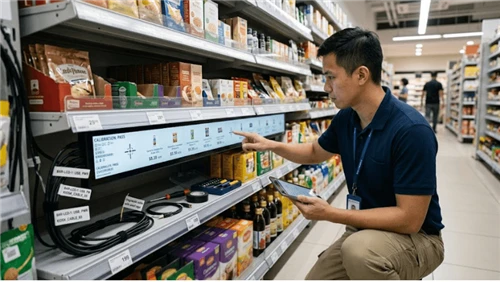
This guide covers the full pricing strategy landscape: the foundational frameworks, the shelf-level tactics, the modern challenges around online pricing, and a practical process for putting it all together. Whether you run a single store or manage pricing across a chain, the principles apply.
Contents
- The Economics Behind Grocery Pricing
- EDLP vs. Hi-Lo: The Two Master Frameworks
- Key Value Items and Loss Leader Pricing
- Psychological Pricing at Shelf Level
- Dynamic Pricing and Price Execution
- The Omnichannel Pricing Challenge
- A Practical Framework for Choosing Your Strategy
- Common Mistakes to Avoid
- FAQ
The Economics Behind Grocery Pricing
Grocery pricing works differently from most other retail because the meaningful unit of profit is not the item - it's the basket. A store can afford to sell a gallon of milk at break-even if the same shopper reliably adds $80 of other goods on that trip. Every pricing decision should be evaluated at the basket level, not the SKU level.
Two types of margin matter here. Front-margin is what you earn on the sale itself: the difference between your shelf price and your cost of goods. Back-margin is what suppliers contribute through vendor allowances, volume rebates, slotting fees, and trade promotion funding. Many promotions that look unprofitable on the front end are partially or fully subsidized on the back end. Understanding both is non-negotiable before you set a pricing strategy.
There's also a cognitive reality that shapes everything: research on grocery price awareness, including a landmark study by Dickson and Sawyer (1990), found that more than half of shoppers could not correctly name the price of an item they had just placed in their cart. Shoppers track a small set of benchmark products with precision and use those to judge the entire store's value. Everything else is largely invisible to them. This asymmetry is what makes Key Value Items so powerful - and so dangerous to get wrong.
EDLP vs. Hi-Lo: The Two Master Frameworks
Every supermarket pricing model ultimately sits within - or between - two foundational philosophies.
EDLP: Everyday Low Pricing
EDLP means consistently low prices without the rhythm of weekly promotions. Shoppers know what to expect on every visit; there are no deals to chase, no loyalty card hoops to clear a normal price. Aldi is the clearest practitioner: a limited assortment of roughly 1,400 SKUs, strong private-label penetration, and an ultra-lean operating model that keeps costs low enough to sustain genuine everyday value. Walmart applies a comparable logic across its grocery aisles at scale.
EDLP rewards stores with supply chain efficiency, high private-label penetration, and a customer base that values predictability over deals. Its weakness is that it cannot generate traffic spikes or create urgency around specific products - two things Hi-Lo does well.
Hi-Lo: High-Low Promotional Pricing
Hi-Lo sets base prices at or above market for most items, then executes deep, regular discounts on selected products through weekly circulars and end-cap features. Kroger is the textbook example in the US: its weekly promotions are engineered to drive store visits on the strength of a handful of loss-priced anchor items, with the expectation that shoppers fill a full basket once inside.
The psychology is contrast. "Was $4.99, Now $1.99" produces a gain response that a static $1.99 EDLP price never would. But Hi-Lo demands operational discipline: frequent price changes, staff training, and tight promotional calendar management. If everyday prices feel inflated to shoppers when there's no deal running, the model erodes trust rather than building it.
How to Choose
| Factor | Favors EDLP | Favors Hi-Lo |
|---|---|---|
| Supply chain strength | Strong, owned or controlled | Variable; reliant on supplier promos |
| Store format | Limited assortment, discount | Full-service, traditional |
| Customer base | Value-driven, routine shoppers | Deal-seeking, variety shoppers |
| Private-label penetration | High (40%+) | Low to moderate |
| Operational capacity | Lean, low labor | High promotional execution capability |
Most mid-size regional chains end up in a hybrid position: EDLP-style pricing on core staples, with selective Hi-Lo activity in high-margin or high-interest categories. The risk of this model is messaging inconsistency - if shoppers can't tell whether your prices are reliably low or only low when there's a deal, you lose the trust benefit of either approach.
Key Value Items and Loss Leader Pricing
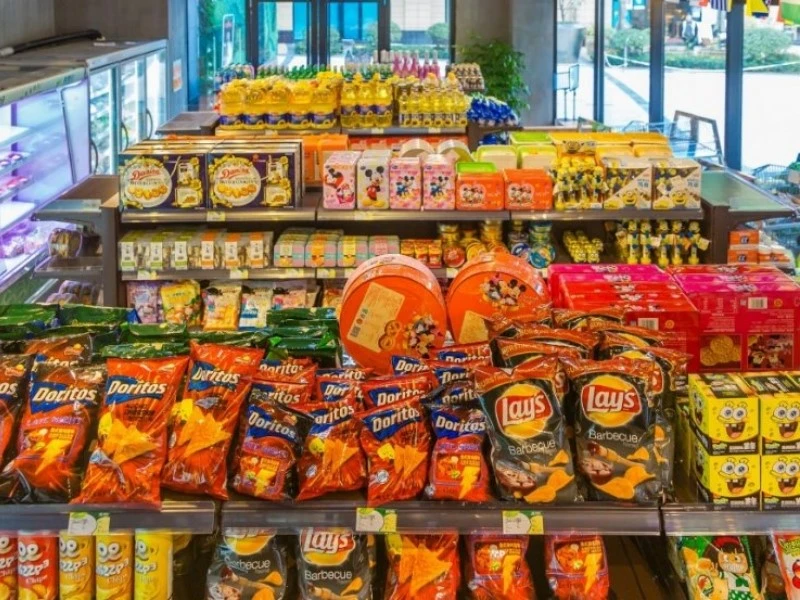
Key Value Items (KVIs) are the small group of products that disproportionately shape how shoppers judge your store's overall price level. They're the prices people remember and share by word of mouth. Common examples: whole milk, eggs, bread, bananas, cooking oil, popular branded beverages. In a store carrying 30,000+ SKUs, KVIs typically represent fewer than 5% of the range - but they carry an outsized share of price perception.
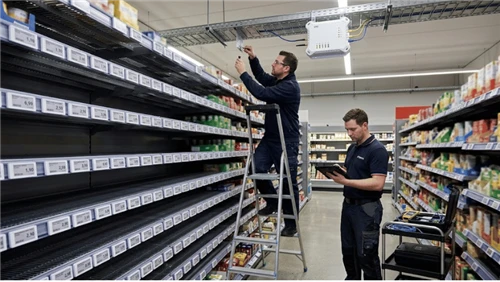
To learn more about how grocery stores are managing shelf-level price display, electronic solutions have become central to KVI execution at scale.
Building a KVI Scoring Model
Not every high-selling product is a KVI. Score each candidate across five dimensions on a 1–5 scale:
- Purchase frequency - How often does the average shopper buy it? Daily essentials score 5; seasonal items score 1.
- Price recall rate - Do shoppers remember what it costs? Branded staples score high; specialty items score low.
- Cross-category basket pull - Does buying it typically accompany other purchases? Milk scores high; a niche pasta sauce probably doesn't.
- Competitive visibility - Is a nearby competitor actively promoting it? High competitive activity raises KVI priority.
- Private-label substitution risk - Can shoppers easily switch to your own brand if the national brand price is too high? Low substitution risk means higher price sensitivity on the national brand.
Products that score 20 or above are your KVIs. These are where pricing discipline must be tightest. Getting them right gives you permission to price more freely elsewhere in the store.
Loss Leader Pricing
A loss leader is a KVI priced at or below your cost to generate traffic or basket attachment. Done right, it's one of the highest-return tools in your promotional toolkit - not a charity.
The Thanksgiving turkey example makes this concrete. A supermarket sells frozen turkeys at a significant loss for several weeks before the holiday. But the shopper who comes for the turkey almost certainly also buys stuffing, roasting pans, cranberry sauce, wine, and baking ingredients. The basket margin on that trip can easily justify the per-unit loss on the turkey itself.
Before running a loss leader, define your threshold: estimate the incremental traffic it will generate and the average basket margin from those visits. If your typical promoted-traffic basket generates $6 in gross margin and the loss leader costs you $1.50 in promotional subsidy, the math works. If the promotion attracts only cherry-pickers who buy the discounted item and leave, it doesn't. To protect against cherry-picking, place high-margin complementary products near the loss leader and consider per-customer quantity limits.
Psychological Pricing at Shelf Level
Strategy sets the framework. Psychology closes the sale at the shelf.
Charm Pricing and Price Anchoring
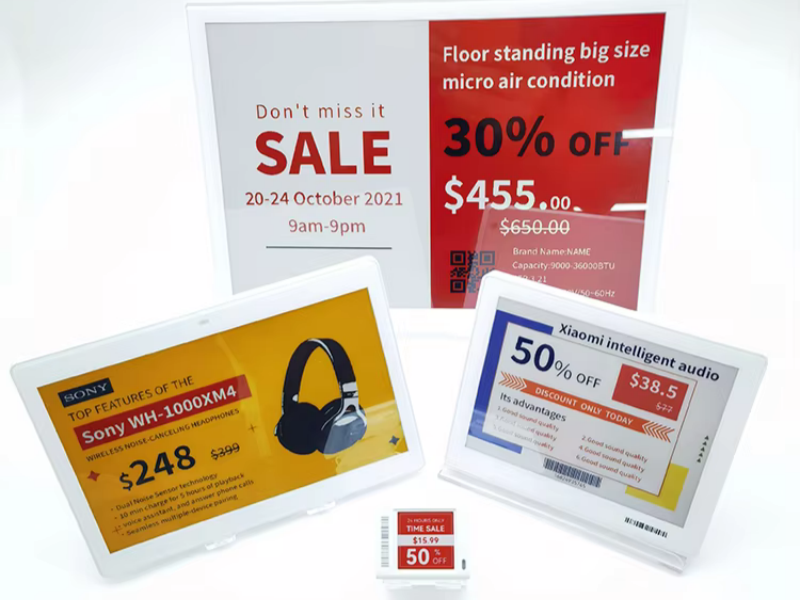
The $2.99 vs. $3.00 effect is well-documented. Consumers read prices left to right, so the first digit anchors the mental categorization - $2.99 registers as "two dollars and something," not "almost three." Use charm pricing on value-positioned products and promotional items. For premium or artisan products, round-number pricing often signals quality more effectively; a $12.00 artisan cheese communicates something a $11.99 price point undercuts.
Price anchoring works by placing a higher-priced reference item next to your target product to make the latter look like value. In grocery, this appears as Good / Better / Best shelf architecture: own-brand, national brand, and premium variant sit side by side. The premium option makes the national brand feel like a reasonable choice; the own-brand anchors the floor for the most price-sensitive shopper. The framing effect - how context around a price changes its perceived value - is one of the most reliable tools in retail psychology.
Decoy pricing takes anchoring further: a third option engineered specifically to make one of the other two look like the obvious winner. A 12-oz bottle at $2.49, a 16-oz at $3.29, and a 20-oz at $3.39 - the 20-oz becomes the clear "value" choice, even though all three prices have been structured to steer you toward spending $3.39.
Bundle and Multi-Buy Promotions
"3 for $5" and "Buy 2, Get 1 Free" mechanics serve two goals: increasing basket size per trip and creating perceived value without permanently cutting the everyday price. But before executing any multi-buy, calculate the bundle contribution margin explicitly. If a 3-for-$5 promotion generates $0.60 in margin on items that would have generated $0.90 sold individually, the promotion has cost you 33% margin without necessarily driving incremental volume. The math only works if the promotion converts shoppers who would have bought one unit into buying three.
The most common multi-buy mistake: running a promotion that primarily rewards shoppers who were already planning to buy multiple units. That's not promotional uplift - it's a margin donation to existing behavior. Digital shelf displays can help test different promotion formats on specific sections before committing to a chain-wide rollout.
Dynamic Pricing and Price Execution
Dynamic pricing - adjusting prices in response to real-time data - has moved from airline industry niche to mainstream grocery practice, particularly in two areas.
Perishable Markdown Optimization
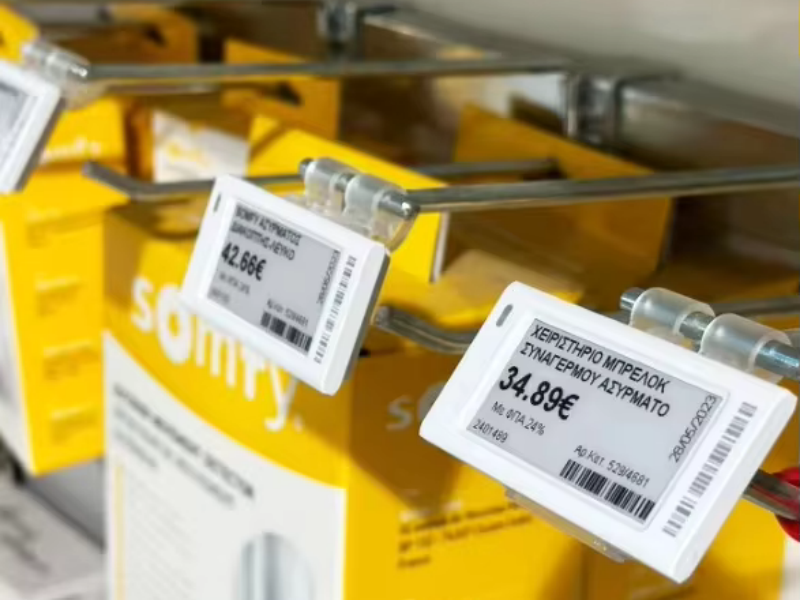
Fresh categories have finite shelf lives and traditionally relied on manual markdown decisions. Automated markdown systems track inventory levels, days to expiry, and historical sell-through rates to recommend or execute price reductions in real time. A 20% markdown applied two days before expiry recovers far more margin than a full write-off on the expiry date itself - and reduces food waste in the process. ESL dynamic pricing enables these adjustments to be executed instantly across all relevant shelf labels without manual repricing labor.
The hardware infrastructure that makes this possible is electronic shelf labels - wireless digital tags that update prices centrally in seconds. Understanding how ESLs work is increasingly a prerequisite for any grocer considering dynamic pricing, since manual paper tag changes cannot support the cadence that perishable optimization demands. The advantages and disadvantages of electronic shelf labels are worth evaluating carefully against your store's volume and staffing model before investing.
Competitive Price Intelligence
One of the most common gaps in independent and regional grocery pricing operations is the absence of a systematic competitor monitoring process. Without knowing what your primary competitors are charging on your KVIs, you're pricing in a vacuum.
A basic competitive intelligence cadence involves three things: weekly KVI benchmarking against two or three primary competitors; promotional monitoring to track which items are featured in their circulars and digital deals; and channel monitoring to check what prices appear in their apps and third-party delivery listings. Retail electronic shelf labels also enable faster competitive response - when a competitor cuts price on a shared KVI, you can match across every affected label within minutes rather than hours.
When a competitor moves on a KVI you share, you have three options: match (protect price image, sacrifice margin); hold (accept short-term price image risk if their cut looks temporary); or differentiate (match on the shared KVI but win in adjacent categories where they're weak). The right call depends on the item's KVI score, your current price image position relative to that competitor, and whether back-margin funding can subsidize a match.
The Omnichannel Pricing Challenge
Online grocery ordering has created a pricing tension that didn't exist a decade ago. Shoppers now routinely check prices online before visiting a store, compare delivery prices to shelf prices, and notice discrepancies - often loudly. A $0.40 difference on a milk price can generate trust damage that takes months of price investment to repair.
Retailers manage this tension in three ways:
- Price parity: same price on all channels; absorb fulfillment cost into the operating model. Cleanest for trust, hardest to sustain economically.
- Differential pricing with transparency: a separate, visible delivery fee rather than inflated item prices. Shoppers generally accept a visible service charge more readily than discovering that the same product costs more when ordered online.
- Member pricing: loyalty-gated prices consistent across channels for enrolled members. This converts the channel pricing problem into a loyalty program value proposition.
Digital price tags that sync in real time with a central POS system reduce the risk of in-store prices falling out of alignment with what shoppers have seen online - one of the most common sources of checkout friction and complaint.
A Practical Framework for Choosing Your Strategy
Pricing strategy is a management process, not a one-time decision. Here's a working sequence:
- Audit your current price position. Benchmark your top 50 highest-frequency SKUs against two or three primary competitors. Where are you above market, below, or at parity?
- Score your KVI list. Apply the 5-dimension model. Confirm your strongest KVIs are priced at or below your primary competitor.
- Identify category-level price roles. Assign each category a pricing objective: traffic driver (price aggressively), basket builder (price competitively), destination category (price for margin), or passive category (price for simplicity). Not every category needs the same strategy.
- Select your master philosophy. Based on your format, supply chain strength, and customer base, commit to EDLP, Hi-Lo, or a defined hybrid. Make it a policy, not a habit.
- Layer in shelf-level tactics. Charm pricing on value-positioned items. Anchoring in multi-tier categories. Multi-buy mechanics where volume uplift justifies the margin trade.
- Set loss leader guardrails. Define the basket attachment threshold before any below-cost promotion runs. Build adjacency layouts that maximize basket-building around loss leaders.
- Establish a competitive monitoring cadence. Assign ownership of weekly KVI benchmarking and a clear process for responding to significant competitor moves.
- Review quarterly. Market conditions, cost structures, and competitor behavior change. Your pricing strategy should change with them - within your master philosophy.
For stores evaluating the technology to support this process, the ESL ROI calculator provides a starting point for understanding whether digital shelf label investment makes financial sense at your store's volume and staffing cost.
Common Mistakes to Avoid
Treating all SKUs with the same markup logic. Uniform percentage markup ignores the fundamental difference between KVIs and passive categories. It's a pricing policy, not a pricing strategy.
Running loss leaders without basket guardrails. A promotion that attracts only cherry-pickers is a subsidy, not a strategy. Define your break-even basket threshold before the circular goes out.
Letting online and in-store prices drift apart without explanation. This is increasingly the most common source of shopper trust damage. Treat omnichannel price consistency as an operational discipline, not an afterthought.
Price changes without operational coordination. When shelf prices update but POS systems don't - or vice versa - the result is a checkout discrepancy. That moment is one of the most damaging trust events in grocery retail. Misaligned price displays can also carry regulatory and compliance risk depending on your market. Electronic shelf labelling systems that sync directly with the POS eliminate this failure point almost entirely.
FAQ: Supermarket Pricing Strategies
What is the most common pricing strategy used by supermarkets?
Hi-Lo (High-Low) is the most widely used model among traditional full-service supermarkets, particularly in North America and the UK. It involves higher everyday prices with regular deep discounts on selected items through weekly promotions. EDLP is common among discount-format operators like Aldi and Walmart.
What are Key Value Items (KVIs) in retail?
KVIs are the small set of high-frequency products - typically fewer than 5% of a store's range - that shoppers use to judge the store's overall price level. Common KVIs include milk, eggs, bread, and branded beverages. Pricing these correctly shapes shopper price perception across the entire store, not just those individual items.
What is the difference between EDLP and Hi-Lo pricing?
EDLP maintains consistently low prices without relying on promotions; Hi-Lo sets higher base prices and executes frequent deep discounts. EDLP requires supply chain efficiency and lean operations. Hi-Lo requires promotional infrastructure and the operational capacity to execute frequent price changes accurately.
How do supermarkets decide which products to put on promotion?
Promoted items are typically selected based on a combination of supplier back-margin funding (which subsidizes the discount), seasonality and demand cycles, competitive activity, and basket-building potential - choosing items that will drive complementary full-price purchases on the same trip.
Does loss leader pricing actually increase profit?
It can, when the promoted item drives basket attachment. The key metric is basket profitability, not item profitability. If total basket margin from loss-leader-driven visits exceeds the promotional cost, the promotion is commercially viable. If it generates only cherry-picking traffic, it's a net cost.
What is basket economics in grocery retail?
Basket economics is the practice of evaluating profitability at the level of the complete shopping trip rather than the individual item. In grocery, where net margins are around 1.7% (FMI, 2024), many individual items are priced at break-even or below cost. Basket economics works because the full set of items in a shopping trip generates a blended margin that is commercially viable even when individual anchor items are not.
How is dynamic pricing used in supermarkets?
Most commonly for perishable markdown optimization - automatically reducing prices on fresh items as expiry approaches - and for competitive price response. Full dynamic pricing on everyday staples is rare, partly because of consumer backlash risk when prices change frequently on expected items.
Should grocery stores charge the same price online and in-store?
There's no universal right answer. Price parity builds the most trust but is difficult to sustain given online fulfillment costs. A visible delivery fee (rather than inflated item prices) is often more acceptable to shoppers. Loyalty-gated pricing - consistent prices for enrolled members across all channels - offers a middle path that also supports retention.
Building a Pricing Architecture That Lasts
Supermarket pricing is a system, not a collection of independent tactics. The retailers who sustain strong margins over time make a deliberate choice about their pricing philosophy, protect their KVIs consistently, evaluate every promotion at the basket level, and monitor their competitive environment as a continuous discipline rather than an episodic reaction.
Three questions are worth applying to every significant pricing decision:
- Does this protect the margin of the overall basket?
- Does this reinforce the price image we want shoppers to carry?
- Does this build or erode shopper trust over time?
If a decision fails any of these, it deserves a second look - regardless of how compelling the short-term trade appears.