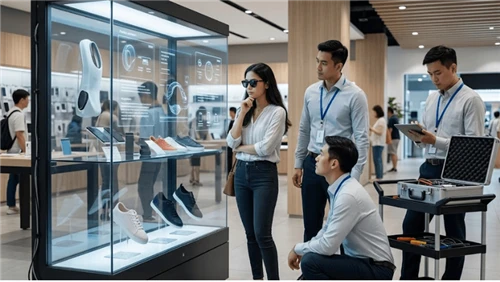
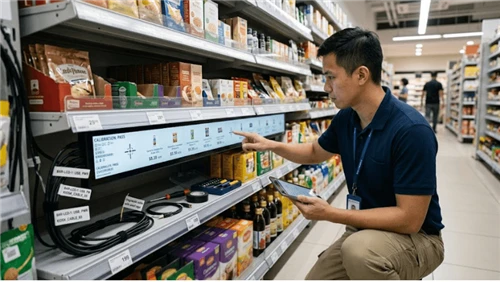
Built on Store Fixtures, Refined Through Digital Display Engineering
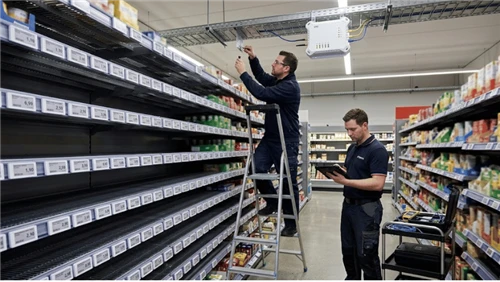
LEGOYO's manufacturing history does not start with electronics. In 2002, the company launched as SINTOP, producing customized store fixtures - shelving units, gondola systems, display stands - for global retail chains. Seventeen years of that work built something most display electronics manufacturers never develop: direct, operational familiarity with how retail store environments actually age, fail, and get modified in the field.
Mounting systems wear in specific ways when store staff reposition them dozens of times during restocking. Temperature differentials between receiving docks and climate-controlled sales floors affect tolerance margins in hardware that gets overlooked during lab-based product testing. Clip systems that look solid in a product photograph turn out to be poorly suited to the actual rail profiles in a particular retailer's shelving infrastructure. These are the failure modes a manufacturer only learns by being inside retail stores for years before designing display hardware.
In 2019, SINTOP entered a technology partnership with a manufacturer specializing in ESL firmware and wireless display communication systems, rebranded as LEGOYO Smart Display, and shifted focus to the digital product lines it now sells. The fixture background feeds directly into hardware decisions that competitors typically miss: mounting interfaces are engineered around real retail rail systems rather than prototype shelving; operating temperature tolerances reflect actual in-store conditions; and the mechanical design of ESL clips and bar screen mounting brackets is built for staff who will reposition them without reading instructions. More on the company's background and current capabilities is available on the LEGOYO company overview page.

One Supplier for Every Retail Display Touchpoint
Most hardware manufacturers in the ESL and display space specialize in one product category. Retailers building out a full store refresh - shelf-edge pricing labels, mid-shelf promotional screens, showcase displays for high-value merchandise, and self-service terminals - typically end up coordinating three or four vendor relationships with separate freight terms, warranty structures, and technical support contacts. When a deployment problem involves hardware from two of those vendors, both vendors will default to blaming the other.
LEGOYO builds all four product lines in-house, and they are designed to operate inside the same retail environment:
| Product Line | Key Specifications | Common Applications |
|---|---|---|
| Electronic Shelf Labels (ESL) | E Ink display, 1.53–9.5 inch sizes, wireless gateway communication, ERP/POS integration, 0°C–40°C operating range | Grocery, pharmacy, specialty retail, warehouse pick-to-light |
| Bar-Type LCD Screens | 28–49.5 inch diagonal, 1920×1080 resolution, 40–80mm depth, built-in Android media player, single-sided and double-sided configurations | Shelf-edge digital signage, hotel amenity screens, transit displays, restaurant menu boards |
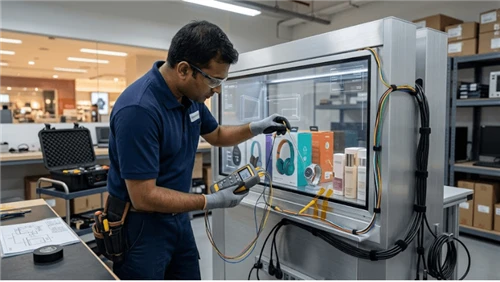
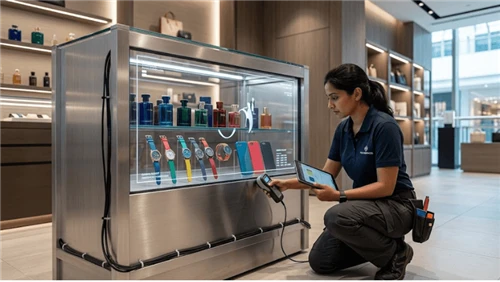
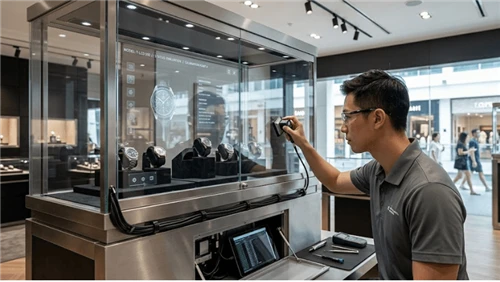
| Transparent LCD Showcases | 27×10 inch and 42×23 inch formats, touch and non-touch variants, direct cabinet integration or floor stand | Luxury retail, consumer electronics showrooms, high-end cosmetics, exhibition |
| Self-Service Kiosk Displays | Standard OS configuration, multiple enclosure formats, compatible with most commercial kiosk management platforms | Ticketing, reception, payment, wayfinding, restaurant self-ordering |
For buyers who want to see how LEGOYO's ESL hardware compares to other manufacturers on specific technical and commercial criteria before making a shortlist decision, the ESL manufacturer comparison published on the LEGOYO blog covers the key differentiators across major suppliers in plain terms.
Why Choose LEGOYO Over Other ESL and Display Manufacturers: Six Factors That Hold Up Under Scrutiny
1. Factory-Direct China Manufacturer With Real OEM and ODM Customization Capability
Factory-direct pricing from China is a claim most suppliers make. What separates them is what "customization" actually means in practice. Some manufacturers will print a logo on a fixed product. LEGOYO's customization covers frame materials, color finishes, mounting interface geometry, enclosure dimensions, and label sizes - changes that require actual tooling flexibility and engineering involvement, not just packaging decisions.
The company operates its own R&D center in Xiamen. For projects that justify the volume, LEGOYO can accommodate custom tooling requests, which makes it a realistic option for brands that need display hardware to match specific interior design standards or proprietary shelf systems. For standard retail rollouts, the catalog range is broad enough that most projects don't require customization at all - which means buyers aren't paying a premium for flexibility they don't need.
2. A Catalog That Eliminates the Multi-Vendor Problem
When a retailer sources ESL labels from one supplier, bar screens from another, and kiosk enclosures from a third, they're not just managing three purchasing relationships. They're managing three freight arrangements, three sets of warranty terms, three technical support contacts, and three different failure modes to diagnose when something goes wrong on the store floor. That overhead compounds at every stage of a deployment.
LEGOYO's four-product-line catalog doesn't just simplify procurement. It means that integration questions spanning multiple display types - for instance, synchronizing ESL pricing updates with promotional content on bar LCD screens in the same section - land with a single technical team that understands the full system context. That's a practical operational difference, not a marketing positioning claim.
3. ERP and POS Integration Support That Extends Through Deployment
ESL hardware installation is the easy part. The complexity is in connecting the ESL management platform to a retailer's existing POS and inventory systems, configuring update schedules, setting up gateway coverage for the specific RF environment of the store, and training staff to manage the system through the first promotional pricing cycle. This is the stage where most rollouts run into trouble - and where many China-based hardware suppliers stop providing support.
LEGOYO's technical team remains engaged through system configuration, installation, and the first operational cycle. The company provides system configuration services, deployment support, and operational maintenance as part of the standard engagement structure rather than as an add-on. For buyers who want to understand what the full operational transition looks like before committing to an ESL deployment, the detailed analysis of how electronic shelf labels change retail store operations covers the workflow shift, realistic labor recovery figures, and where implementation gains are actually realized versus where they are often overstated.
4. ESL Communication Protocol Flexibility Across 2.4GHz and Sub-GHz Bands
Not all retail environments perform the same from a radio frequency standpoint. A large grocery store with dense metal shelving and heavy 2.4GHz Wi-Fi traffic - from staff handheld scanners, customer smartphones, and in-store Wi-Fi networks - has very different ESL communication requirements than a pharmacy with open floor plans and minimal interference. Deploying 2.4GHz ESLs in a high-interference environment and expecting reliable sub-second update propagation is a common and expensive mistake.
LEGOYO's ESL lineup supports multiple communication protocols, including 2.4GHz for standard retail layouts and sub-GHz options for high-interference or long-range applications. Protocol choice affects gateway placement density, label update latency, and coverage uniformity - getting it wrong at the design stage means retrofitting hardware after installation. The ESL communication protocol comparison explains the practical tradeoffs between these options for different store types and environments.
5. In-House R&D at a Scale That Changes Response Times on Custom Requests
LEGOYO runs a team of over 40 engineers dedicated to product R&D in Xiamen. That figure matters specifically when a buyer needs a hardware modification that falls outside the standard catalog - a non-standard frame color to match a store's interior design, a custom mounting bracket for a proprietary shelf system, or a modified ESL size for an unusual product display format.
With an outsourced engineering model - common among display hardware resellers - custom modification requests go through a third party with its own project queue, its own communication overhead, and no particular incentive to prioritize any individual buyer's needs. With an internal team, modification approvals and custom samples move faster. Technical questions during deployment get answered by engineers who designed the hardware, not by someone working from a datasheet provided by the actual manufacturer upstream.
6. Localization Infrastructure for Multi-Country Rollouts
Deploying display hardware across multiple countries at the same time introduces regulatory, language, and logistics variables that most buyers underestimate during the vendor selection phase. Product certifications vary by region - CE for Europe, FCC for North America, regional equivalents for Asia-Pacific and the Middle East. Management software interface language needs to match the operating language of store staff. Freight documentation and import compliance requirements differ across borders.
LEGOYO operates across 40-plus countries and provides localization support covering certification guidance, software language adaptation, and regional market entry assistance for distributors expanding into new geographies. For a brand managing a simultaneous rollout across multiple markets, that infrastructure is an operational differentiator - it shifts coordination work from the buyer's internal team to the manufacturer's localization team, where it belongs.
How LEGOYO's ESL System Integration Works in Practice
An ESL deployment is a four-layer architecture: the e-ink labels mounted on shelf rails, the wireless gateways that push content updates to those labels, the management software that controls pricing and scheduling, and the backend integration with the retailer's POS and inventory systems. What customers see is the label. The operational value - and the implementation complexity - lives in the three layers behind it.
LEGOYO's ESLs communicate with gateways using the protocol selected for the store's RF environment. The management platform connects to the retailer's POS or ERP through standard API integration. Once configured, a store-wide price update initiated from the management platform propagates to all affected labels within seconds - without any manual intervention on the store floor. For buyers deciding between E Ink and LCD shelf-edge label technologies before selecting a system, the LCD vs. E Ink shelf label technology guide covers power consumption, update frequency requirements, cost, and readability tradeoffs in practical terms.
The broader market context for this decision is worth understanding. According to Markets and Markets, the global electronic shelf label market was valued at approximately $2.34 billion in 2024 and is projected to grow to $4.18 billion by 2029, at a CAGR of 12.3%. That growth is driven primarily by labor cost reduction, the push to eliminate shelf-to-checkout price discrepancies, and the expanding use of dynamic pricing strategies in grocery and specialty retail. Walmart's announced chain-wide ESL rollout in early 2026 is the most visible signal of where mainstream retail adoption is heading. For buyers who need a structured way to calculate what an ESL deployment would actually return for their specific store size and pricing update volume, the ESL ROI framework works through the real cost calculation - labor hours recovered, error rate reduction, and hardware cost amortization across the label lifespan.
What a Typical ESL Deployment Looks Like: A Representative Scenario
The following scenario is representative of a mid-sized grocery deployment, based on the scale and workflow patterns common to this type of rollout. It is not a specific client case study.
A grocery chain with eight locations, each carrying 350 to 500 SKUs, currently updates paper shelf labels manually three to four times per week. Each pricing cycle requires printing labels, sorting them by aisle, and sending staff through the store to replace tags - a process that typically runs 14 to 18 labor hours per store per week when promotional pricing weeks are included. A promotional period with 200 simultaneous price changes takes most of a shift to execute cleanly.
After deploying LEGOYO's E Ink ESL system - typically two to four gateway units per standard supermarket floor, depending on layout and RF environment - that same 200-change promotional update runs from the management dashboard in under three minutes. Staff previously assigned to tag replacement shifts to the sales floor. The paper, toner, and printing logistics disappear from the weekly cost structure. The hardware investment for a store of this size is typically recovered within 18 to 30 months, depending on pricing update frequency and how aggressively the dynamic pricing capability is used.
For a structured side-by-side comparison of paper versus ESL systems across labor cost, error rate, and operational flexibility criteria before making a deployment decision, the ESLs vs. paper labels analysis lays out the differences in practical terms. The underlying display technology used in LEGOYO's E Ink labels is based on electronic paper developed and licensed by E Ink Holdings, whose technical documentation explains the core display physics for buyers who want to understand what they're deploying at a component level.
Before You Order: Five Things to Confirm With Any ESL or Display Manufacturer
These questions apply to any supplier evaluation, not just LEGOYO. The answers reveal more about a manufacturer's actual capabilities than any product brochure.
- Minimum order quantity, by configuration: MOQ varies significantly between standard catalog items and OEM or color-customized configurations. Get the specific number for your exact product and configuration, not a general range. For LEGOYO, configuration-specific MOQ information is available through the project inquiry form.
- Sample availability and lead time: A physical sample before a volume commitment is standard practice for display hardware. Confirm whether sample costs are credited against the purchase order and what the lead time is for your configuration.
- Product certifications for your target market: ESLs and commercial displays sold into Europe require CE certification; those sold into North America require FCC. RoHS compliance is relevant across markets. Confirm which certifications apply to your deployment region and that the specific product configuration you are ordering carries them - not just the product line in general.
- Production and shipping lead time: Standard catalog items typically ship faster than OEM or color-customized configurations. Confirm lead times against your rollout schedule before placing an order, particularly for multi-location simultaneous deployments where timing across stores needs to be coordinated.
- Warranty terms and after-sales process: What is the warranty period for the hardware? What does the RMA process look like when a label or gateway fails in the field? How fast does technical support respond to a deployment issue during a live store environment? These answers tell you more about the supplier than the warranty document itself.
Where Buyers Consistently Lose Money When Choosing a Display Manufacturer
Unit price is the most common primary filter in supplier evaluation, and it produces the most predictable category of regret. Factory-direct pricing from a China manufacturer is a real advantage in this market - it is one of LEGOYO's actual differentiators. But buyers who optimize entirely on hardware unit cost routinely encounter costs on the other side of delivery that dwarf what they saved on the initial order: integration engineering when POS compatibility turns out to require custom development; freight and customs complications when certification documentation is incomplete for the target market; replacement hardware costs when a lower-price supplier's build quality fails in a high-traffic retail environment; and support gaps when the supplier's technical team stops responding after the shipment clears customs.
The total cost of a display system is almost never the number on the initial hardware invoice. The bar LCD display buying guide covers the evaluation criteria that experienced buyers use to compare options beyond unit cost - panel quality indicators, brightness ratings for different ambient light conditions, and what to look for in mounting hardware quality. The same logic applies across ESL and kiosk purchases: the specification comparison is the starting point, not the ending point, of a good procurement decision.
The second expensive mistake is dividing the display hardware stack across multiple vendors when one manufacturer can cover the range. Managing separate supplier relationships for ESL labels, bar screens, and kiosk enclosures creates coordination overhead that compounds at every deployment stage and turns integration problems into finger-pointing between suppliers. Consolidating the display hardware stack with a manufacturer that covers all four product lines is not just a procurement convenience - it is a risk management decision.
Frequently Asked Questions
What is LEGOYO's minimum order quantity for electronic shelf labels?
MOQ varies by product line and configuration. Standard catalog E Ink ESL sizes typically have lower minimum orders than OEM or custom-color configurations. The most accurate answer for a specific project requires a direct inquiry, since standard and custom configurations carry different production minimums. You can reach LEGOYO's team through the project inquiry page for a configuration-specific response.
Which ESL communication protocol does LEGOYO support, and how do I choose between them?
LEGOYO's ESL systems support 2.4GHz and sub-GHz communication protocols (including 433MHz). The right choice depends on your store's RF environment. 2.4GHz works well in standard retail layouts with moderate interference. Sub-GHz provides better range and stronger penetration through dense metal shelving in high-interference environments, and typically requires fewer gateway units per floor area - which can offset its slightly higher hardware cost in large-format stores. Getting this decision wrong at the design stage means gateway density and placement need to be revised after installation, which is one of the more disruptive mid-deployment corrections. The ESL communication protocol comparison explains the practical tradeoffs in detail, including update latency benchmarks and gateway coverage estimates by environment type.
Does LEGOYO make both E Ink and LCD shelf labels, and how do I decide which one to use?
Yes, LEGOYO produces both technologies. E Ink labels draw power only during content updates, which gives them battery lives measured in years - typically three to five years under daily update conditions - and strong readability under bright store lighting without glare. LCD shelf-edge displays require a continuous power connection but support color content, animation, and higher information density, which makes them more appropriate for applications like promotional product showcases or menu displays where visual differentiation matters more than battery autonomy. For most grocery and pharmacy shelf-edge pricing applications, E Ink is the right default. The LCD vs. E Ink shelf label guide covers the decision criteria by use case, including mixed deployments where both technologies are used in different sections of the same store.
Does LEGOYO ship to the United States, and are the products FCC-compliant?
Yes, LEGOYO ships to North American buyers and has products certified for the U.S. market. FCC compliance is a prerequisite for commercial display hardware sold into the United States, and buyers should confirm certification status for the specific product configuration they are ordering during the inquiry process. The ESL for the U.S. market page covers deployment considerations specific to North American retail environments, including common shelf rail formats and system integration requirements relevant to U.S.-based POS and ERP platforms.
How does a transparent LCD showcase differ from a standard LCD display, and is it the right choice for my environment?
A standard LCD panel is opaque - it shows content against a black or white background regardless of what is behind it. LEGOYO's transparent LCD showcases allow the physical product inside a display case to remain visible through the panel while digital content - pricing, promotional graphics, product specifications - overlays the glass surface. The effect only works when the product itself is the visual focal point; in environments where the product is not physically inside a showcase (a wall-mounted screen, for instance), a standard LCD display is more appropriate. Transparent showcases are most commonly used in luxury retail, consumer electronics showrooms, and high-end cosmetics environments where the physical product is valuable enough to warrant direct visibility alongside digital context. Before specifying a transparent display, the transparent LCD retail spec sheet analysis explains what the key specifications actually indicate for real-world performance - brightness under ambient light, contrast ratio limitations, and the conditions under which the transparency effect holds up versus where it visually degrades.