What Is a Digital Price Tag?
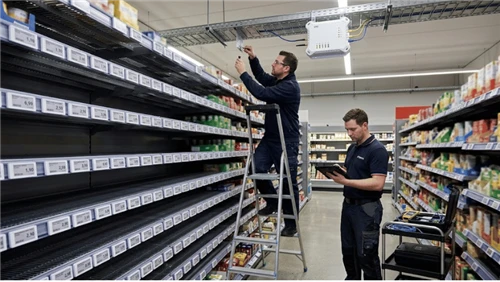
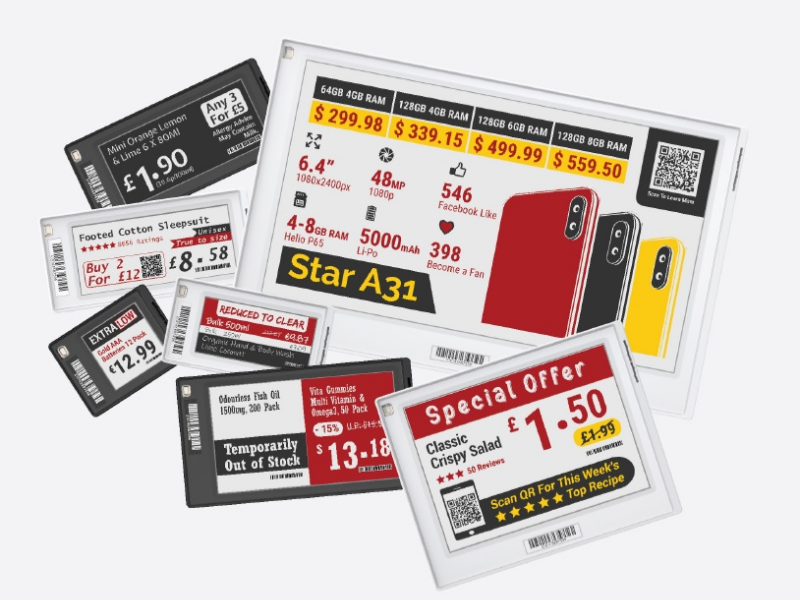
A digital price tag - more formally called an electronic shelf label (ESL) - is a wireless display mounted on store shelving that receives price and product updates from central software. Most use E Ink technology, which retains its last image without continuous power. The system replaces the manual process of printing and replacing paper tags across thousands of shelf positions. The operational advantages are real. But so are the following drawbacks.
Opening Quotes Rarely Reflect Actual Deployment Cost
Individual E Ink labels typically range from around $5 for basic single-color units to well over $100 for larger full-color displays with NFC. That range sounds manageable until you multiply it across a store carrying 15,000 to 25,000 products. Hardware alone becomes a substantial commitment - and it's usually not where budgets get surprised.
Vendor quotes commonly leave out:
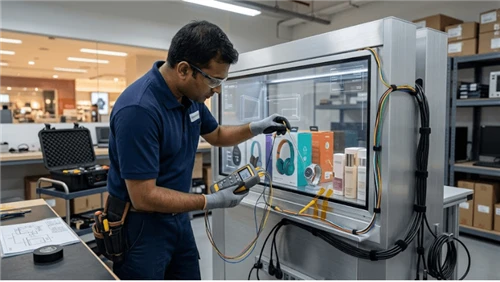
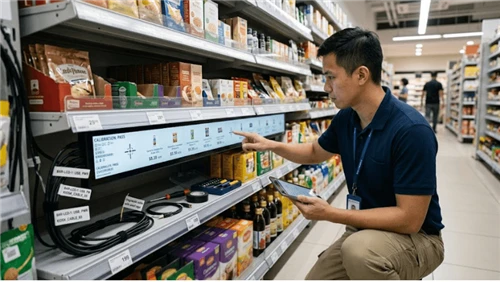
- Network infrastructure: Thousands of connected devices require dedicated gateway access points and, in most stores, network upgrades before deployment begins.
- POS and inventory integration: Connecting the ESL platform to your existing point-of-sale or ERP system almost always involves custom development that starting prices rarely include.
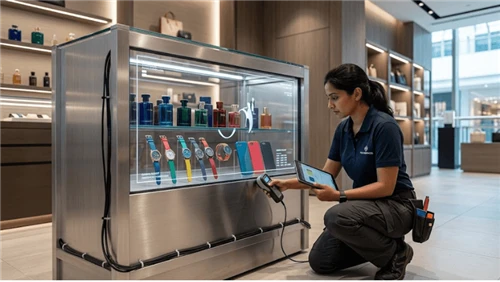
- Installation labor: A full-store deployment requires professional installation teams working over several days.
- Staff retraining: Pulling employees from regular duties carries a real time cost, even when it is hard to quantify in advance.
The ROI case most vendors present rests on labor savings from eliminating manual price changes. That holds for stores with high price-change frequency. For retailers with stable pricing, payback periods can extend well beyond the hardware's useful lifespan. Our detailed ESL cost breakdown covers what a realistic total investment looks like at different store sizes.
Total Cost of Ownership Goes Well Beyond the Hardware
- Software licensing: Management platforms charge monthly or annual fees, with advanced features - dynamic pricing, analytics, remote monitoring - typically at higher subscription tiers.
- Battery replacement: E Ink labels are efficient but not maintenance-free. Refrigerated and frozen aisles reduce battery life considerably, and managing replacement cycles across thousands of units at different stages is a real operational task.
- Label damage: Forklifts, restocking, and customer contact break labels over time, particularly in high-traffic zones. Replacement is a recurring line item.
- Support contracts: Without a support agreement, on-site technical resolution may be billed per incident - which gets costly when issues affect pricing accuracy across the floor.
Industry experience suggests total five-year costs typically run two to three times the initial hardware investment once recurring expenses are included. For a projection based on your actual store size and price-change frequency, start with our guide to real ESL ownership costs.
Vendor Lock-In: The Risk Most Retailers Don't See Coming
Most ESL systems use proprietary wireless protocols. Labels from one manufacturer communicate only with that manufacturer's gateway hardware and software. This is an architectural decision - and it creates a vendor relationship that constrains your options throughout the hardware's lifespan.
In practice: if your vendor raises subscription pricing after year two, your alternatives are to absorb the increase or replace your entire infrastructure. If the vendor is acquired or discontinues your hardware generation, you are on their upgrade timeline, not yours. Your negotiating leverage at contract renewal is minimal once deployment is complete.
Some vendors offer open-standard compatibility that meaningfully reduces this risk, but full interoperability across different ESL hardware brands remains limited. Before signing, get written answers to:
- What communication protocol do your labels use - proprietary, or an open standard such as Zigbee or Bluetooth?
- What happens to our system if this product line is discontinued?
- Can we export our complete pricing and product configuration to another platform?
See how major ESL manufacturers compare on integration flexibility and contract terms - the differences matter considerably once you are in a multi-year relationship.
System Failures Hit the Core Promise of ESLs
The fundamental value proposition of digital price tags is consistent, accurate pricing at scale. That makes failure modes consequential in a specific way: they undermine the main reason you invested.
When labels lose connectivity, they freeze on their last displayed price. If that price has since changed, every customer in that zone sees incorrect information - creating checkout disputes and potential compliance issues. Gateway failures take every label in a coverage zone offline simultaneously. The most serious failures occur when the ESL platform falls out of sync with your POS, producing a divergence between shelf and register price that is a consumer protection issue in most jurisdictions. Learn about what happens when shelf prices display incorrectly and review the most common reasons ESLs stop updating.
On power outages: E Ink labels retain their last image without power - shelves do not go blank. But you cannot push any updates until power and connectivity are fully restored, which matters when urgent price corrections are needed.
Dynamic Pricing Features Are Under Active Legislative Scrutiny
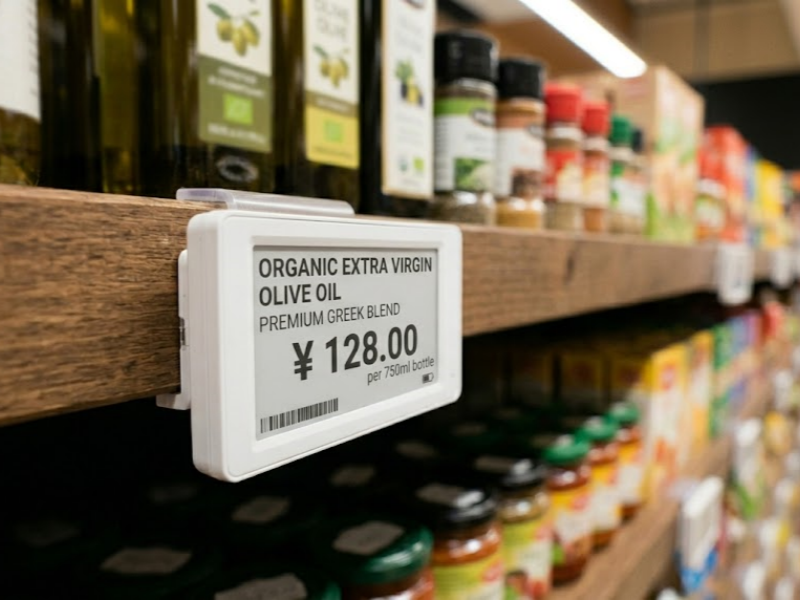
The ability to change shelf prices instantly is central to the ESL value proposition - and is drawing serious regulatory attention across the U.S. By mid-2025, state legislators had introduced 51 bills across 24 states addressing algorithmic and real-time pricing, many specifically targeting electronic shelf labels, according to Consumer Reports' algorithmic pricing bill tracker. Maryland has already passed a dynamic pricing ban for grocery stores. New York, New Jersey, California, and Washington state have advanced related legislation. Retailers in grocery, pharmacy, and essential goods categories face the highest exposure.
Even where legislation has not passed, consumer perception is a real risk. Customers who notice digital price tags may assume prices shift during peak hours regardless of your actual practice. A visible, documented pricing policy reduces both reputational risk and regulatory exposure. For more on how ESLs interact with dynamic pricing and what retailers need to understand before enabling those features.
Customer Experience Has Specific, Testable Weak Points
ESL display performance varies with environment. High ambient light, direct sunlight near storefronts, and extreme temperatures in refrigerated sections can affect legibility. Before committing to a product line, place representative labels across different store areas - near windows, in cold aisles, under varying overhead lighting - and evaluate readability over a few weeks.
Accessibility is a structural concern. ESL displays have fixed screen dimensions and set font sizes. Customers with low vision can struggle with smaller labels, and unlike paper tags, ESL form factors are constrained by the hardware. Retailers with genuine accessibility commitments should evaluate minimum font size and contrast ratio against relevant standards before purchase.
When a label malfunction produces a shelf price that differs from the register price, the customer experience is disproportionately negative. Clear staff protocols - including register-level override authority - should be established before rollout, not after.
Staff Training Is a Recurring Operational Cost, Not a Line Item
U.S. retail consistently records among the highest annual employee separation rates of any industry sector, running at 50% or above in recent years according to U.S. Bureau of Labor Statistics JOLTS data. In stores where half the workforce turns over annually, ESL training is a recurring cost that most ROI models never include. Each significant software update requires refresher training for operations leads; and when technical issues arise, store staff typically cannot diagnose network problems without vendor support, meaning downtime while waiting for remote or on-site assistance. The ESL installation and setup process gives a realistic view of the operational scope involved, both initially and on an ongoing basis.
The Environmental Trade-Off Is Nuanced
Eliminating paper label printing is a genuine benefit, especially for high-SKU retailers running frequent promotions. But the full lifecycle picture includes obligations that deserve honest assessment. Each ESL unit contains a circuit board, electronic display, lithium battery, and plastic housing. Responsible disposal at end of product life requires specialized recycling infrastructure that is not universally available. At chain-wide scale, battery disposal programs and e-waste management need to be planned years in advance. Whether ESLs produce a net environmental benefit depends on your actual price-change frequency. The ESL vs. paper labels comparison breaks down this trade-off in practical terms.
A Quick Framework Before You Talk to Vendors
ESL adoption tends to make sense when:
- You manage 10,000 or more SKUs and update pricing at least weekly
- You can clearly quantify the current labor cost of manual price changes
- You have internal IT capacity or budget for a robust vendor support contract
- Your network infrastructure can support thousands of continuously connected devices
ESL adoption carries higher risk when:
- Pricing is stable with fewer than a few dozen changes per month
- You lack reliable network infrastructure or dedicated IT resources
- You operate in a category or jurisdiction facing active dynamic pricing regulation
- A significant proportion of your customers have accessibility needs
Before any vendor conversation, define three things in writing: the specific inefficiency you are targeting and by how much you expect to reduce it; the maximum payback period you will accept; and what vendor lock-in protections are non-negotiable in the contract. Use the ESL ROI calculator to build a projection before those conversations begin. For a balanced view of both sides, the full ESL advantages and disadvantages overview is worth reading alongside this guide.
Frequently Asked Questions
What happens to digital price tags during a power outage?
E Ink displays retain their last image without power, so shelf prices remain visible to customers. You cannot push any updates until power and connectivity are fully restored. For time-sensitive pricing situations, this creates a window where manual intervention may be necessary.
Is vendor lock-in really that serious once you are deployed?
For retailers satisfied with their vendor, lock-in may never surface as a problem. It becomes serious when vendors raise prices, reduce support quality, or discontinue hardware - at which point replacing the entire infrastructure is the only alternative to accepting new terms. Negotiating data-portability and exit provisions before deployment is significantly easier than after.
Are digital price tags worth it for smaller stores?
For most small retailers with stable pricing and a limited SKU count, total cost of ownership is difficult to justify within a reasonable payback window. ESL economics improve substantially at scale. Model the specific labor cost you would actually be replacing before assuming the investment makes sense. Our guide on choosing the right ESL solution for your retail format provides a framework calibrated to different store types.