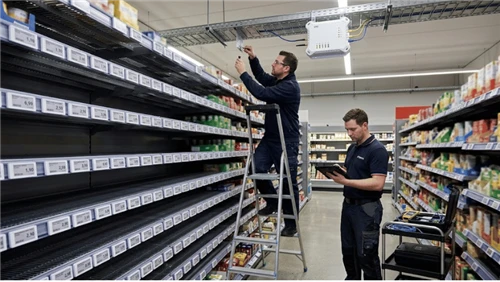
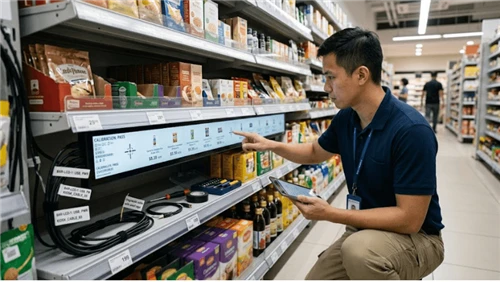
Yes, ESLs automate pricing - and that alone saves serious labor hours. But after supporting deployments across grocery, pharmacy, and specialty retail, we have seen firsthand that pricing is the entry point, not the destination. The retailers pulling the strongest returns use their ESL network to solve problems across fulfillment, compliance, merchandising, and customer engagement.
The numbers reflect this shift. Industry analysts valued the global ESL market at roughly $1.85 billion in 2024, projecting $7.54 billion by 2033. Walmart alone has announced plans to deploy ESLs across 2,300 U.S. stores.
This guide walks through 12 electronic shelf label use cases that matter right now, with sourced examples and practical context to help you decide which ones fit your operation.
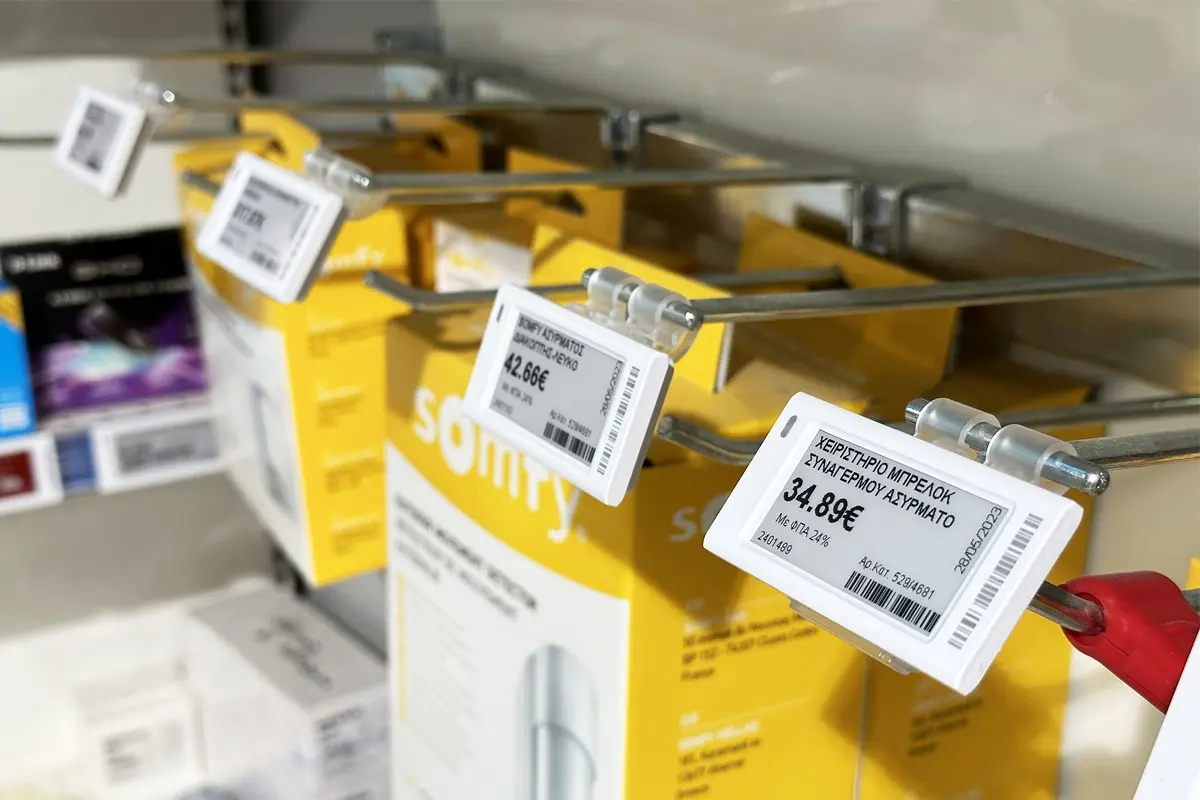
12 Electronic Shelf Label Use Cases Across Retail
1. Real-Time Price Automation
This is the foundational use case, and it deserves more than a passing mention because the labor math is staggering.
According to FMI - The Food Industry Association, the average U.S. supermarket carries approximately 32,000 unique products, with hundreds or thousands of price changes every week. With paper tags, each change means printing, sorting, walking, and swapping.
The difference with ESLs is dramatic. One independent grocer reported saving roughly 50 labor hours per week. An IGA retailer described processing 1,400 price changes in under 10 minutes - a task that previously consumed an entire shift. If your store handles more than a few hundred weekly changes, this use case alone often justifies the investment. See our guide on ESLs vs. paper labels for a detailed comparison.
2. Pick-to-Light Order Fulfillment
The rise of online grocery and buy-online-pick-up-in-store (BOPIS) has turned store aisles into fulfillment zones. The problem: in-store picking is inherently less efficient than warehouse picking because the environment was not designed for it.
ESLs equipped with LED indicators can function as pick-to-light systems. When an order comes in, the relevant labels flash a specific color and the picking route is optimized so associates move through aisles in sequence rather than zigzagging. Picks per hour increase, order accuracy improves, and training time for new staff drops because the lights do the guiding.
3. Promotion Synchronization
When an advertised deal goes live at 6 a.m. but the shelf tag does not flip until mid-morning, you get customer complaints, margin leakage, and potential compliance issues. ESLs tied to the pricing engine activate promotions at the exact scheduled time, across every location. Execution discipline becomes system-driven instead of labor-dependent.
4. Expiration Tracking and Automated Markdowns
This is the use case we see grocery operators underestimate most often.
Shrink in perishable departments does not come from one dramatic failure. It accumulates through small timing gaps: a markdown that triggers a day late, a rotation task that gets skipped during a busy shift. Modern ESL platforms integrate with expiration data to trigger markdowns automatically - for example, 30% off at three days before expiration, then 50% at one day out. The label updates, the POS reflects it, and the manager gets a digital audit trail.
When markdown timing shifts from "whenever someone remembers" to a rule-based system, sell-through on short-dated products improves measurably and waste drops. For ESLs in grocery stores, this often becomes the second-highest ROI driver after price automation.
5. Planogram Compliance and Shelf Accuracy
Planograms drift - resets get partially completed, out-of-stocks create gaps filled with wrong products, and overrides accumulate week after week.
ESL platforms with geolocation anchor each label to a precise shelf position. When a label moves, the system flags it. When headquarters pushes a reset, the layout transmits digitally and associates work from exception reports rather than printed diagrams - resulting in faster resets and cleaner inventory data.
6. Dynamic and Competitive Pricing
This is the use case that generates the most public debate - and the most misunderstanding.
Dynamic pricing with ESLs does not mean raising the price of water bottles when the temperature hits 90°F. In practice, it means matching a local competitor's price within hours instead of days, running a "happy hour" markdown on prepared foods to cut end-of-day waste, or automatically repricing an overstocked item before it becomes a shrink problem.
Santiago Gallino, a retail management professor at the University of Pennsylvania's Wharton School, told NPR that the primary economic driver behind ESL adoption is labor savings - not opportunistic price increases. Retailers know that eroding consumer trust through perceived gouging would be self-defeating in a market where shoppers compare prices on their phones in seconds.
7. Omnichannel Price Consistency
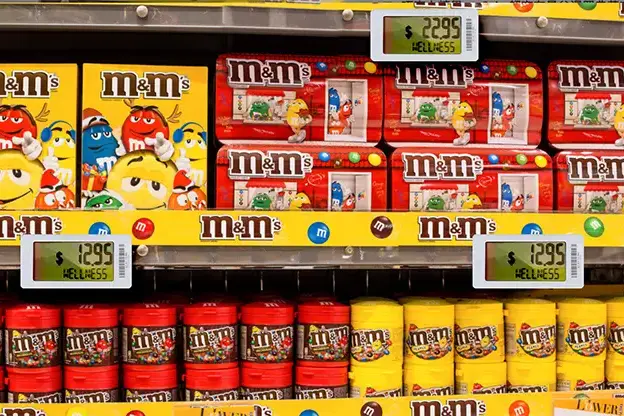
When the price on the shelf does not match the price in the app, shoppers lose trust. ESLs connected to a centralized pricing engine propagate changes to the e-commerce platform, the mobile app, and the physical label simultaneously. For retailers running click-and-collect or ship-from-store, this eliminates a persistent source of checkout friction.
8. Customer Engagement via NFC and QR Codes
Picture a shopper in the vitamin aisle, unsure which supplement fits their needs. They tap their phone against the shelf label and instantly see ingredient lists, usage guidelines, and reviews - no associate needed. Newer ESL models with NFC chips and QR code capability turn the shelf edge into an interactive touchpoint. Our guide to programming NFC price tags for retail covers the technical setup.
9. In-Store Analytics and Traffic Insights
ESL infrastructure using Bluetooth Low Energy (BLE) communication can double as a sensor network, approximating foot traffic patterns and dwell times by aisle. This is still an emerging capability - most deployments do not yet leverage it as a primary function - but for retailers already running a dense ESL network, the incremental data comes essentially free.
10. Inventory Visibility and Stockout Alerts
Industry estimates place grocery out-of-stock rates somewhere between 5% and 10%, and every empty shelf position is a lost sale. ESLs integrated with inventory systems can display stock-level indicators visible to associates, so replenishment gets prioritized by actual need rather than scheduled walk-throughs. Some configurations display a customer-facing QR code when a product runs out, linking to the retailer's e-commerce site to preserve the sale.
11. Sustainability and Paper Waste Reduction
A large grocery chain can go through tens of thousands of paper tags per store annually. ESLs eliminate that cycle entirely. As the National Retail Federation notes, the shift removes a significant source of recurring waste and labor cost - and for retailers with ESG reporting obligations, the reduction provides a quantifiable metric.
12. Staff Communication and Task Management
ESL displays and LED indicators can communicate operational tasks directly on the shelf edge - flashing a color for restocking, highlighting items in an active recall, or signaling a cleaning task. This use case is newer and less widely adopted, but for high-volume stores already running a dense label network, it turns existing hardware into a distributed task board without additional investment.
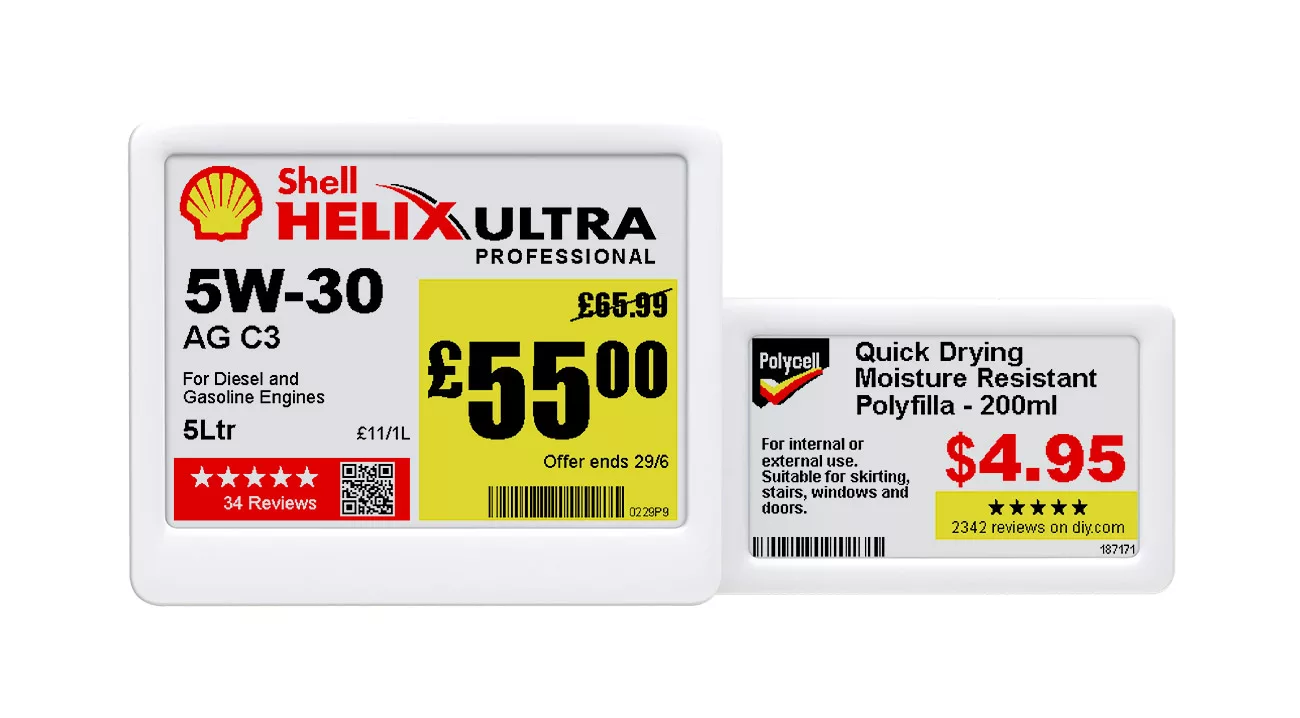
Electronic Shelf Label Use Cases by Industry
Not every use case carries equal weight in every retail vertical. The table below maps the most relevant applications across five common segments.
| Use Case | Grocery | Pharmacy | Electronics | Fashion | DIY / Hardware |
|---|---|---|---|---|---|
| Real-time price automation | ● | ● | ● | ● | ● |
| Pick-to-light fulfillment | ● | ○ | ○ | ● | ○ |
| Promotion synchronization | ● | ● | ● | ● | ● |
| Expiration tracking / auto markdown | ● | ● | ○ | ○ | ○ |
| Planogram compliance | ● | ● | ● | ○ | ● |
| Dynamic / competitive pricing | ● | ○ | ● | ● | ● |
| Omnichannel price consistency | ● | ○ | ● | ● | ● |
| NFC / QR customer engagement | ○ | ● | ● | ● | ○ |
| In-store analytics | ○ | ○ | ● | ● | ○ |
| Inventory visibility / stockout alerts | ● | ● | ● | ○ | ● |
| Sustainability / paper reduction | ● | ● | ● | ● | ● |
| Staff communication | ● | ● | ○ | ○ | ● |
● = High relevance | ○ = Moderate or emerging relevance
How to Decide Which ESL Use Cases Matter for Your Store
Start with your most expensive pain point. If weekly price changes eat 40+ associate hours, price automation is the entry use case. If perishable shrink is the bigger drain, expiration tracking deserves priority.
Check your integration readiness. Use cases like promotion synchronization depend on clean connections between ESL platform, POS, and ERP. For guidance on how electronic shelf labels work with existing systems, see our walkthrough.
Deploy in phases. Start with one or two core use cases and expand as infrastructure matures. The retailers extracting the most value treat ESLs as a platform, not a one-time project.
What Does ESL ROI Look Like?
ROI timelines vary by store format, label density, and labor costs - but most grocery retailers report reaching payback within 12 to 24 months. The primary savings come from labor reduction and shrink improvement; the cost side includes hardware, integration, and maintenance. For a detailed framework, use our ESL ROI calculator.
One factor that often gets underestimated: the compounding value of secondary use cases. A retailer that installs ESLs for pricing and later activates pick-to-light and expiration tracking extracts value from the same hardware multiple times - without additional capital expenditure on labels. When building your business case, model the second and third use cases you plan to activate, not just the first. For a full cost breakdown, see our dedicated guide.
Frequently Asked Questions
What is an electronic shelf label and how does it work?
An ESL is a small wireless display - typically using e-paper - attached to the shelf edge in place of a paper tag. It receives price and product updates wirelessly via radio frequency or Bluetooth. Because e-paper only draws power during a refresh, battery life typically ranges from five to ten years. For a deeper look, see our overview of electronic shelf labelling and how it works.
How much do electronic shelf labels cost?
Per-label costs depend on size, display type, and order volume. Total deployment cost also includes access points, software licensing, and integration labor. Prices have dropped significantly as adoption scales. See our breakdown of real ESL costs for current benchmarks.
Do electronic shelf labels enable surge pricing?
This is a common concern, but the reality is different from what headlines suggest. The vast majority of retailers use ESLs to improve pricing accuracy and reduce waste - not to raise prices during peak demand. Industry groups including FMI have stated publicly that the primary economic driver behind adoption is labor efficiency. We address this topic in depth in our article on whether ESLs enable dynamic pricing.
Are ESLs only for large chains?
No. While Walmart and major European retailers were early adopters, independent grocers are increasingly deploying ESLs. Industry groups like IGA have actively promoted adoption among independent members, and the labor savings scale down effectively to single-store operations.
How long do ESL batteries last?
Most modern ESLs last five to ten years under normal refresh cycles. Labels updating once or twice daily last significantly longer than those refreshing every few minutes. For technical details, see our article on ESL refresh rates and display performance.
Getting Started
If you are evaluating ESLs for the first time, start by mapping your top three operational pain points against the use cases above. If you already have labels deployed for pricing, look at which secondary use cases your infrastructure supports with minimal additional investment. The question is no longer whether ESLs work - it is which use cases deliver the most value for your operation. Reach out to our team to discuss which configuration fits your store.